

What's The Difference Between Bridgestone And Firestone Tires?
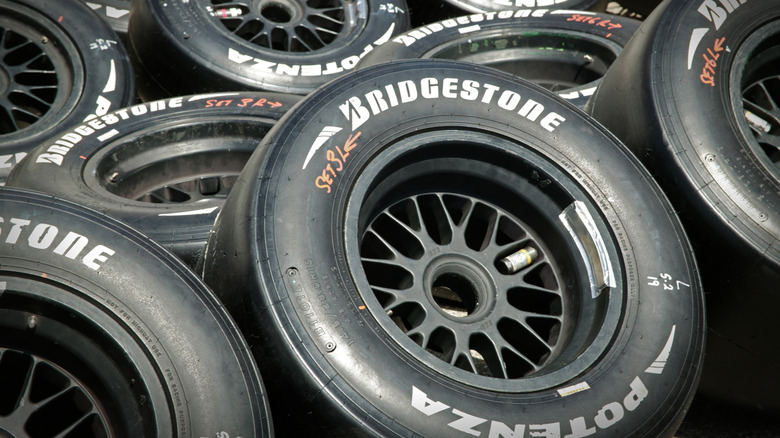
In today's globalized economy, it's common to find shared international DNA behind the products we buy, even if it's not always obvious. Tires are no exception to this. Even if the brand names make their origins unclear, you've probably noticed that today's tire market is full of Chinese-made, budget tires — sometimes of questionable quality.
There are also some interesting global ties between two of the older and more established tire brands on the American market — Bridgestone and Firestone, which share the same parent company. Oddly enough, the "stone" in both names is merely a coincidence, and each brand name had a long, independent history — one in Japan and one in America — before their paths converged to become one company in the late 1980s.
Does this mean that today's Bridgestone and Firestone tires are the same? No, not really. There are significant differences between Bridgestone and Firestone's tire models, tread types, sizing, and price points, though there have been instances of Bridgestone and Firestone offering the same tire internationally under their respective brand names. This type of relationship between different brands operating under the same parent company is common in the modern tire industry.
The brands' Japanese and American roots
Let's start with the massive Bridgestone Corporation, which is the Japanese parent company that owns the Firestone tire brand. Bridgestone's roots go back to the early 1930s, and the company name comes from founder Shojiro Ishibashi. "Ishibashi" means "stone bridge" in Japanese, and with an eye on international expansion, he decided to use the reversed English translation of his name for the company.
The Firestone Tire & Rubber Company was founded by Harvey Firestone in 1900 on the other side of the world. It quickly became one of America's biggest and best-known tire brands through, among other feats, dominating the Indianapolis 500. In the 1980s, Bridgestone began acquiring some of Firestone's U.S.-based tire plants, with the two operations merging in 1988 to become the global tire giant we know today.
Just because the same parent company owns the Bridgestone and Firestone brands does not mean that they have the same products. The Firestone line, for example, has a larger selection of off-road, mud, and all-terrain tires under its Destination brand, compared to Bridgestone's fairly limited Dueler and Duravis offerings. Bridgestone, meanwhile, has a much larger line of Blizzak winter and snow tires compared to Firestone's Winterforce tires. For enthusiasts and track day junkies, the Bridgestone Potenza line also offers significantly more models and more aggressive track compounds than the Firestone Firehawk line.
One company, two distinct brands
Both brands, however, are trusted enough to be used as OE equipment on a variety of new vehicles, including American market Hondas and Toyotas. Also of note is that both Bridgestone and Firestone are among the handful of tire brands Costco sells. Overall, though, Firestone's tires are usually positioned as the more value-focused of the two brands.
It's not surprising, then, that when ranked among all major tire brands, Bridgestone finished well ahead of Firestone, thanks to products like its well-regarded Blizzak line. There have, however, been cases where the brands have sold nearly identical tires across different markets. For example, the Firestone Firehawk Indy 500 performance tire shared its tread pattern with the Bridgestone Potenza RE003.
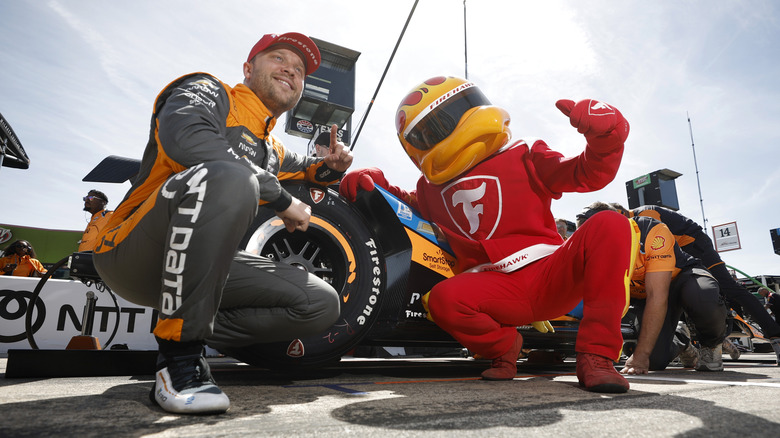
Today, the Indy 500 connection is still a huge part of the modern Firestone brand, despite having been under the Japan-based Bridgestone umbrella for nearly 40 years. Both brands have, however, supplied tires to Formula 1 at different points in the past. And, speaking of history, Firestone also has an extensive lineup of period-appropriate vintage tires for classic cars sold through Coker Tire.