

iOS 27: 4 New Features Added To The Apple Music App
Whenever Apple announces a new version of iOS, it is natural for only the most significant updates to make headlines. This is why, while talking about the recently announced iOS 27, most headlines centered around more important updates like Siri AI (which is now a standalone app), improvements to AirDrop, and new customization options for Liquid Glass design language.
As it turns out, these were not the only significant changes set to arrive on devices running iOS 27. In this article, we turn our attention to Apple's music streaming platform — Apple Music — which is set to receive a slew of important updates when iOS 27 finally rolls out to iPhones later this year. These updates include subtle changes to the app's user interface, enhanced lyrics-related features, updates to the AutoMix feature, and an improved streaming experience during low-bandwidth Internet connections. Keep in mind that to take advantage of these features once iOS 27 goes live, you'll need to have a device that's compatible with the update.
Lyrics translation and pronunciation features support more languages
Two important Apple Music-related features introduced with iOS 26 last year (2025) were lyrics translation and lyrics pronunciation. As the name suggests, the lyrics translation feature helps listeners understand the true meaning, cultural nuance, and intent behind a song written in another language. The pronunciation feature, on the other hand, proved to be a boon for anyone wanting to sing a song in another language and get the pronunciation and the diction right.
For iOS 27, both these features have been updated to support additional language pairs. In the case of lyrics translation, support for seven new language pairs has been introduced. These include: English to French, English to German, English to Italian, English to Korean, English to Spanish, French to English, and Japanese to English. Apple says that the translation feature uses machine learning along with inputs and training from language experts.
As for the pronunciation feature, it has also added support for five new language pairs. These include Arabic to Romanized Arabic, English to Hangul, English to Katakana, Japanese to Hangul, and Mandarin Chinese (simplified) to Katakana.
Updated Automix features
Another iOS 26 feature announced in 2025, alongside the translation and pronunciation, was something called AutoMix. The feature uses AI to create DJ-style transitions while moving between audio tracks. Think of it as an advanced, modern-day iteration of the standard crossfade effect that transitions one audio track to another more smoothly.
For iOS 27, this feature will be updated with better transitions, which should make the overall effect even more engaging than its current form. Until now, the AutoMix feature was restricted to the iPhone, iPad, and Macs running macOS Tahoe and above. With iOS 27, AutoMix will roll out to more devices, including the Apple Music app in tvOS, as well as the Apple HomePod. As was the case last year, the AutoMix feature will not work on older Intel-based Macs and requires the user to be subscribed to a paid Apple Music plan.
Redesigned artist page and album pages, and deeper Siri AI integration
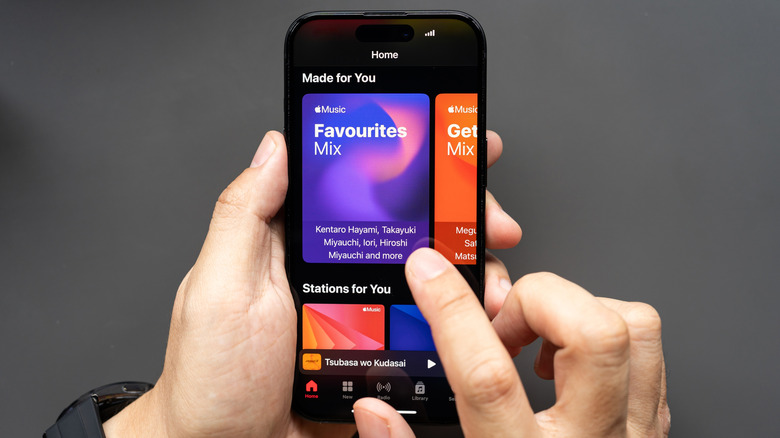
With iOS 27, Apple is also making several changes to the overall look and feel of Apple Music. The most prominent is a redesigned artist page, featuring an easily accessible shuffle play button. Another change Apple confirmed during its 2026 WWDC conference is that it has redesigned album pages, although the details remain murky. Apple has also made subtle changes to the overall layout of the app to give it a fresher look. Beta testers have reported that these changes have not yet made it to the beta version of the operating system. Another new addition — one that many users have asked for — relates to the "Now Playing" screen, which will support both portrait and landscape orientation.
As for Siri AI, it is public knowledge that Apple is pinning its hopes on the success of this AI tool, especially after its first few attempts at AI integration weren't quite successful. Given that Siri AI is integrated across most of the elements of iOS 27, it is hardly surprising that Apple Music will also integrate with it.
In its current form, users could ask Siri for information about an artist, then follow up by asking it to play one of the artist's popular tracks. There is no denying that this feature sounds great in theory, and it will be interesting to see if Apple's integration maintains the same degree of seamlessness.
Better streaming reliability
Another subtle update to Apple Music with iOS 27 is its enhanced reliability while streaming and downloading content. Thanks to the prevalence of high-speed Wi-Fi and 5G networks, bandwidth is generally not an issue for most iPhone users. However, there could be instances where a user stuck in a low-bandwidth environment could end up having a degraded experience on Apple Music. Apple says it has made improvements to the app's overall streaming speeds in iOS 27.
In real-world terms, these improvements promise faster loading of multimedia-heavy content like album art and the Now Playing view, as well as a smoother streaming playback experience by decreasing the time taken to load the next track after an existing track comes to an end. These additions are also designed to make the Apple Music app feel noticeably quicker to use in day-to-day use. Another new feature addition that iOS 27 will bring to Apple Music users is the ability to swipe away the Now Playing widget on the Lock Screen.
While there's no denying that these feature additions should improve the overall Apple Music experience, we are still several months away from getting to actually use them. This is because Apple typically aligns its yearly iOS rollout with the release of its new iPhones, which usually happens in September.