

What Does Sabbath Mode Mean On A Refrigerator?
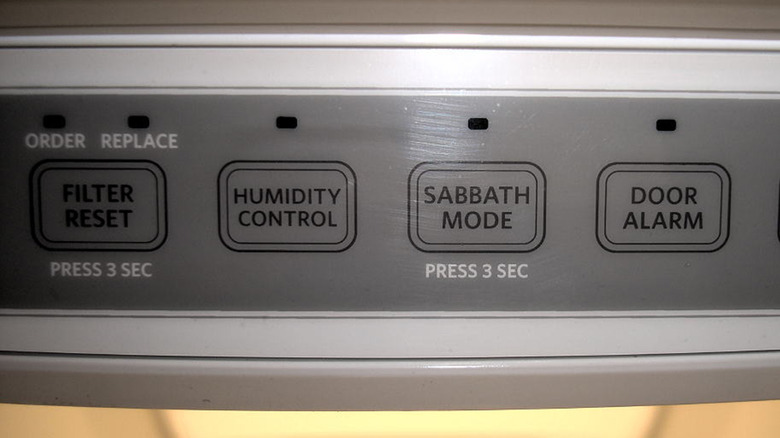
The evolution of fridges has seen the appliance elevated from something that kept food cool to a complex smart device. While smart fridge quality and functions can vary by manufacturer, many modern refrigerators can automatically fill your glass to the right level, add humidity to keep vegetables fresh for longer, and send users alerts to warn about temperature issues or problems with filters. However, one mode available with certain refrigerators might seem a little puzzling — Sabbath Mode.
Sabbath Mode is a feature that allows people to operate devices without carrying out acts forbidden on the Sabbath. More specifically, it's designed for people who observe traditional restrictions on electricity usage during Shabbat (the Jewish Sabbath Day) and other religious holidays. Generally, this rule states that operating electrical appliances and even turning the lights on or off is not allowed on the Sabbath.
This last fact might not seem that important when it comes to fridges. But what happens every time you open a fridge door? A light switches on. In other words, just opening the door on the Sabbath breaks Judaism's strict laws governing the Shabbat. This is the crux of the matter: Sabbath Mode exists so that those who comply with the relevant religious laws can continue to keep their food cool and fresh during the Shabbat.
In the case of the interior fridge light, Sabbath Mode works by disabling the activation of the light when the door is opened. Some manufacturers disable the light altogether, while others have opted for keeping the light permanently on, but operating in a dimmer mode.
What does Sabbath Mode do on a refrigerator?
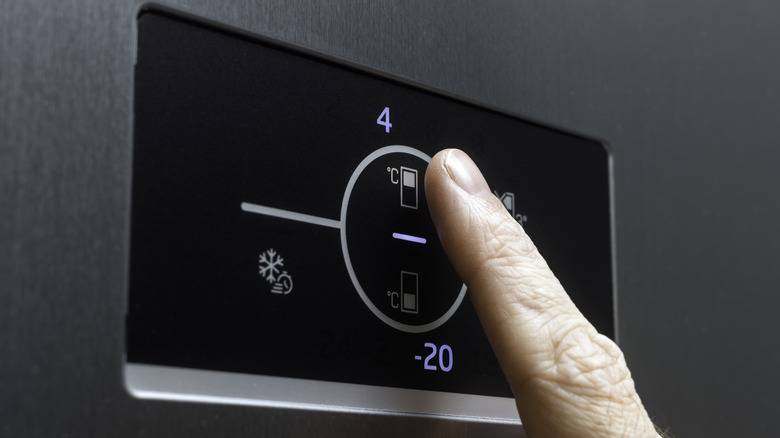
Adjusting how the refrigerator lights work is perhaps the most obvious function that Sabbath Mode activates, but it's far from being the only one.
For instance, opening the door raises the temperature in the fridge, which in turn can activate the compressor to bring the temperature back down. One way that Sabbath Mode addresses this is to integrate delays into the system, so that opening the door doesn't directly electrically activate it.
Similarly, defrost cycles can be influenced by factors like temperature drops, how many times the door has been opened, and how long the compressor's been running for. Essentially, this means that opening the door could trigger this cycle. A common method to address this is to switch the defrost cycle to a simple timer when Sabbath Mode is activated.
Other features commonly disabled in Sabbath Mode are touchpads, digital displays, alarms, status lights, and any other electrical buttons. Additionally, functions like temperature adjustment, water coolers, and icemakers are usually disabled when the mode is activated.
Essentially, this is a religious safe mode that allows those who observe the Sabbath to keep their refrigerator running without triggering any electrical actions that would normally violate Shabbat laws. Smart fridges may be one of those smart home devices that often aren't worth the price, but for strict followers of the Shabbat, Sabbath Mode might make it a worthwhile purchase.
Do other kitchen appliances have a Sabbath Mode?
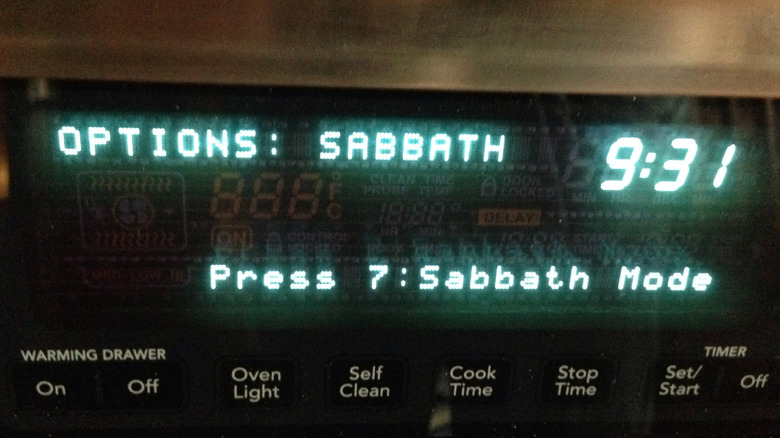
Sabbath Mode on refrigerators demonstrates just how inventive people can be to continue to use electrical devices while remaining adherent to religious laws. But refrigerators aren't the only appliance to feature such a mode: many other appliances also include a Sabbath Mode.
Let's start by looking at ovens. Modern smart ovens are growing in popularity and could replace air fryers as the "hottest" kitchen gadget. Some of the latest ovens also feature a Sabbath Mode. There are strict rules as to how food is prepared for the Shabbat, and this includes how food is warmed. Typically, ovens aren't allowed even if they are turned on before Shabbat begins, as even triggering a thermostat through opening the door would violate Shabbat laws.
Common features in ovens with Sabbath Mode include the disabling of auto-off functions, special lighting modes, and the disabling of temperature controls, although the thermostat is still active. The latter is allowed because of a "loophole" that says triggering an "electrical function that is neither beneficial nor wanted" is permissible. This scenario can be applied to oven use, but only if the entire oven is emptied of food when it's opened.
Other appliances that are available with Sabbath Modes include stoves, microwaves, dishwashers, and wine refrigerators. We won't go into the details of the features of these devices other than to say that they're there to allow users a level of functionality is still available without compromising the religious laws that are central to Judaism.