

Starlink Satellites Are Doing A Lot More Than Just Providing Internet
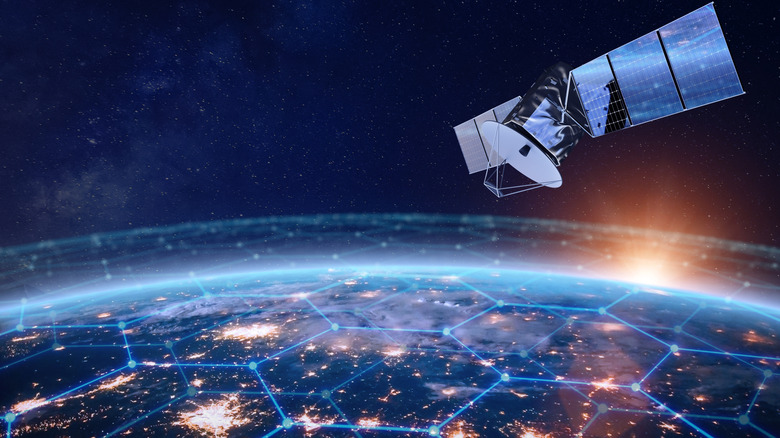
Options in terms of internet service providers haven't always been plentiful, especially for those in rural America or more remote parts of the world. Satellite internet service first became available back in the late 1990s and has traditionally used geostationary devices. A geostationary satellite can match the rotation of the Earth, basically remaining in the same section of sky continuously. The problem however, is that these geostationary units sit much further out in space, creating latency or delay when receiving and transmitting data.
Conversely, Starlink satellites orbit much closer to earth and form a unified web of thousands called a constellation. Rather than delays of 600ms or more, as with geostationary satellites, Starlink latency is closer to 25ms. As a result, internet has become more widely available and can support high data transfer in places it was previously impossible. This does come at a price though – Starlink will cost you a good amount of money. While its primary purpose is to provide high-speed internet, Starlink has also helped the FBI track down a scammer ring across the globe that was preying on Americans in 2026.
In parts of the world like southeast Asia, criminal organizations have been setting up shop well outside of populated cities, opting for isolated locales, using Starlink equipment. Starlink remained scarce on details in terms of its contribution to the law enforcement operation, but the company did admit on X, that it "proactively detect[s] and disable[s] terminals involved in illegal activity."
Starlink is also good at detecting wildfires and rainforest protection
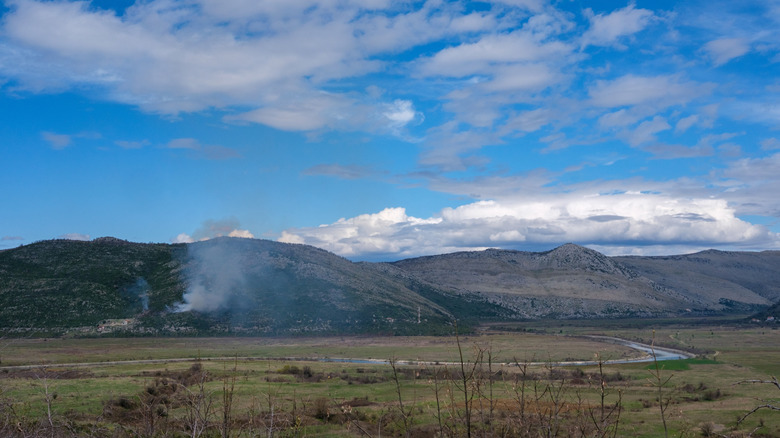
Canada has had a very publicized battle with wildfires in recent years, with 2023 being considered the worst yet. According to NOAA.gov, by June 2025, around 6.4 million acres had succumbed to flames, with more than 1,700 fires on record for that year alone. One of the most significant issues is the rate at which a simple spark can quickly wreak havoc. It's impressive how quickly wildfires can travel across a forest, which is why early detection is key.
Rogers Communications, a major Canadian media conglomerate, teamed up with Starlink to help spot these fires as quickly as possible, even in the most remote of regions. Starlink doesn't directly detect these wildfires, however it does connect specialized detection equipment, like Pano AI cameras, to authorities. These Pano AI devices take 360-degree pictures in short intervals and are programmed to look for signs of a fire, like smoke.
Swarm, which was acquired by Starlink in 2021, has been used by conservation organizations like Rainforest Connection, which monitors the Amazon for illegal logging operations. Using cutting-edge audio sensors, the sounds of wood cutting machines and engines are picked up in remote areas of the jungle, then transmitted over low Earth orbiting satellite constellations to nearby intervention teams. Although, these satellite systems aren't without their problems, as Starlink lowered over 4,000 satellites following a near-miss with China.