

The Hidden Risk Modern Heating Systems Can Add To Your Home
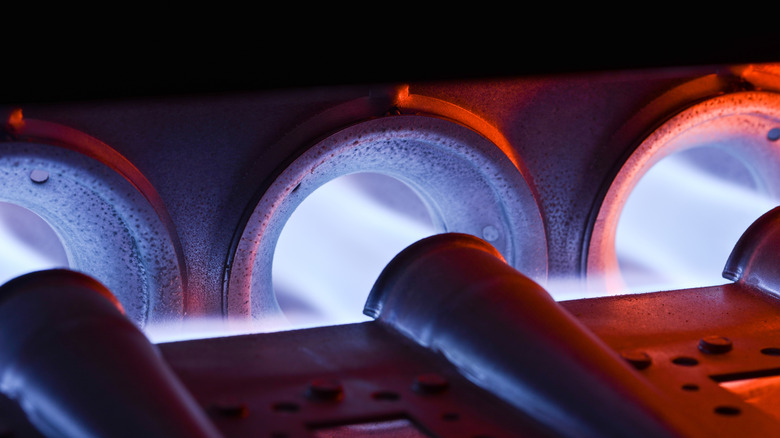
Perhaps one of the most critical advancements in gas-burning furnaces was the addition of a secondary heat exchanger, allowing modern furnaces to reach an AFUE rating of 90% or more.— though heating your home can still remain expensive. The increased efficiency adversely affects flue gases, though, lowering their temperature enough to condensate. This necessitates the need for a different venting material, and many OEMs have turned to PVC. The problem is that most polyvinyl chloride (PVC) is not listed or certified for flue gas venting –- neither the American Society for Testing and Materials International (ASTM) or UL 1738 address PVC as safe for flue gas venting.
The annual fuel utilization efficiency (AFUE) is the metric for how efficiently gas-burning appliances can convert fuel into heat. An appliance with a 90% AFUE rating means that the appliance will turn 90% of its fuel into heat, and the remaining 10% is lost through vents or chimneys. With two heat exchangers and a higher efficiency compared to lower-efficiency models, so much heat is extracted from the combustion process that the flue gases pass their dew point and begin to condensate in the second heat exchanger. This is why gas furnaces are also categorized as condensing or non-condensing, based on their AFUE rating. This toxic flue gas condensate is corrosive, leading to the corrosion of older galvanized vent pipes, which in turn would cause venting failures and carbon monoxide leaks (CO).
Although better than galvanized pipe, PVC pipe is still susceptible to failure from gas venting and potentially leaking toxic flue gases. As most of these piping systems are in walls and attics, modern heating systems can potentially add a hidden risk to homes.
PVC is still used despite safety standards, but building codes are changing that
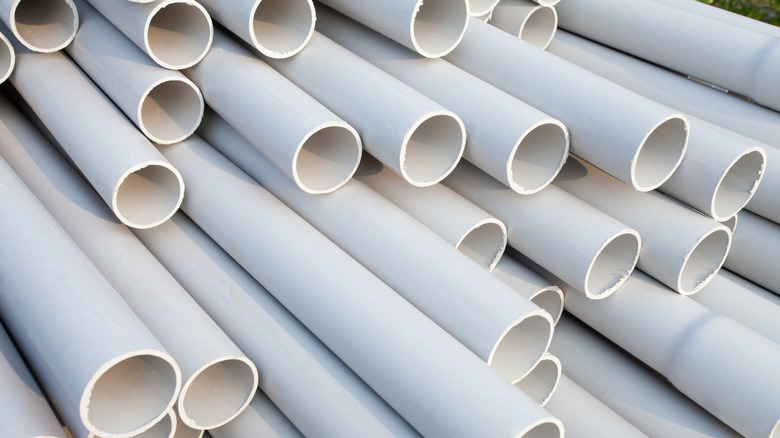
There are multiple safety standards that have emerged over the years that govern direct venting for gas-burning furnaces. Canada, for example, adopted the ULC-S636 venting standard, the US has developed UL 1738, and Europe has EN 14471. Both the National Fire Protection Agency (NFPA) and the International Fuel Gas Code (IFGC) recognize these standards. There are pipe manufacturers that have produced engineered PVC pipe that meets these standards, but traditional solid-wall PVC remains less expensive to use during construction. And unless local and state building codes enforce stricter standards, little is likely to change.
Massachusetts, which is often at the forefront of research into minimizing energy consumption to combat climate change, has introduced some of the most stringent regulations to date on gas venting. Under 248 CMR 5 and its amendments, vents should be steel, wrought iron pipe, or corrugated stainless steel tubing (CSST). Non-metallic vent pipes must be chlorinated polyvinyl chloride (CPVC) or polypropylene, or a product that has been specifically built for gas venting and approved by the state. Massachusetts also prohibits new gas appliance installations without the installation or presence of CO alarms –- either hardwired or battery powered. Connecticut has been reviewing building code changes since 2024, and those changes are expected to land later in 2026. The proposed revisions include that PVC used for venting be certified to the appropriate standards.
Other municipalities have also phased out PVC for venting, including New York City, and most recently, Nashville. Even plastic pipe manufacturers such as Ipex and Centrotherm have rallied behind a mandate for UL 1738. The avenue and precedents to mitigate the danger of improper flue gas venting have been set, but it will continue to be up to building codes to make safety standards universal.