

Dodge Wants To Make The Charger Even Quicker With Inflatable Roof Rails
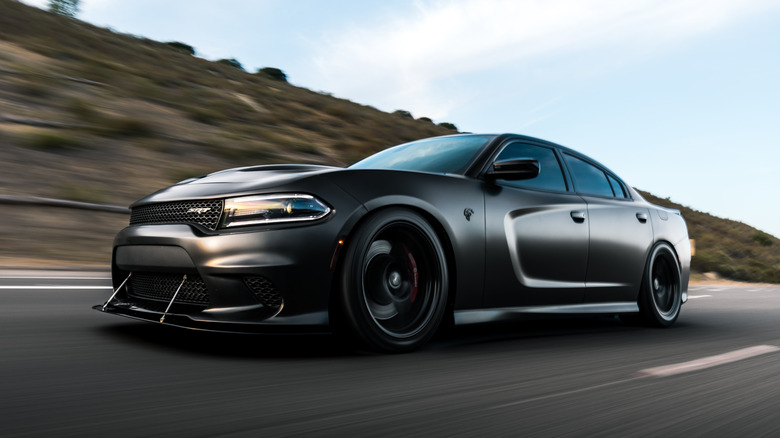
Vehicles are becoming faster and faster, but there are limits — tires can only handle so much traction and horsepower must fight against aerodynamic drag. A vehicle's design holds it back from faster acceleration as well, since they can lose stability without the right aerodynamics. The Dodge Charger has often pushed speed to the limit – and with the Hellcat engine rumored to return, it looks like Stellantis is looking for ways to allow the Charger to become even quicker.
Recently, Stellantis filed a patent for inflatable roof rails. The two rails would run across both sides of the roof, popping out when filled with air at higher speeds to channel more air to the already existing rear spoiler, adding more downforce. Stellantis explains that this is a cheaper way to make the spoiler more effective as it approaches faster speeds instead of using an active spoiler, found on more advanced supercars.
Inflatable roof rails would be latest attempt at improved aerodynamics for sports cars
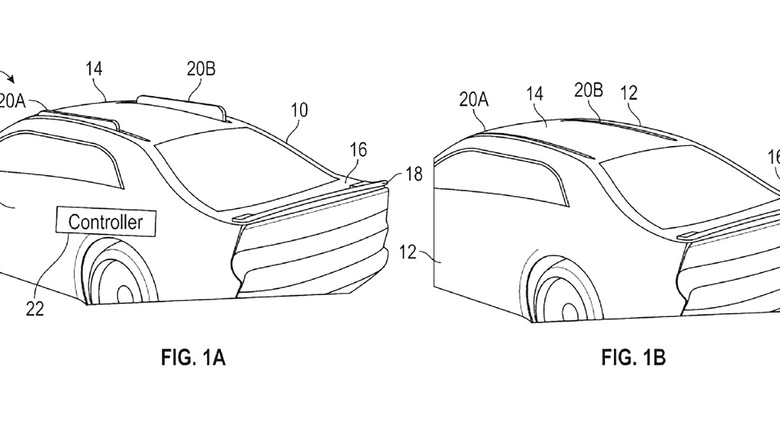
Inflatable roof rails are unheard of in the car world, so you may be wondering how something like this would even work. The patent explains that there would be a decorative trim hiding the rails while they're not in use, but once the Dodge Charger reaches 55 miles per hour, the vehicle's sensors would activate them. Drivers would also be able to keep the inflatable roof rails up in drag race mode or braking mode.
While the idea of inflatable roof rails popping up on a Dodge Charger sounds a bit comical, this wouldn't be the first time an automaker has attempted to make a vehicle more aerodynamic in creative ways. The Lotus Evija has air tunnels that allow the 2,000-plus horsepower hypercar to essentially "eat" air and spit it out the back. The Bugatti Veyron Super Sport has two NACA ducts on its roof rather than scoops above the engine, giving the vehicle less surface area in the front for increased aerodynamics. The Porsche 911 GT3 RS has carbon fiber air outlets near the front tires that alleviate pressure created by fast-spinning wheels, reducing lift.