

5 Common Problems With Whirlpool Dishwashers
We may receive a commission on purchases made from links.
Whirlpool is well known as a reliable dishwasher manufacturer. Buyers generally seem to be happy with most of these dishwashers, with a vast majority of the models the company makes being highly rated on retail sites, such as Home Depot and Lowe's. The company has been around for over a hundred years and is one of the few appliance brands that still makes many of its products in the USA. But just because the company's dishwashers are well-liked doesn't necessarily mean they're bulletproof.
There's nothing worse than scraping and rinsing an entire sink full of plates and loading them into your dishwasher only to find that it doesn't work — particularly if you don't know exactly what it is that broke or how costly it will be to fix. It could be that the dishes themselves aren't clean, that the machine has developed a leak, or even something as simple as the items not drying all the way. Dishwashers can be surprisingly complex machines that have to deal with a lot of crud, day in and day out. Understanding why and how these problems occur is the first step in knowing how to address them.
While Whirlpool-brand dishwashers aren't particularly temperamental in comparison to most other brands, it's still worth taking a look at the most common problems that customers report having with them. That way, new buyers can decide for themselves if these machines are worth the risk, and those who already own them can be prepeared for any issues they might face down the line.
Poor drainage
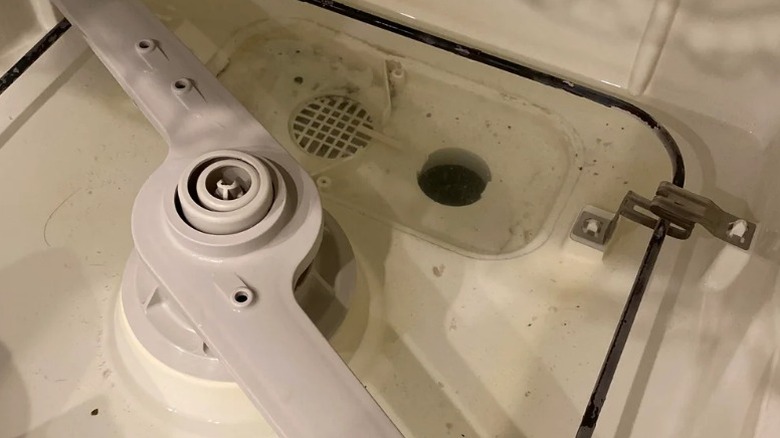
Drainage issues are among the most common problems you're likely to encounter in a Whirlpool dishwasher. This isn't all that surprising, as it tends to be a source of headaches across many dishwasher brands. You open the machine after it finally dings that it's finished, only to find a pool of murky dishwater still sitting at the bottom.
Sultan Appliance Repair cites issues with the dishwasher not draining as the single most common problem that they get called about for Whirlpool dishwashers. It's also a frequent complaint that you might find on forums from users trying to figure out why their machine has suddenly stopped working properly. There are several things that can cause this problem. The worst-case scenario is that you have a bad drain pump and need to get it replaced. The component itself will run about $70-$180 plus installation, but there are a couple of smaller things that could be to blame as well. You might have a kink or clog in the drain hose, the garbage disposal might be blocking the dishwasher's ability to discharge into the main drain, the air gap could be clogged, or it might be as simple as needing to clean off a blocked filter.
Whirlpool has step-by-step instructions on its website that will guide you through the process of unclogging one of its dishwashers if you want to save yourself the maintenance bill. All you need is a bucket, a cup, some towels, a brush, a screwdriver, and the willingness to get in there and work with a little dirty water. This won't fix a busted motor, but it will check off a few possibilities before needing to make a more expensive repair.
Dishes aren't getting clean
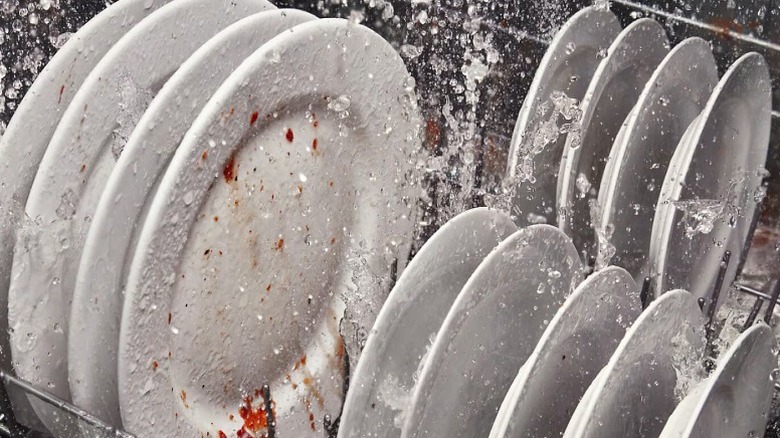
A dishwasher's whole job is to wash dishes, so it can be pretty frustrating when you run a multi-hour-long cleaning cycle only to open the door and find that your dishes are still dirty. This is a surprisingly common problem and can be a key sign that your dishwasher is about to break. There are quite a few different reasons why your Whirlpool model might not be doing its job correctly.
One of the first things to consider is that hard water can cause buildup in just about any appliance. That buildup can block the small holes in things like the sprayer arms in your dishwasher, preventing them from being able to properly clean your dishes. Running your dishwasher with a descaling solution, like that used in Affresh Dishwasher Cleaner, can free up those blocked openings. Other things to consider are the type of detergent you're using, whether the dishwasher is getting enough access to water, whether the dishes are loaded correctly and given enough space, and whether the correct washing cycle has been selected. Additionally, insufficient access to hot water can leave residue, while dirty filters and improper drainage can also lead to dirty water being sprayed back on your dishes.
If you've addressed all of these, then another likely culprit is a broken sprayer arm. OEM replacements for these generally run around $50-$100. iFixit has a very handy tutorial for how to remove and clean the sprayer arm, and the same steps can be followed when a replacement is needed. If none of this was the source of the issue, then the problem may be with the circulation pump or motor.
Leaking water
From potential repair costs to concerns about mold and water damage, finding water under your dishwasher can set off alarm bells. There are several things that can cause this to happen. A worn door gasket, a damaged latch, a cracked tub, an incorrectly installed water supply or drain line, an unlevel washer, or a leaky inlet valve are all possible culprits. It's worth checking these first, but there's one issue that seems to be a bit more common on Whirlpool dishwashers when it comes to smaller, slow-dripping leaks.
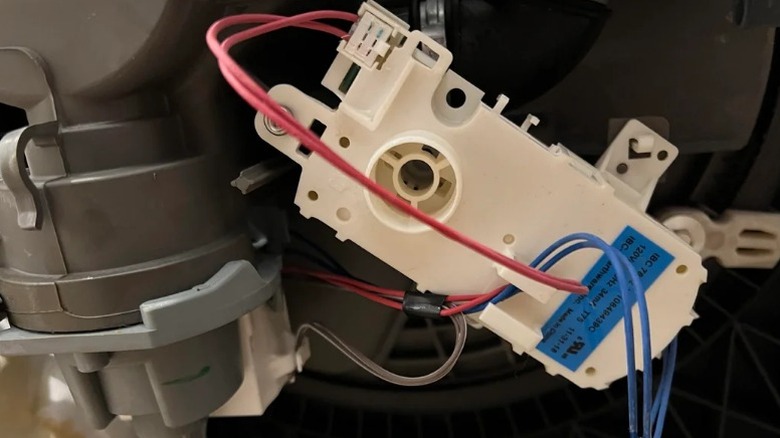
There is a component called a diverter motor located on the underside of your dishwasher that is responsible for directing the flow of water inside the machine. The motor has a valve that controls where this flow goes, and in many Whirlpool dishwashers, this valve relies on a small rubber seal to keep the connection watertight. Unfortunately, being constantly exposed to moisture, movement, and the expansion and contraction of heat causes these seals to degrade over time.
Fixing this can be a challenge, however. It doesn't look like Whirlpool sells the seal as an OEM part, implying that the grommet itself isn't meant to be replaced on its own. And while some have successfully installed aftermarket grommets, others have found that attempting to do so doesn't resolve the leak. The alternative to this is to replace the entire diverter motor. Whirlpool sells three different motor models, costing $78.63, $92.95, and $112.11, respectively. So, you'll want to make sure you consult your manual and order the correct part number before attempting to replace it if you verify that this is, in fact, the source of your leak.
Dishes aren't drying properly
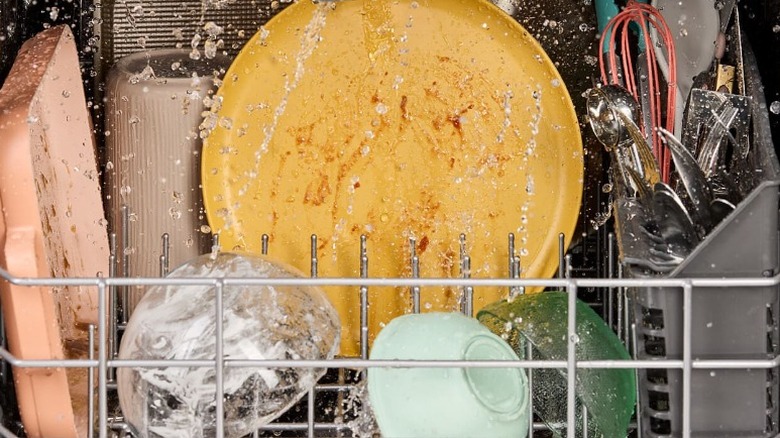
Another common problem that a lot of people seem to encounter with their Whirlpool dishwasher has to do with their dishes not drying correctly. They run their dishwasher like normal, only to open it up at the end of the cycle and find their dishes still dripping wet, needing to air dry them before they can be put away.
Several Whirlpool dishwasher owners have reported this problem. Assuming that the dishwasher is draining correctly, there are a few other reasons why your dishes might still be wet at the end of a run. The first thing to check is that the dishwasher is on the correct setting, as some energy-efficient modes might use less or no heat to dry at the end of a cycle. Likewise, overloading or incorrectly loading the dishwasher can trap moisture, and rinse aid additives like Jet-Dry are often recommended for additional drying power.
That said, a mechanical failure can also be to blame. Your dishwasher likely has a small, mechanized vent door that's supposed to open at the end of a cycle to release moisture. Your dishes might not dry correctly if this door doesn't open as intended or if the fan inside the vent has a faulty motor. Your dishwasher may also contain a heating element that is used to dry dishes. This is a metal tube similar to the heating element you might find in an oven. Whirlpool sells OEM replacements for around $50-$100. If even replacing the heating element doesn't work, then it may also be possible that there is a control board, wiring, or thermostat failure that is preventing the part from functioning as intended.
Broken upper rack adjusters
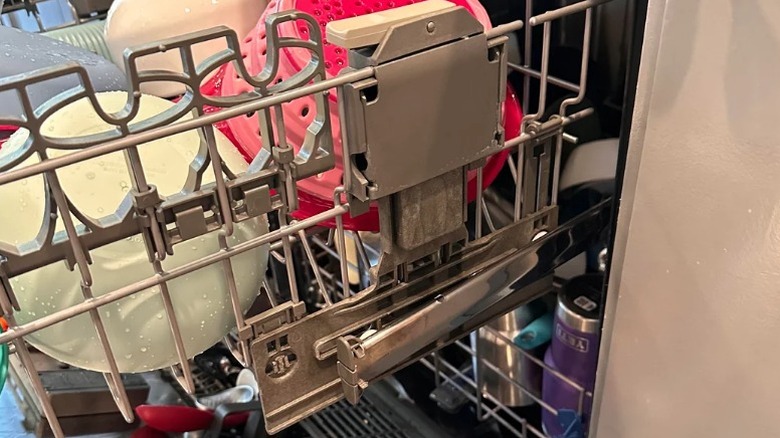
Many of the newer and higher-end Whirlpool dishwashers have metal components for adjusting the height of the upper dish racks and securing them in place. These components are collectively referred to as the upper rack adjusters, and the metal versions are sturdy and don't often fail. Unfortunately, there are a lot of older mid-range Whirlpool models that came with plastic rack adjusters, and there have been numerous reports of them breaking. This makes sense as the constant strain of heavy dishes, combined with the movement of the rack and repeated heat exposure, are all factors that might contribute to a plastic component failing over time.
The problem is prominent enough that Whirlpool sells several factory-certified replacement kits designed to address this exact issue. Some users have attempted to replace these components with the same OEM plastic, but have found that these also quickly broke. Fortunately, Whirlpool has also started making metal replacement kits that are designed to replace the OEM plastic used in these older models. The kits go for about $50 and come with all the parts you need in order to install them.
Whirlpool itself has shared a video on its help site that has step-by-step instructions to guide you through the process of removing the old rack adjuster and replacing it with a new one. All you need is the kit, a Torx head screwdriver, and a flathead screwdriver.
Our methodology
Whirlpool's dishwashers are generally well regarded in terms of design and durability, but like all appliances, they can occasionally break down. In making this list, we sought to find the most common problems that users reported, as well as potential causes, and a rough idea about what it might take to fix them.
We started by taking a look at professional appliance repair sites and numerous appliance repair forums, searching for the most commonly reported issues among owners of the brand. We made sure that these issues were reported by multiple sources and that they were relatively common across the brand's various models.
Once we had a few picked out, we looked at reputable instructional sites, such as Whirlpool's own customer help page and third-party sites like iFixit, in order to identify potential causes for the dysfunctional behavior and the kinds of solutions that were available. We also sought to find repair parts and cost estimates for readers so they could get a better idea of how serious the problem is and the difficulty level associated with fixing it.