

New Proposed Law Aims To Put A Recording Light On All Smart Glasses
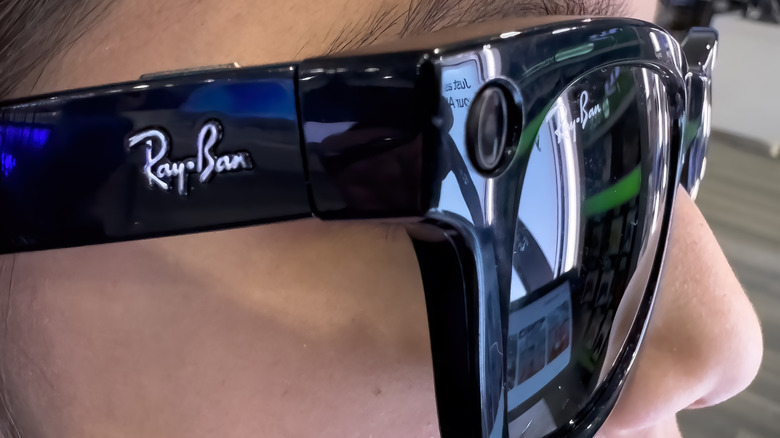
Relatively speaking, smart glasses are quite a new technology. While it's astonishing to see them doing things like translating languages right before the wearer's eyes, smart glasses are in a similar position to driverless cars: different sets of regulations across the country and around the world are struggling to adapt to the technology's implications. In Pennsylvania, the newly introduced House Bill 2603 aims to tackle one of the biggest societal concerns regarding smart glasses: being recorded without knowledge or consent.
Introduced by state representative Joe Ciresi, with co-sponsors including Liz Hanbidge, Dan Williams, and Carol Hill-Evans, the proposed bill adds to the state's laws on "wiretapping and electronic surveillance." It aims to establish that smart glasses and other wearables must always feature a visual indicator, which the text of the bill defines as "a light or device on a wearable recording device that indicates that the device is capturing sound or video." Under its terms, smart glasses and similar wearables are not to be manufactured or sold in the state without such an indicator, nor may any secondary device be used to prevent the indicator from functioning.
For users of such wearables, the suggested bill will forbid recording (audio and/or video) of anybody else without their specific permission to do so, also underscoring the need in particular scenarios for an indicator that is operating as intended. The bill lists very limited exceptions, including "law enforcement officers during a lawful criminal investigation." The proposed penalties are quite hefty too.
What the measures might mean for wearers and retailers
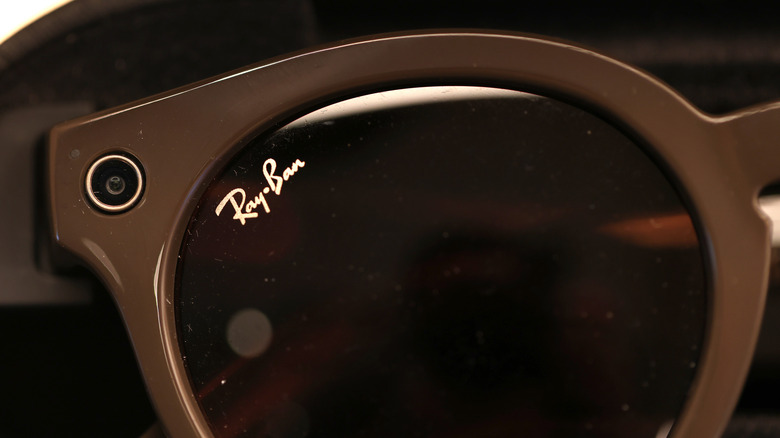
As of June 5, 2026, the bill is awaiting the Communications and Technology Committee's report and remains some way from becoming law. If it does, those in the industry in Pennsylvania will certainly want to pay attention.
Under its terms, any retailer selling such wearables must provide buyers with documentation that closely details the aforementioned rules governing consent for recording and the use of indicators. This documentation, House Bill 2603 goes on, must be "separate from other information provided to customers and shall be made clear and conspicuous for the customer." Failure to comply will see a retailer given one month's grace to make their business compliant with these terms, on condition that they register the changes they've made with the authorities. This is followed by a penalty of up to $500 for a second violation, which is doubled for a third.
For every individual model manufactured and sold without meeting the regulations for visual indicators, as well as every individual device created and sold that allows them to be circumvented, the manufacturer will be fined $500. This will increase to as much as $1,000 and as much as $1,500 for a recurrence and a third offense, respectively.
The passage of this bill could be very important for the future of wearable regulation. Perhaps it will set a U.S. precedent that will make the general public and users alike feel safer, whether or not they're in places where smart glasses should never be worn.