

Why Do Some Traffic Lights Have Two Red Arrows?
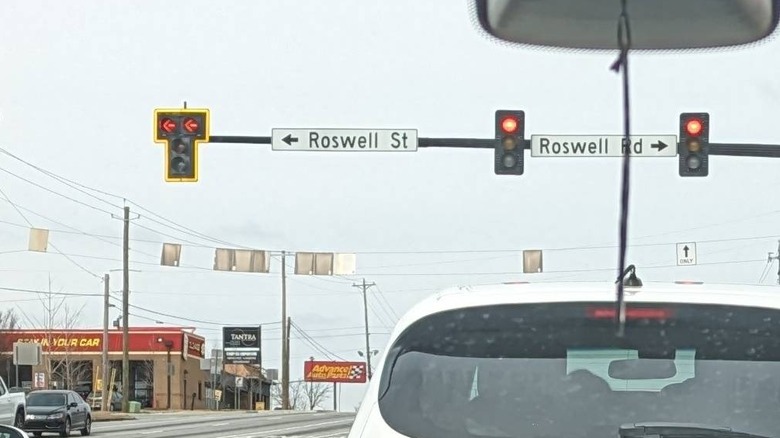
A lot of times, when we think of traffic lights, we think of green, yellow, and red. But in reality, it's not that simple — and it can start to get confusing when you come across lights you've never seen before. Most drivers have seen a red arrow, which indicates that you may not take that turn while it's on. But a few years back, drivers were thrown off by the flashing double arrow red lights implemented in a Texas town.
If a traffic light has two red arrows, it's simply a way to emphasize the necessity to stop at the light and not make the turn. If the arrows are solid, you have to wait for the light to turn green before you can make that turn. If the arrows are flashing, you can make that turn after making sure traffic is clear. The double arrows are believed to be more effective than the usual red circle when trying to get drivers to stop, with Traffic Engineer, Peter Eng, telling CBS News that the two arrows "more obvious" despite the initial confusion.
Traffic lights are ever-changing, but the changes can be slow and confusing
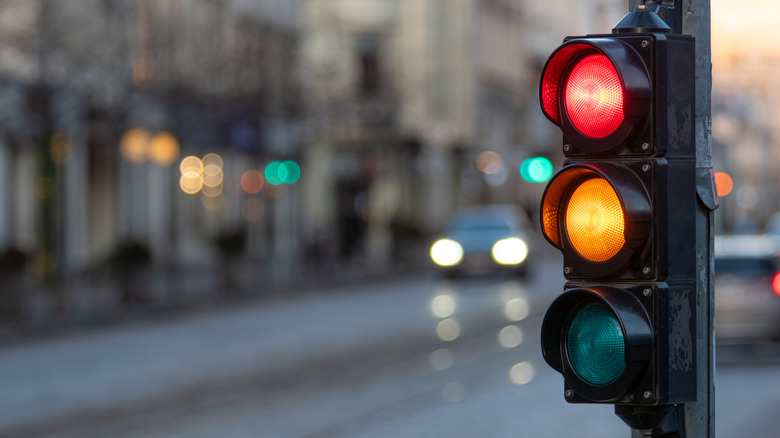
The colors you see on traffic lights were chosen for a reason. Green lights already meant "go" on railways, chosen due to how easy the color is to spot, so this was an easy transition as vehicles became a popular mode of transportation. Red is often associated with danger, making it an effective color for warning drivers to stop.
While the United States has some variation due to some cities' particular needs, most traffic lights are generally the same due to an international treaty meant to create an international standard. New lights continue to pop up as traffic laws change and cities notice traffic patterns. For example, the flashing yellow arrow is new to larger cities, allowing drivers to turn in an intersection as long as they yield to oncoming traffic and pedestrians. Boston also got new lights that indicate if pedestrians are crossing, although it's been confusing motorists.
Recently, experts have proposed the addition of white lights as a way to direct drivers to follow the autonomous vehicle in front of them rather than defer to the standard colors, hoping to reduce traffic congestion. A new color hasn't been added to traffic lights in nearly 100 years, but AVs could push for big changes once they're here.