

The US Navy May Choose Foreign Shipyards To Help Build The 'Fleet Of The Future'
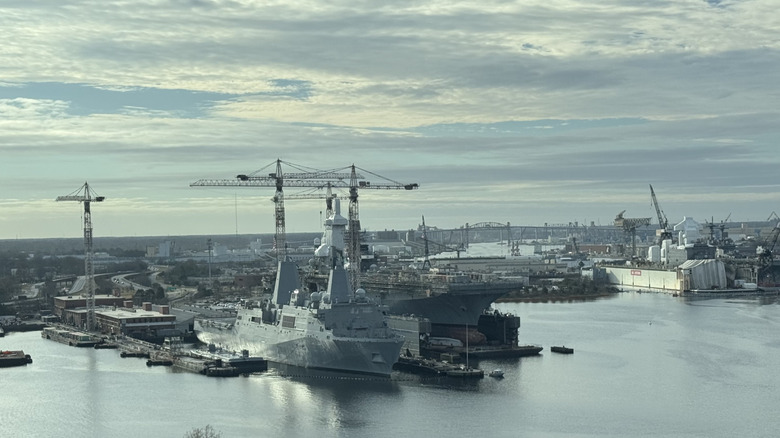
The US Navy is considering proposals to build US warships in foreign shipyards. If it goes ahead, this would be the first time in centuries that the Navy has outsourced the building of major vessels to overseas nations. The move comes as the service continues to grapple with a shipbuilding crisis that has left the Navy with its lowest hull count since before World War One.
The details of the proposal were revealed in the US Navy's Shipbuilding Plan, published in May 2026. The plan notes that, "the Navy is requesting targeted legislative changes, specifically offering a proposal for the fiscal year 2027 (FY27 NDAA) to authorize the construction of up to two auxiliary ships and the flexibility for fabrication of some combatant modules overseas."
The report admits that the current state of US Navy shipbuilding means it's unable to meet the Navy's required fleet size. Among the reasons listed are a lack of facilities at US shipyards and a workforce that isn't large enough. The latter point was acknowledged in November 2025 by John Phelan, the then Navy Secretary, when he admitted that the US Navy can't find workers to build warships.
Speaking to the USNI, Phelan suggested that the Navy was considering the option of building combat ships abroad.
Which allies could help build the fleet?
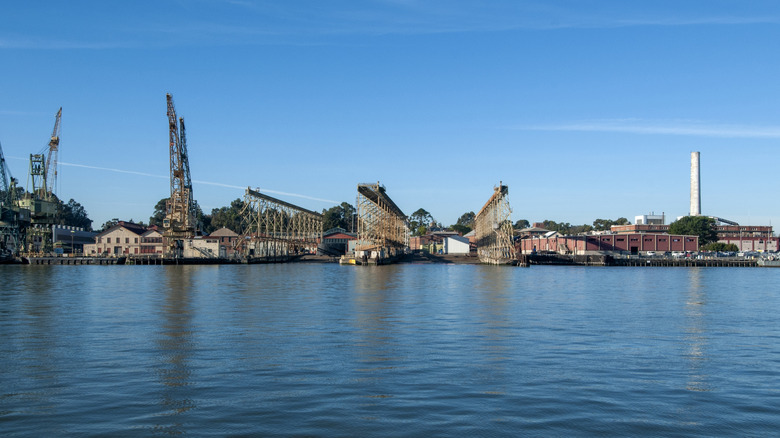
In terms of ship numbers, the US Navy now ranks third in the world, although it's still the world's largest if you use gross tonnage as the metric. However, China's current shipbuilding capacity is believed to be about 230 times that of American yards, so this state of affairs could easily swing in just a few years.
This is why the idea of foreign-built US Navy ships is not as surprising as it first sounds. Among the potential countries that are reported as being under consideration are two that have proven capabilities when it comes to advanced naval construction — South Korea and Japan. This capability is one of the reasons they're being considered as potential shipbuilding partners.
While there's a geographical distance separating the US from these countries, partnering with allies like this makes sense. South Korea is home to some of the largest and most modern shipyards in the world, with companies like HD Hyundai Heavy Industries already building advanced naval vessels. The story is similar in Japan, with companies including Mitsubishi Heavy Industries building naval ships for the Japan Maritime Self Defense Force.
When added to China's shipbuilding output, the total output of the three countries accounts for a staggering 90% of global shipbuilding production. This one figure is enough to explain why Washington is now potentially looking overseas, as it looks to implement its "Golden Fleet" initiative.
America's shipbuilding problem
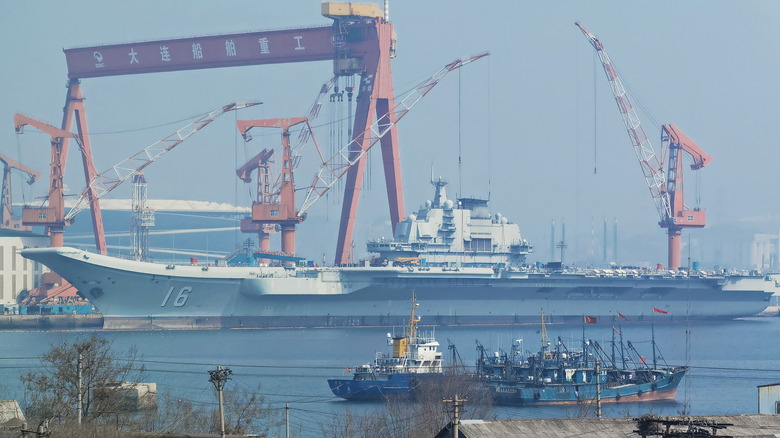
The Navy's shipbuilding problem isn't going to go away by just shifting the building of a few auxiliary ships to foreign yards — it's much deeper than this.
The problem isn't something that appeared overnight. Since the 1970s, only one new shipyard has opened. However, during the same period, 14 naval shipyards closed their doors for good. Now, to understand just how calamitous this is for the navy, let's throw in another troubling stat — one Chinese company (China State Shipbuilding Corporation) produced more tonnage in a single year than the entire US shipbuilding industry has produced since the end of World War Two. It should be pointed out that this includes commercial shipping, but it still acts as a yardstick for just how far apart the two countries' shipbuilding industries are.
Even just building the necessary yards is not a quick fix. Shipyards need skilled workers, and the industry is already struggling to attract them. At least part of the problem is down to low wages. A point noted by John Phelan in November 2025, when he admitted that the industry was struggling to find workers, as companies like Amazon could pay the same wages for easier work.
The Navy hopes that its future "Golden Fleet" is the way forward for the US Navy as it aims to consolidate its place as the world's most powerful fleet. Plans include the Trump-class battleship, a ship that has experts worried. However, putting worries about particular battleships aside, addressing the problems facing the country's naval shipbuilding sector is seen as essential for the future of the Navy.