

Is Adding A Nitrous Kit To Your Daily Driver Legal? Here's What You Need To Know
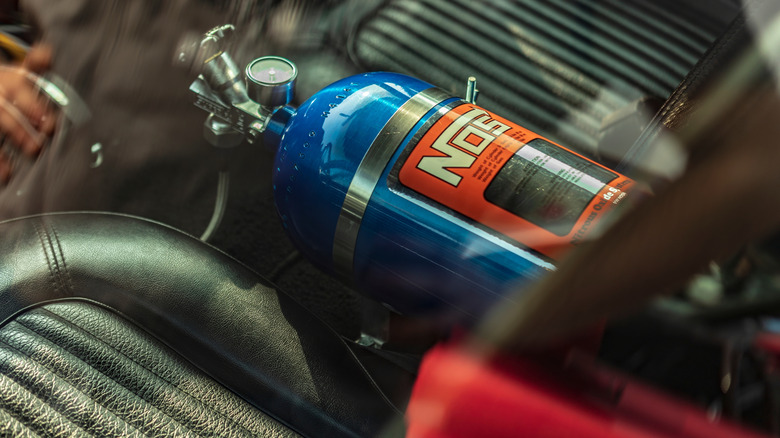
It's not uncommon for race cars and other high performance sports cars to use a nitrous oxide system. After all, nitrous gives an instant burst of energy that can put drivers ahead of the pack on any given track. Nitrous can even be utilized in everyday vehicles as well, and it's not illegal to do so on a U.S. federal level. When it comes to the state level, however, the issue gets a bit more nuanced than you might think.
For example, California does not specifically regulate nitrous oxide systems in the state's vehicle code. Yet any emissions-related aftermarket modification on a street-driven vehicle must adhere to California Air Resources Board (CARB) standards. Most nitrous systems are not CARB-compliant, so they fall into that category. In contrast, drivers in the state of Virginia are allowed to own nitrous systems, but they must be disabled before a vehicle is driven on a public highway.
These types of restrictions exist in states throughout the country, making it tough to know where the use of nitrous beyond ownership is allowed and where it's not. Nitrous systems make any car a police magnet, so drivers that want to install nitrous in a registered street-legal vehicle should take the time to understand their state's law first. Otherwise, they could end up with a system they're not legally allowed to use.
Nitrous use in street cars vs race cars
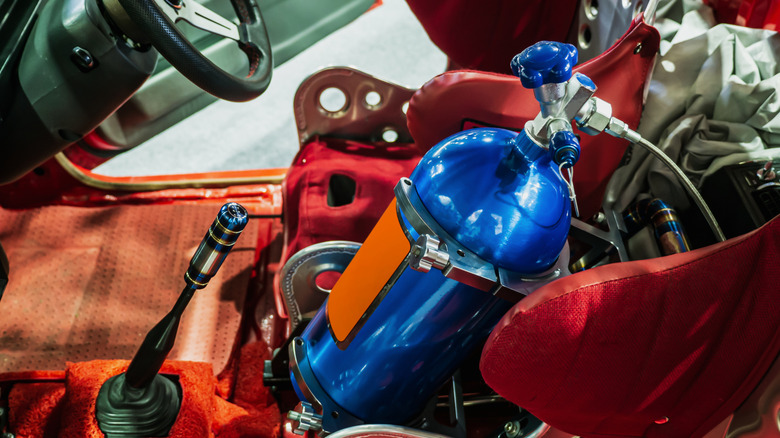
Though nitrous systems are used in vehicles across the U.S., there are some things you should know before installing one. Nitrous oxide, though it can deliver a noticeable increase in engine performance, also requires the engine to work harder. The system supplies additional oxygen to allow a higher fuel burn, which means engine components must suddenly keep up in conditions outside of the norm. Even the engine block itself is affected, as it can endure stress almost immediately.
However, if your engine is in good shape and all the systems are functioning correctly, then your vehicle should be able to handle the occasional burst of nitrous. The problems begin when the nitrous shot is too heavy, the fuel mix is off-balance, or the timing control is ineffective. In fact, if the air-fuel mix is too "lean" or thin, engine temperatures can increase and things can get dangerous. Ironically, it's not the nitrous itself that causes the failure, but how the engine responds to its presence.
Race cars and high-performance sports cars use nitrous more safely and more consistently because the engines are designed around the added power and stress. The engines themselves are typically built using upgraded fuel systems, adjusted ignition timing, colder spark plugs, and other optimized components. These parts and systems work to help control combustion under higher cylinder pressures, which occur during heavy nitrous use.