

Could This German Strategy To Slow Surging Gas Prices Work In The US?
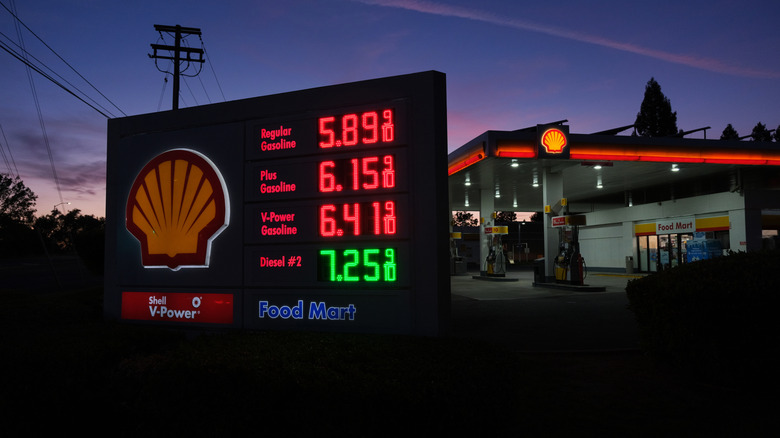
Gas prices are higher than they've been in years, and unfortunately, they're unlikely to go down anytime soon. Drivers are taking a huge hit in their wallets, and governments around the world are scrambling to help alleviate the economic fallout. Last month, Germany followed Austria in passing regulations to prevent gas stations from increasing prices more than once a day, with fines up to $116,000 for companies that do so. That may not seem like much, but because fuel prices are in such flux, a little stability goes a long way. Germany made the move after reports that gas prices had been rising by more than 22 times per day. Plus, the asymmetric "rocket and feather effect" means that even when prices rise quickly, they tend to fall much more slowly, which is why Germany looked to limit increases.
It's not likely that the United States will employ a similar strategy, even though gas is currently around $4.30 per gallon on average (it was $3 earlier this year, before the war). While the federal government could likely implement a similar regulation under the Commerce Clause of the U.S. Constitution, it would require a bipartisan Congress to make the move. The oil industry has powerful lobbyists, and the current administration seeks to limit regulation rather than increase it.
Plus, states hold considerable power themselves, which complicates the implementation of drastic changes mandated by the federal government. States also have the authority to limit price gouging, though typically only in an official emergency, and any conflicts between states and Washington can greatly hinder actions by either side. This hasn't stopped states like California, where the average price hovers around $6 per gallon, from calling out oil companies profiting off these major hikes.
Germany's new regulations may not help much
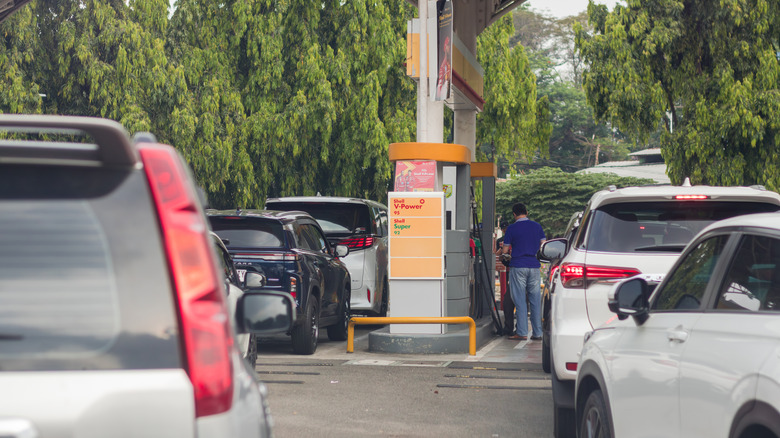
Not only would it be difficult for the United States to copy Germany's limits on price hikes, but the effort may not be worth the reward. Even if oil companies limit price increases from several times per day to just one, a single bump in the cost per gallon of gas will still impact the budgets of millions of Americans. Gas is already much more expensive than it was just a few months ago — even if it suddenly plateaued, it would still be relatively expensive. Seven price increases in seven days would only exacerbate the problem.
That's why countries are looking for additional solutions to the problem. In addition to its new regulation, Germany has also been introducing laws that would make it easier to stop major companies from taking advantage of America's war with Iran by price gouging. France is also looking into the issue, and Hungary is attempting to copy Germany and Austria's strategy of limiting increases in oil prices. The U.K. is looking to cap energy bills for its citizens until at least September.
Recognizing that not much can be done in the face of the private oil industry's vast power and influence, other governments are focusing their efforts elsewhere. In addition to its proposed energy bill regulations, the U.K. announced it would be giving tens of millions of dollars to families deeply affected by high energy costs. In Denmark, politicians are simply asking citizens to drive less and reduce energy consumption, which may be good advice, but doesn't do a thing to actually improve economic conditions. The United States is looking to help its citizens by focusing not on the price of gas but the tax that comes with it.
Would eliminating the gas tax make any difference?
To help offset price increases from its war with Iran, the Trump administration has been tapping deeply into America's oil reserves and has even eased shipping restrictions and sanctions on countries like Russia and Venezuela. Another strategy the federal government is considering is temporarily pausing the gas tax, since taxes are much easier for the government to control than the prices of private companies. Several bills have been introduced in Congress to do just that, since taxes fall under Congress's jurisdiction, but the gas tax is still currently in place.
Even if the gas tax were eliminated, however, it wouldn't solve the problem. It wasn't long ago that slashing around 18 cents off a gallon of gas would be a significant discount, but that's no longer the case. Considering drivers were paying around $1.30 less per gallon at the pump before the war with Iran, reducing the cost by 18.4 cents (the current federal gas tax) doesn't bring the price anywhere near where it used to be.
On top of that, there are still state taxes on gas that wouldn't be affected by the federal pause, though some states have already reduced or paused theirs. The revenue from those taxes goes toward highway construction and repairs, among other transportation improvements, so losing it would likely cost taxpayers in other ways. When Georgia paused its gas tax, for example, it lost around $361 million for such projects. All these roadblocks mean that whatever Band-Aids governments attempt to apply, you shouldn't expect gas to be cheaper anytime soon — or the price of motor oil, for that matter.