

If You Grew Up In The 2000s, You Definitely Remember These Cars
As is the case with every decade, the first decade of the new millennium was filled with both tumult and excitement. In pop culture, for example, we saw the birth of the superhero movie boom, the creation of the iPod, and social networking sites like MySpace and Facebook starting to change the way we communicated on the Internet. The 2000s were loud, abrasive, somewhat obnoxious, and reveled in excess, and then it all came crashing down with the Great Recession in the decade's latter years.
That mindset was certainly present in the design of automobiles in the 2000s. This decade saw a plethora of gigantic, gas-guzzling SUVs hit the market, letting people — particularly in the U.S. — drive down the street in a vehicle that screams, "You're in my way." That being said, not every car was like that. The decade began with introduction of the Toyota Prius to the American market, starting the popularity of the hybrid vehicle. We also saw a number of car brands try to create retro-inspired designs for their vehicles, such as with the Toyota FJ Cruiser, to stand out from the crowd.
Here, we are going to look at five different vehicles that are quintessentially from the 2000s. These run the gamut of what the decade had to offer and, more importantly, what the following decades decided to pivot away from in their vehicle designs.
Chrysler 300
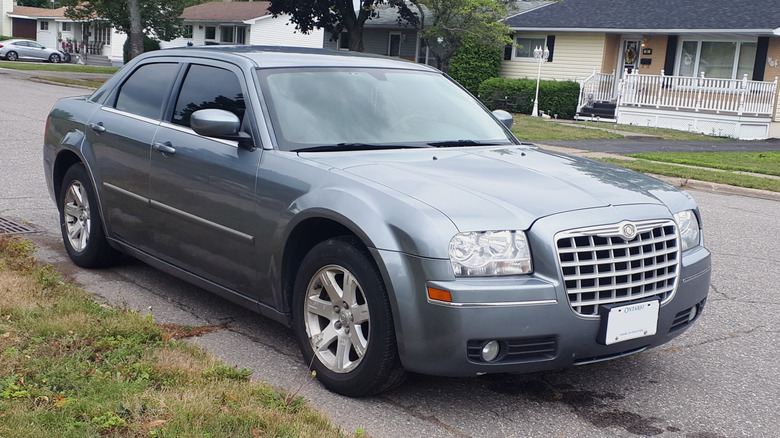
Few vehicles from the 2000s better encapsulate the decade's ethos of excess like the Chrysler 300. First introduced for the 2005 model year, this car instantly became a status symbol in the decade. The appeal of the 300 was pretty simple. This was a mid-tier priced full-size car, starting at $24,695 (about $43,535 adjusted for inflation), but it positioned itself as a luxury automobile.
With inspiration clearly taken from the likes of Bentley and Rolls Royce, this was a more consumer-friendly executive car that still had the big, boxy look that communicated wealth. The Chrysler 300 was particularly popular in the hip-hop community. It appeared in plenty of music videos in the mid-2000s, and it was even the grand finale reveal of G-Unit's episode of "MTV Cribs."
The centerpiece attraction was the front grille. With its bold checkerboard design, you could spot a Chrysler 300 coming from a mile away. Although the standard engine was a 2.7-liter V6, plenty of people opted to get the 300C trim, putting a massive 5.7-liter HEMI V8 with 340 hp and 390 lb-ft of torque. As one might expect, the car was horribly fuel inefficient, getting anywhere from 15 to 21 combined mpg.
Chrysler redesigned the 300 for the 2011 model year, notably getting rid of that standout chunky grille design, and despite the car continuing to be sold through 2023, it never quite had the same cultural standing as it did in the 2000s. Eventually, the desire for efficiency would lead Chrysler to pull the plug on the 300 after poor sales. For that brief period of time though, it was an American automotive icon.
Chrysler PT Cruiser
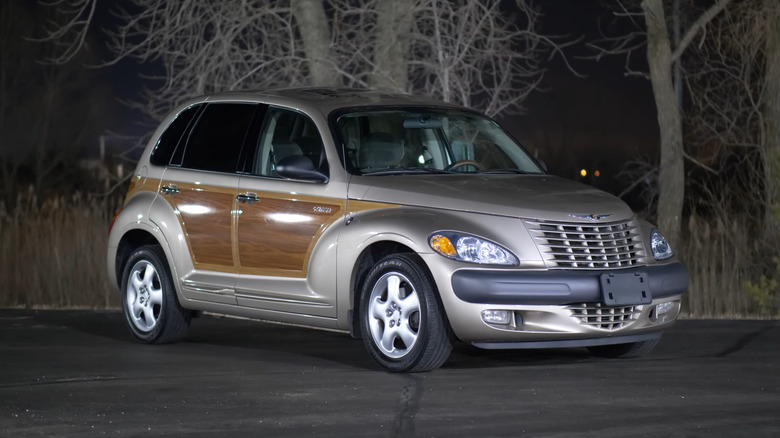
Chrysler was one of those companies that was trying to play both sides on the car design front. On one side, there's the perfectly on-trend Chrysler 300. On the other, there's the PT Cruiser, on the front lines of the retro styling trend that took hold in the 2000s. It took its inspirations from a variety of different sources. First, you have the influence of cars from the 1930s like the Chrysler Airflow, but you can also see hints of mid-1950s station wagons packed into the frame of a hatchback. Some consider it one of the ugliest cars of the 2000s, but it obviously has some aesthetic appeal for it to become such an immediately standout vehicle upon its introduction for the 2001 model year.
The Chrysler PT Cruiser was a modestly-priced vehicle. A 2001 model had a starting price of $18,415 (about $34,647 adjusted for inflation), and it sold really well. According to data from Good Car Bad Car, several years into its run, the PT Cruiser was still routinely selling over 130,000 units per year in the United States. One can never underestimate the appeal of a company presenting something that feels both nostalgic and fresh at the same time.
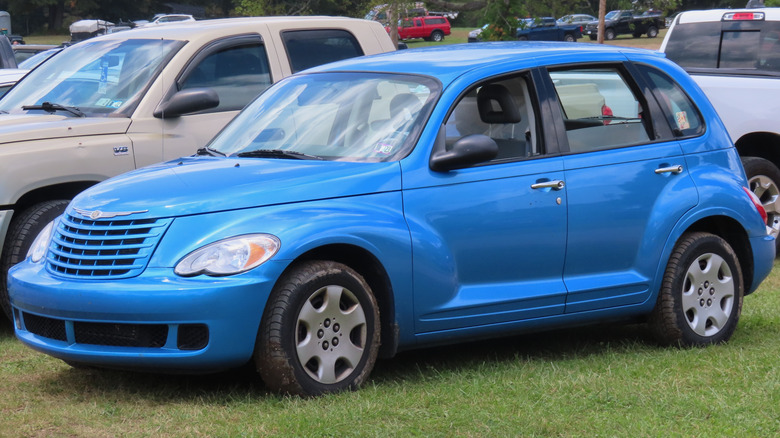
What the PT Cruiser did have in common with the Chrysler 300 was poor fuel economy, averaging 19 to 20 mpg. At a time where gas prices were dramatically rising due to wars in the Middle East and an economy that crashed, sales for the PT Cruiser plummeted during the Great Recession. In 2006, it sold about 100,000 units. In 2008 it was half that. In 2009, it was down to just 18,000 units sold. Chrysler discontinued the PT Cruiser after the 2010 model year.
Volkswagen New Beetle
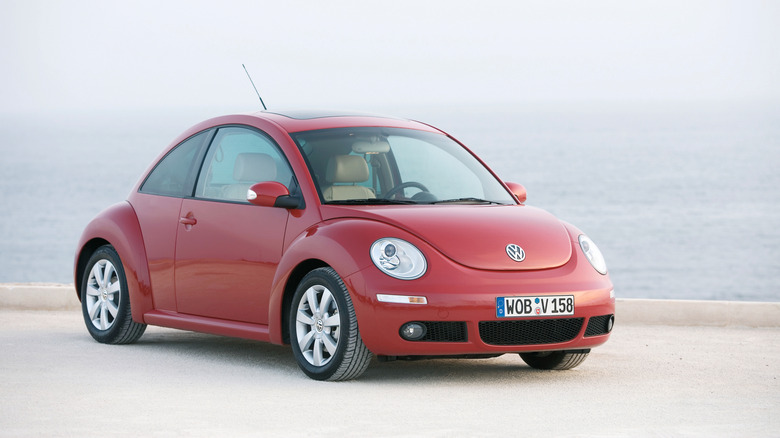
While the PT Cruiser was merely inspired by vehicles of the past, other companies just decided to revive historic nameplates from their own past, and Volkswagen did just that with the New Beetle. Obviously, this was an updated take on the automotive icon that first arrived in the late 1930s, but gained massive popularity in the United States in the 1960s. Volkswagen then created the New Beetle. It first hit the market for the 1998 model year, and by the turn of the millennium, you could not escape being on the same road as a New Beetle.
In an era where fuel economy was tanking, this little sprite of a car was going the opposite direction. A 2000 model could get you anywhere from 22 to 39 combined mpg. Sure, it wasn't very powerful, as the engines for it produced a range of only 90 to 150 hp, but if you were getting behind the wheel of a New Beetle, you weren't expecting a muscle car. The 2006 model year saw the release of a minor facelift, but its efficiencies were basically identical to the pre-facelift version.
The novelty of the Volkswagen New Beetle did eventually wear off though. Sales for the car dwindled as the decade went on. The mid-2000s saw it averaging around 35,000 units per year, and by the end, it was in the 14-16,000 units per year range. Volkswagen pulled the plug on the New Beetle after the 2010 model year and, in its place, introduced a revamp simply called the Beetle. The rebrand boosted sales slightly, but then they tapered off again.
Chevrolet Avalanche
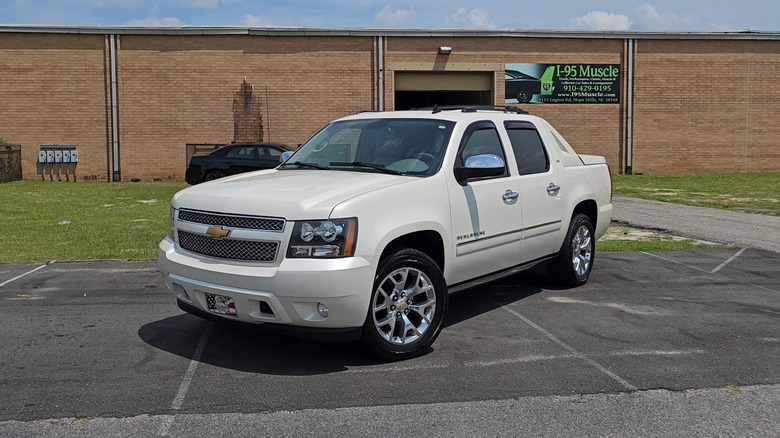
It's hard to deny that there's something striking about each of the three previously mentioned vehicles. Even the often maligned PT Cruiser has some charm about it. Sometimes though, the cars in the 2000s were just pure eyesores, and that's exactly what the Chevrolet Avalanche was. This pickup truck first hit the marketplace for the 2002 model year, and it's a perfect example of a car company in this time just wanting to make something big, in every sense of the word. Chevrolet took its popular, large Suburban SUV and turned it into a truck.
What makes the Avalanche such a memorably awful looking car comes down to two very specific design elements. The first is that Chevy opted to make this a unibody design. Most pickup trucks have the main cab and truck bed brought together as separate pieces, but here, the bed and cab are a single piece, making it look like an SUV had its back cut off. The other bewildering design choice is having these triangular plastic hunks running from the top of the vehicle to the lip of the truck bed. Not only do they just look bad, but they make trying to remove or places things in the back of the truck bed all the more difficult.
This thing wasn't cheap either. A 2002 Chevrolet Avalanche had a starting price of $33,965 (about $63,900 adjusted for inflation), and you could only expect to get about 13 combined mpg out of it. This was another victim of the Great Recession. 2005 saw over 63,000 units sold, and in 2009, that dropped to about 16,400. Amazingly, the Avalanche lasted through the 2013 model year, when it was well out of fashion.
Hummer H2
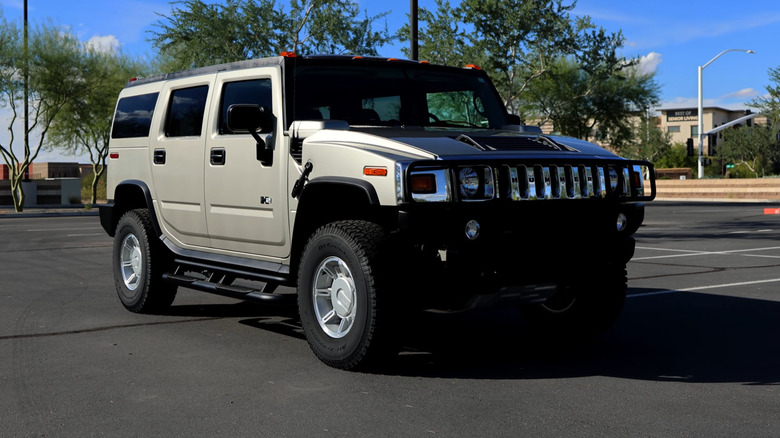
All of the vehicles on this list were all over the streets in the 2000s, but if only one vehicle was going to be spotlighted to represent everything that the 2000s were, it would be the Hummer H2. Launched for the 2003 model year, after the military-derived Hummer H1, the H2 was seemingly created to give people the feeling of driving around in a military tank on the streets in a post-9/11 America. The H2 was simultaneously a rugged off-road vehicle, a luxury status symbol, and both a fascinating and obnoxious looking vehicle you'd see driving down the street.
A 2003 H2 had a starting price of $48,800. Adjusted for inflation, you're looking at over $90,300. Even with those high prices, the H2 was a pretty immediate hit, selling nearly 53,400 units in its first 18 months on the market. Like the Chrysler 300, you would see this car everywhere in pop culture. From "Bad Boys II" to "The Sopranos" to a lot of rap music videos, this behemoth was everywhere. After all, it was a novelty. Some people loved it. Others loved to hate it.
Despite its rousing initial success, it flamed out almost as quickly. While the other cars on this list at least made it to the 2010 model year to enter the next decade, that wasn't the case with the Hummer H2. A vehicle this massive could only average 13 highway mpg and 10 city mpg. For something this expensive and inefficient, it was only natural that the Great Recession would clobber its sales. In 2008, it sold just under 6,000 units, and production ceased after the 2009 model year. If that doesn't tell the tale of 2000s automobiles, what does?