

What Is The Average Lifespan Of A Mini-Fridge?
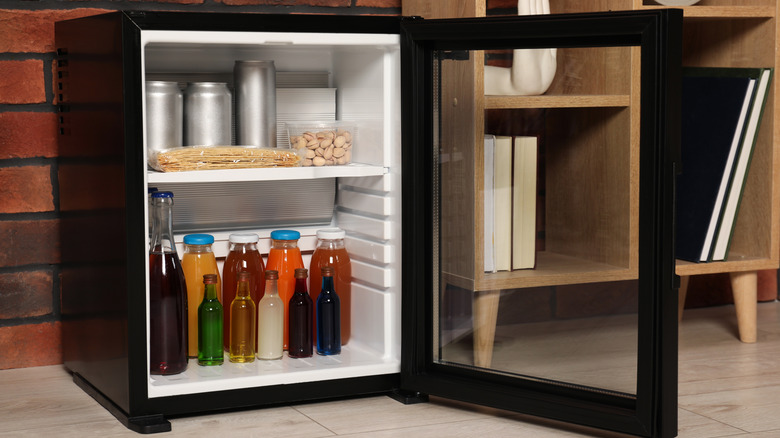
SlashGear has previously investigated the average lifespan of a refrigerator, and while there are various factors to consider, we found that they will last around 12 years on average. You may be able to get a similar lifespan from their tiny counterparts. According to appliance manufacturer Danby, you can expect to get between ten and 15 years of service from a mini fridge, and Cookology estimates from 5 up to 15 years too. That's a wide range, and this is partially because different models use different components and so performance can vary.
There are two more huge factors that can have a big impact on how long a given mini fridge will last: How well it's cared for and how it's used. You could potentially get a longer life out of a cheaper one that's carefully cleaned and maintained than a top-of-the-range model that isn't. Let's take a look at some tips for getting the longest life possible out of a mini fridge, as well as some usage habits (such as its placement) that could see you inadvertently doing just the opposite and harming its life. On a hot day, it's more important than ever to think about where you're storing it and how you're treating it while it's in operation.
How to help your mini fridge last longer
For appliance manufacturer Subcold, care begins with the very first power-on. By setting your system to a medium setting to begin with, you give yourself a baseline from which to carefully adjust, avoiding making your system work too hard to bring its content back up or down to a more optimal temperature. Though a mini fridge won't typically consume as much energy as its full-sized counterpart, it's still wasteful to expend energy like this and, in forcing the components to work harder, it means that they experience increased wear.
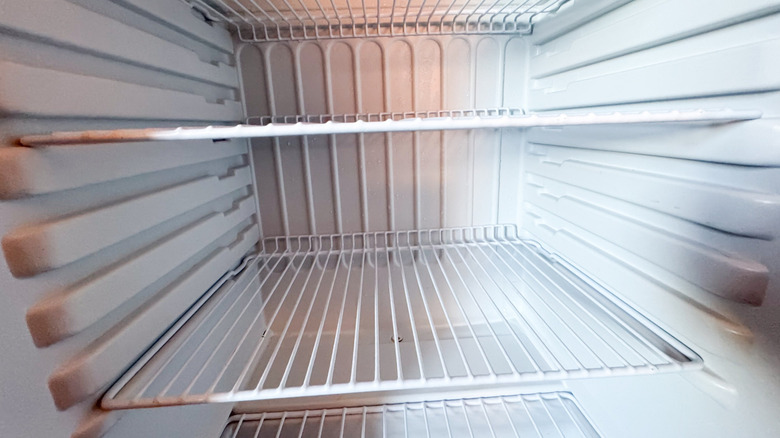
So many of our most-used gadgets are susceptible to dust and other build-up over time, and their essential workings can become strained and clogged if they aren't cleared. Fortunately, the manufacturer goes on, cleaning a mini fridge doesn't have to be a chore or require specialized equipment. A simple combination of baking soda and warm water and thoroughly wiping the interior will go a long way to cleaning away stubborn food waste and keeping everything running well.
Remember, too, that no refrigerator likes to be over-filled, as this will also make them work harder and reduce efficiency. Over time, this can result in degraded performance, potentially resulting in a replacement or a costly repair. Meanwhile, vents and other exposed components should be carefully cleared of any dust or other obstructions with an appropriate cleaning product, as having them open and clear is the key to efficient performance.
Exposure to the elements and other errors that can dramatically reduce a mini fridge's lifespan
With their lightweight designs, mini fridges are portable and versatile. This doesn't mean that you should just plug them in anywhere, though, because you could dramatically reduce your system's lifespan that way. A mini fridge is one useful appliance homeowners might not think to add to their garage, but if you do use one there, bear the conditions in mind.
Generally, a refrigerator will work best and most efficiently when it's maintaining a steady temperature, at the recommended level for its particular contents. Leaving the door open can compromise the food inside and waste a lot of energy because, once closed, it will need to work the compressor harder to get back down to the optimal temperature. Similarly, having a mini fridge in your hot shed can reduce its lifespan, because it's battling high ambient temperatures too. There are mini fridges designed for the outdoors that are more resilient to temperature changes (and with features like resistance to the elements), but you should still bear sustained heat in mind over longer periods.
Another critical thing, as with larger refrigerators, is to ensure that there's optimal space for air to circulate around it. The coils are key in drawing the heat out of the machine. Ample spaces in and around kitchen units are often reserved for full-sized refrigerators, and it's because they'll have to work even harder if there isn't space for that hot air to leave the machine's vicinity. Higher ambient temperatures result, similarly, in harder work for the internal components to keep the machine's contents cool. This not only makes them wear faster, but also increases the risk of damage, in some miniature models as well as full-sized ones.