

Five '70s Muscle Cars That Never Got The Attention They Deserved
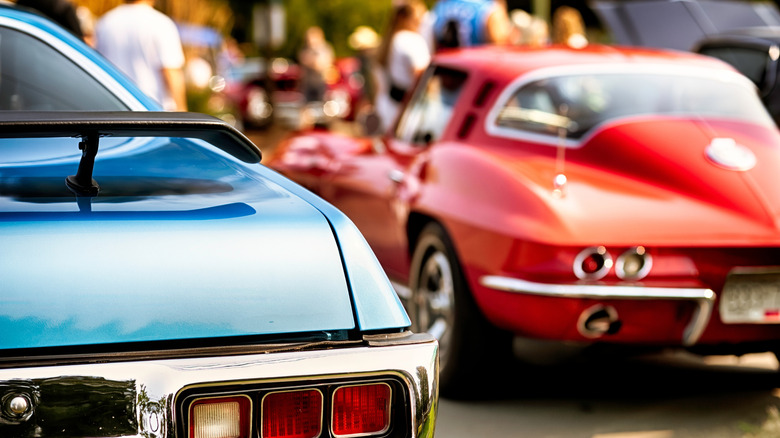
When you think of the muscle car, you probably aren't thinking about the 1970s. After all, the 1970s represented an era when the V8 muscle car was on life support. With the oil crisis and the introduction of CAFE standards, muscle cars, V8s, big power, and cheap fuel all became difficult to come by. At one point, it even seemed like the muscle car had had its day, and that the 1970s were writing the last chapters in the muscle car book.
Thankfully, that did not come to fruition. The V8 evolved. It got catalytic converters, new HEI ignition systems, and engineers who took more care designing cars to use less fuel. The V8 truck also helped keep the V8 alive, since trucks weren't subject to the same strict regulatory standards as smaller passenger cars. However, even in the 1970s — a time when being a muscle car was more difficult than ever — many cars stood out.
Everyone knows about the Chevrolet Chevelle SS 454, one of the highest horsepower 1970s muscle cars. Everyone also knows the Pontiac Firebird Trans Am. Most enthusiasts will also recognize the AMC Javelin. But the depth of underappreciated 1970s muscle cars goes a lot further than that. Here are five '70s muscle cars that never got the attention they deserved.
1970 Buick GS 455 Stage 1
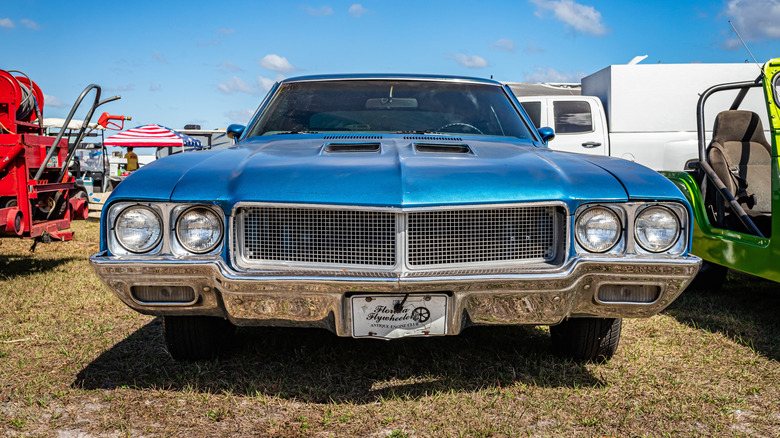
The 1970 Buick GS 455 Stage 1 was a missile when it first came out. In January 1970, a bone-stock example managed to cross the quarter mile mark running at 105.5 mph in just 13.38. The 426 Hemi Barracuda did it in 13.78. The Pontiac GTO did it in 13.40. Even so, the Buick GS never got the recognition it objectively deserved.
After all, Buick sold old man's country club cars, they didn't sell cars that outrun HEMIs and GTOs. Under the hood, the 455 features a dedicated cam profile, high compression pistons, overbored cylinders, an iron crankshaft, and forged connecting rods. The 455 Stage 1, featuring special ported heads with larger valves, got Buick's rating of "just" 360 horsepower and 510-lb-ft of torque. The character of the engine allowed it to pull hard at low and mid RPMs, not at the top.
The GS 455 Stage 1 is also overshadowed today by its much rarer and sought after sibling, the GSX – Buick's rarest 70s muscle car. The GSX was the top offering, the Grand Sport revolution was at the lower end, and the 455 was in the middle. Out on the collectors market, the GSX was always the one to get. Although the Stage 1 had the speed credentials, it never really caught on.
1970 Ford Ranchero GT 429
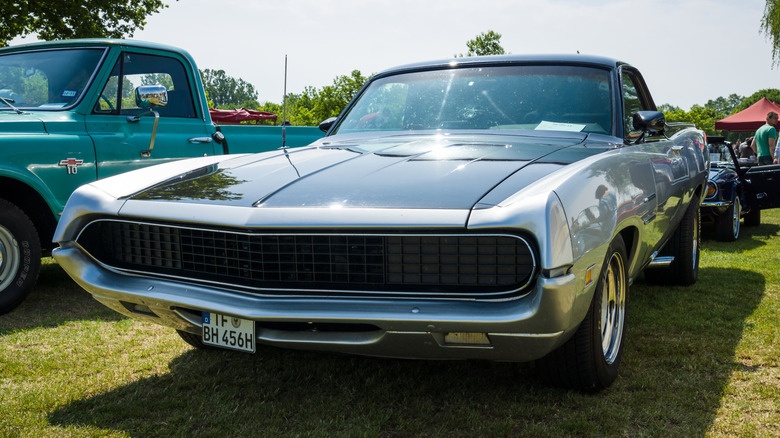
A muscle car's physical traits are fairly easy to sum up. In most cases, it is a two-door mid-size car that has a coupe-like silhouette. Muscle cars with weird pickup beds, although they did exist, aren't something that jumps to mind. The 1970/71 Ford Ranchero GT is one such car. Understandably, it didn't sell all that well, and according to AutoEvolution, only 8,000 of these were built, and just 5% of them left the factory with a 429 engine.
In its own right, the early 70s Ranchero was a beast, especially since performance figures from this era were often underrated due to insurance reasons. What is even more impressive is that, according to MotorTrend, the manual 429 GT Ranchero's production number was only 78. This makes the Ranchero GT 429 manual six times rarer than the 1969 Dodge Charger Daytona, and yet, the current estimated value of the GT 429 is between $35,000 and $75,000.
First of all, the Chevy El Camino overshadowed it, and so did the Ford Torino Cobra with which it shared its underpinnings. With 375 horsepower and 450 lb-ft of torque, the Ranchero GT 429 was more powerful than the 1970 Pontiac GTO. The best part, it did so with a truck bed included. Hardly anyone expected a pickup-based Ford to run with the quickest muscle cars of 1971, but the 429 GT did.
1970 Mercury Cougar Eliminator
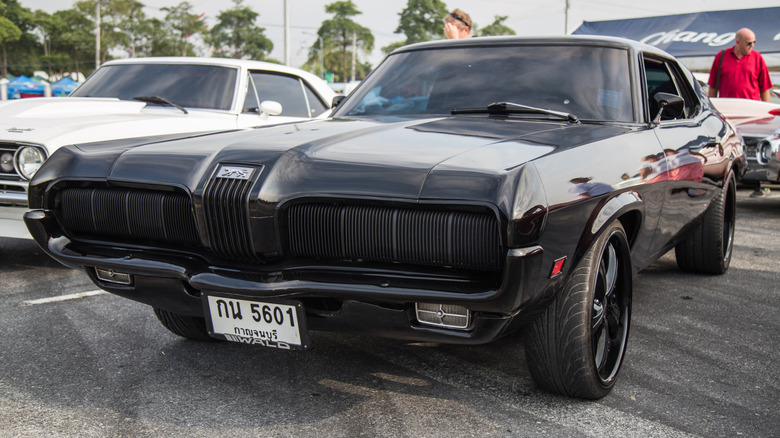
The 1970 Mercury Cougar Eliminator is not a car that managed to earn a large cult following, not when it came out, and not after. Still, the Eliminator — as it is very strongly named — is one of those cars where the more you know about it, the more confusing its obscurity becomes. The Eliminator was designed by none other than the same guy who designed the Boss 302 Mustang — Larry Shinoda. When you consider that, you kinda start seeing the connection between the two.
First, you could get the 302 Boss engine with the Eliminator, and these two were constantly compared against each other. Yet, the Eliminator has nowhere near the same level of clout the 302 has. With only 2,267 examples built, the 1970 Eliminator is also rare. Of those, only 444 left the factory with the 428 Cobra Jet — Ford's most serious big-block of the era. The 428 Cobra Jet was officially rated at 335 horsepower.
Still, as was the case with many muscle cars from this era, this figure was grossly underrated, with real output believed to be closer to 400 horsepower. The Eliminator came with competition suspension, dual exhaust, and front and rear spoilers straight from the factory. What it didn't come with was a Mustang badge — and in 1970, that mattered a lot. Because of that, the Cougar Eliminator is widely regarded as the most underappreciated Mercury muscle car.
1970 Plymouth Duster 340
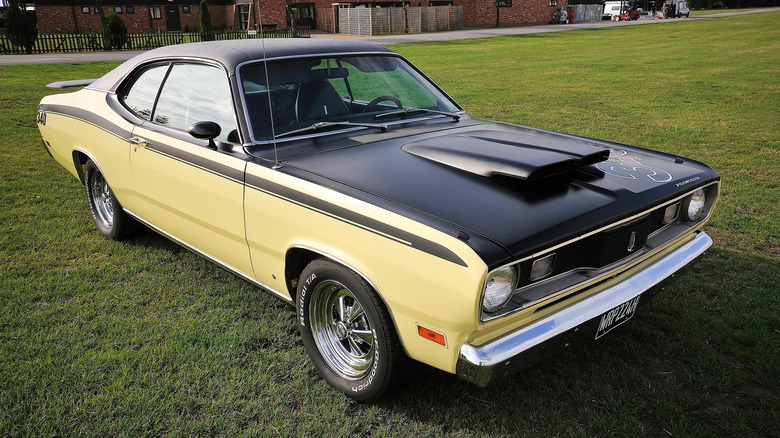
The very point of a muscle car was to give the average American access to V8 performance at a relatively affordable price. The very outset of the 1970 Plymouth Duster 340 was exactly that — make it cheap, make it V8. As such, the original purchase price of the Duster 340 was $2,547, even with front brakes. Under the hood, the 340 offered a 340-cubic inch V8 with a power output of 275 horsepower and 340 lb-ft of torque.
It also differentiated itself from other Duster models thanks to bigger springs, sporty rally wheels, and bigger sway bars. Hagerty called it: "Mopar's underappreciated mini muscle car" because it was grossly overshadowed by the bigger Mopars like the 'Cuda and the Road Runner. The Duster 340 was the smallest powerhouse of the '70s, yet it was somehow forgotten. Moreover, the Duster 340 ran the quarter mile in 14.5 seconds at 99 mph in standard trim.
This was enough to outrun many more expensive muscle cars from that era. It was also lighter, roomier, and faster than the 340 'Cuda, which cost considerably more money. Granted, the prices have started to rise, and it seems like the Duster 340 is getting its due, but for what it was, it didn't get the attention it deserved.
AMC Rebel Machine
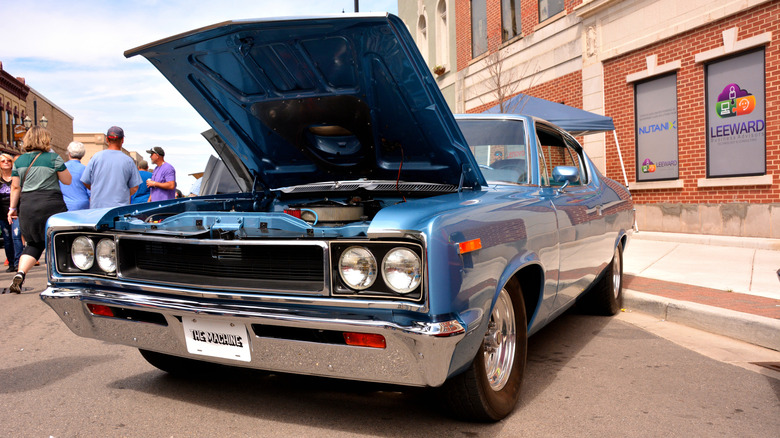
When writing articles such as these, it is very easy to drown in opinions and pick cars that someone else said were underrated simply because they believe they are better than they are. However, in some instances, some cars, like the 1970 AMC Rebel Machine, were objectively underappreciated. AutoEvolution called it "arguably the most underrated muscle car of all time," because it was priced at $3,500 from the factory, yet only 2,000 of them were ever built.
Moreover, there really is no clearer sign that it didn't get the attention it deserved than the fact that it was available for one year only. The Rebel Machine debuted at the NHRA World Championship Drag Race Finals in Dallas on October 25, 1969, and it ran mid 14s from the factory. Its engine was the AMC 390 — one of the most iconic engines from the golden era of muscle cars — and it was not just any AMC 390.
This one was developed alongside Hurst Performance Research and featured redesigned cylinder heads, a high-flow intake, and larger exhaust manifolds, producing 340 horsepower and 430 lb-ft of torque. Still, none of that was enough. AMC was always the underdog, and in 1970, even a car that could run mid-14s out of the factory couldn't change that.