

What's The Average Lifespan Of A Motorcycle Chain?
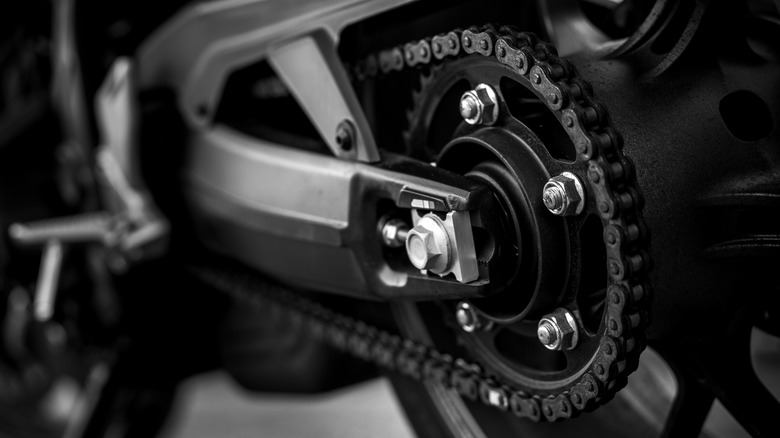
Keeping your motorcycle chain and sprocket in good condition is one of the most important maintenance tasks that comes with owning a motorcycle. These are essential components that the bike needs to function, so making sure that they're in working order is a big part of it, but a damaged chain can be a safety concern as well. A worn or poorly adjusted chain can crack and snap when you least expect it. This can damage your vehicle, injure your legs, and make the rear wheel lock up, which can even lead to a crash. You need to make sure your motorcycle chain is properly cleaned and lubricated so it functions as intended and lasts as long as possible. That said, even the most well-maintained chains don't last forever.
The average lifespan of a properly maintained motorcycle chain generally ranges from 15,000 to 30,000 miles. That's a pretty big margin of error, so some riders might rightfully be wondering what causes some chains to last twice as long as others. The truth is that even when a chain is lubricated and kept free of rust, there are a number of different factors that can contribute to its degradation, including the kind of chain you use, the kind of bike that you have, the environment where you ride, the way that you ride, and other factors like alignment and tension. Understanding these and keeping an eye out for their effects can help you keep your bike in good working order and ride safely.
Chains and bikes
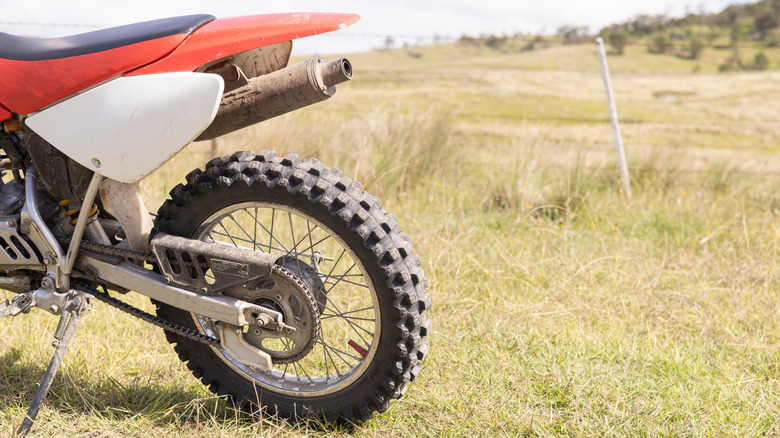
Believe it or not, there are actually two different kinds of motorcycle chains out there. Unsealed or standard roller chains are cheap and most commonly used on vintage bikes, small-engine economy bikes, and some off-road bikes. These are essentially the same as bicycle chains, with all their components exposed to the elements. Sealed chains, on the other hand, have rubber seals between the side plates and the internal links. This keeps the grease in and protects the internal moving parts from exposure to outside air, dirt, and moisture. Unsurprisingly, this means that they last significantly longer on average. You can get these in O-ring, X-ring, or Z-ring formations, with X-ring and Z-ring chains promising the longest life as they're designed to reduce drag.
Another consideration is the kind of motorcycle that you ride. Aside from environmental damage, the main thing that wears down your motorcycle chain is the stress placed on it. A lightweight economy bike that's maybe a little slower off the starting line is going to inflict significantly less torque on a chain than a 1,000cc sportbike. Hard acceleration and heavy weight place greater strain on the chain, causing both the chain and the sprocket to wear significantly faster. There isn't much you can do to prevent this if you have a heavy, high-torque bike, but it's something to be aware of.
You'll also want to check to ensure that the chain is properly set. A slight misalignment can cause the rear sprocket teeth and chain to wear on each other as the bike moves. Be sure to check both alignment and tension, and adjust them as needed to ensure they're working together properly, especially if you're concerned that these components are wearing out faster than they should.
Climate and riding style

It isn't just the physical materials that affect your chain's lifespan, but also where and how it's used. We've already looked at the way torque and tension can affect the way a chain wears, so it's probably not too much of a surprise to learn that riders who put more pressure on the throttle will wear their chains faster. Smooth shifting and progressive acceleration habits can prolong the life of a motorcycle chain. Riding this way allows the chain to gradually and evenly accept pressure rather than being suddenly jolted. Meanwhile, rapid accelerations, wheelies, and off-road riding can shorten the chain's longevity.
The other side of this is the environment where you ride. It's no secret that automobiles near the coast and in areas where the roads are salted tend to corrode more quickly. This is because salt and moisture are two of the biggest factors that cause metal oxidation. Other factors, like road grit and heavy rainfall, can also cause the chain to wear out faster. In these instances, regular cleaning and lubrication are even more important.
Of course, you can take every precaution and still wear down your chain eventually. It's worth regularly inspecting your chain and sprocket for signs of wear and cracking, so you can replace them before they become a hazard. You should lube your motorcycle chain regularly anyway, so it's a good idea to take the opportunity to examine the condition and tension whenever you do.