

Is The Google Pixel 9a Still A Good Buy In 2026?
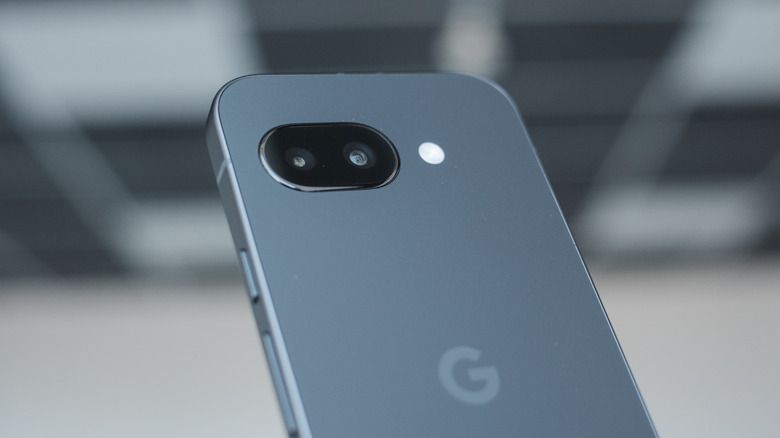
Google's Pixel series is pretty infamous for performance and battery endurance — the in-house Tensor chips simply aren't as powerful or as efficient as Qualcomm's or Apple's silicon. Yet, the Pixel enjoys a very loyal user base owing to its clean Android experience, solid camera performance, and day-one software updates. The Pixel 10 Pro series, starting at $1,000, is currently the best that the company has to offer, but there are more affordable ways to get into Google's ecosystem.
The Pixel 10a we reviewed is an affordable $500 smartphone that gets you most of the experience. You get decent performance, two solid cameras, and the same seven-year software update commitment as the expensive models. However, if you're looking for an even cheaper way to enjoy the Pixel experience, last year's Pixel 9a remains a solid purchase if you can find it at a discounted price. In fact, there are practically no meaningful differences between the 9a and 10a that would justify spending the extra money.
Both phones are powered by the same Tensor G4 chip, have an identical dual-camera setup, a 5,100 mAh battery, and the same storage and RAM configuration. On paper, the only things you'd be missing out on are a slightly brighter display, faster charging, and one fewer year of Android updates. If there's not a big price difference between the two, the Pixel 10a is the way to go. The 9a is essentially the same device, just cheaper.
Why the Pixel 9a still holds up
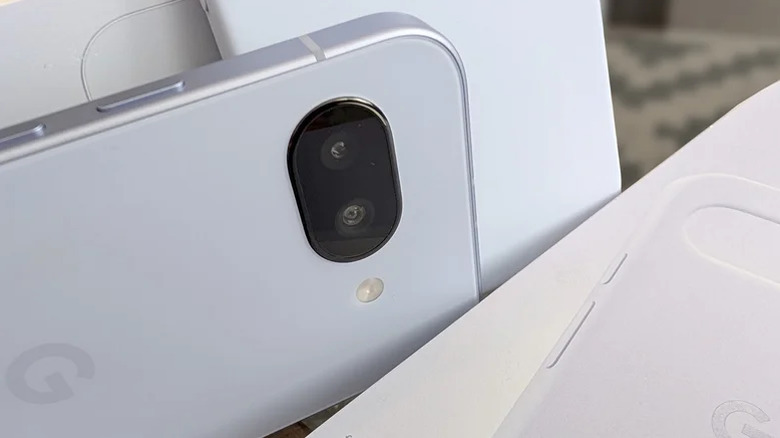
Unlike in other markets, the budget smartphone segment in the U.S. doesn't really have fierce competition. Samsung has a few options, but the Pixel has them beat in camera quality. Similarly, the $600 iPhone 17e asks you to make do with a single camera and a 60Hz display in 2026. Despite being a year older, the Pixel 9a ensures you receive day-one software updates and is expected to be supported until the year 2032. You are much more likely to run into performance or battery life issues before Google officially drops support for the Pixel 9a.
The Tensor G4 is noticeably slower than comparable Snapdragon chipsets or the Apple A19 chip powering the iPhone 17e, but it manages to run a pure Android experience at consistent frame rates. While we wouldn't recommend the Tensor-powered Pixel 10 Pro for $1,000 if you're primarily looking for raw performance, in a budget-oriented smartphone, the Pixel 9a manages to outpace other $400 or $500 smartphones.
Moreover, in our review of the Pixel 9a, we reported excellent battery life, with the phone sometimes lasting up to two days on a single charge — which makes sense given that it has a larger battery than the Pixel 10 Pro. The 48-megapixel primary camera also captures great shots — paired with Google's computational photography, the Pixel 9a is likely to be the best camera experience on a sub-$500 smartphone you can get.