

E15 Gas Vs Fuel Economy: How Many MPG You Could Be Losing
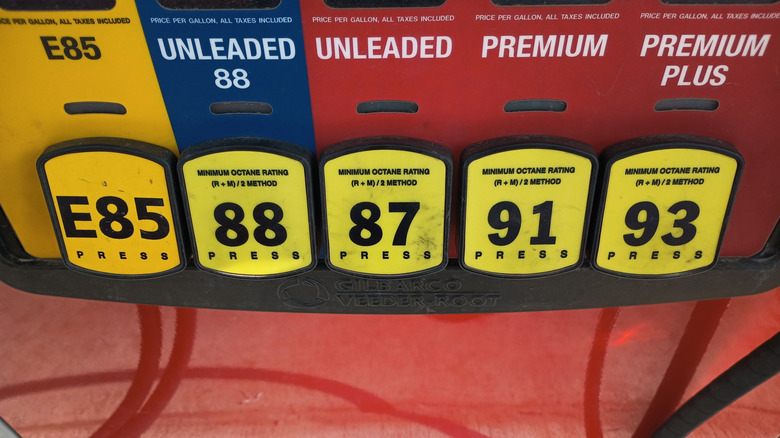
The next time you're cruising effortlessly along the highway, it's worth reflecting on where all the energy enabling your journey comes from. Of course, the answer is gasoline. However, farmers in the United States also add something to the recipe with ethanol, an alcohol that is mostly distilled from corn, although other biomass feedstocks can be used. Most drivers are familiar with E10 fuels (the 10 refers to 10% ethanol), which was first marketed in 1979, although ethanol's use far predates this. In fact, Henry Ford engineered the Model T to run on ethanol, gasoline, or a combination of both as far back as 1908.
More recently, in 2011, the Environmental Protection Agency approved the use of E15 fuel (or Unleaded 88). This contains up to 15% ethanol and can be used in most light-duty vehicles manufactured from 2001 onward. The ethanol is present for several reasons. We look at these in more detail later, but briefly, ethanol is cheaper than gasoline, so its addition softens the blow of rising fuel prices. It also has a higher octane rating than gasoline, is a cleaner fuel, and reduces America's reliance on fossil fuels.
Ethanol does have a downside, in that it's less energy-dense than gasoline — meaning lower MPG figures. Energy density is measured in British Thermal Units (BTUs). According to the Department of Energy, pure gasoline contains around 114,000 BTU per gallon, while pure ethanol weighs in about a third less, at 76,330 BTU. This means that E15 is less energy-dense than E10. But what does this mean in MPG terms? Let's put our arithmetic caps on and see.
How does E15 fuel affect your MPG?
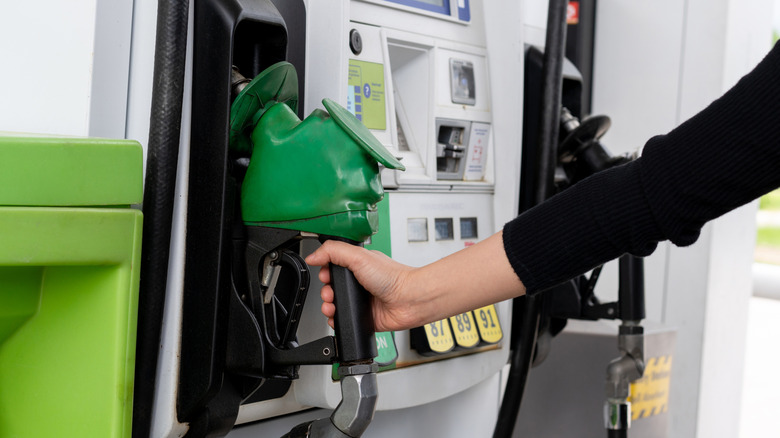
To begin, we need to set a baseline by calculating the energy content of E10 fuel. There are fundamental differences between 88 octane and standard gasoline. But basically, E10 is made up of 90% gasoline with the remaining 10% being the ethanol component. From this, we can work out the energy content of E10 by adding together the BTU of the gasoline content (90% of 114,000 = 102,600) and that of the ethanol (10% of 76,330 = 7,633) for a total of 110,233 BTU per gallon of E10 gasoline.
Now, if we change the gasoline and ethanol percentages to 85% and 15%, respectively, and plug these into the same equation, we get an energy content figure for E15 of 108,350 BTU per gallon. Comparing these figures, we establish that E15 fuel is about 1.7% less energy-dense than the E10 formula. We can then take this percentage and apply it to the MPG of a vehicle. Let's assume that the car in question rattles along while burning through E10 fuel at the rate of about 30 MPG. If you filled the same car with E15, you'd expect the MPG to fall to about 98.3% of the E10 figure. In other words, the MPG you could be losing is about 0.5 MPG. Keep in mind that real-world results can vary, but the energy-content math is a useful estimate.
Of course, how this affects your car depends on the starting MPG figure. However, the same percentage rule can be applied to any MPG figure to work out the mileage lost. It's also worth noting that these figures disregard the impact of any other fuel additives, such as ethanol denaturants, which could affect the calculation.
Why do we need ethanol in fuel anyway?
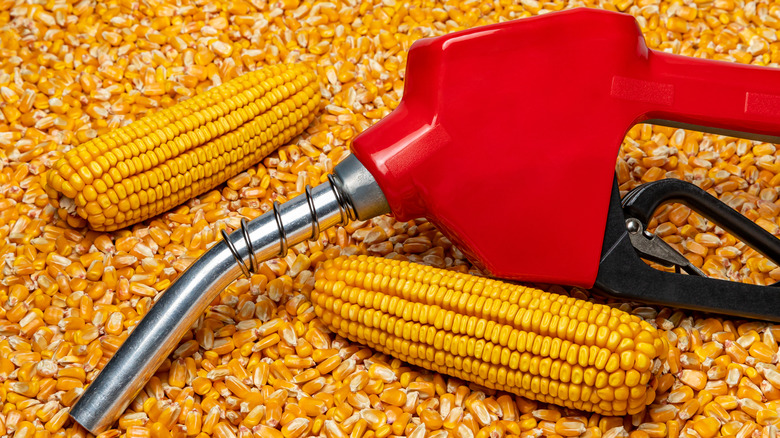
At least in MPG terms, the switch to E15 probably isn't going to be a dealbreaker for most people, especially since E15 gas is cheaper. However, it's still worth exploring just why we put ethanol in gasoline. This is even more relevant when we consider that the MPG loss we calculated was comparing E15 to E10 fuels, with E10 already reducing fuel economy by about 3% compared with pure gasoline, according to the Energy Information Administration.
One of the biggest reasons that ethanol is mixed with gasoline is that it increases the fuel's octane rating. Higher-octane fuels are more resistant to engine knock — a condition that previously needed the lead additives in fuel to combat. In fact, this is why E15 is often marketed as Unleaded 88, with the number referring to the octane rating rather than the ethanol content. Strategically, the use of ethanol is also an important part of American energy policy. Because most U.S. ethanol is produced from U.S.-grown corn, it can help reduce the country's reliance on imported petroleum products. This also has the fortunate side-effect of supporting the nation's farming sector.
However, while most modern vehicles will happily accept a fill of E15 without a hiccup, it's worth noting that this temporary solution for high fuel prices doesn't suit all engine types. Motorcycles, boats, lawn equipment, and many small engines are typically not designed for higher ethanol blends. There is also the chance that excessive ethanol use could be bad for some car engines, although this risk is minimal with fuels like E10 and E15.