

87 Vs 88 Octane: What's The Difference Between These Two Fuel Grades?
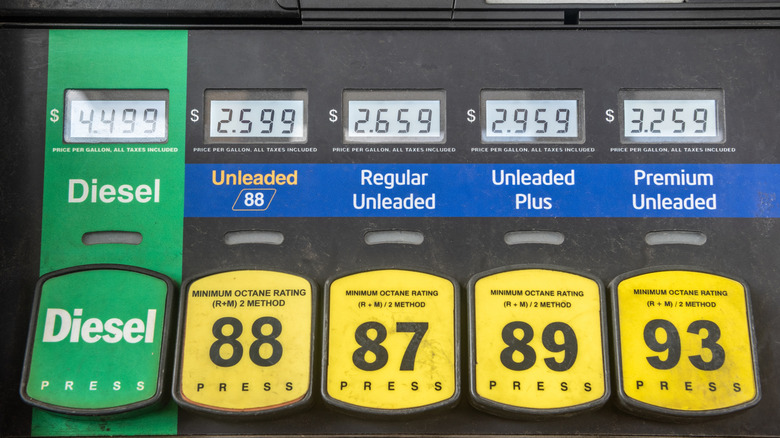
There's a new type of gasoline at gas stations nationwide. It is called "Unleaded 88." While it is OK to use in many vehicles, it is not suitable for all. While Unleaded 88 is rated at one octane point higher than regular gas and ranges from five cents to 15 cents cheaper on a per-gallon basis, there are other differences you should know about before you decide whether or not to use it.
Let's start with the major difference between Unleaded 88 and Unleaded 87. Unleaded 88, also called E15, contains 15% ethanol and 85% gasoline, whereas the Unleaded 87 you are familiar with is a blend of 10% ethanol and 90% gasoline. This difference in the proportions of ethanol and gas has some implications for your specific vehicle. As a general rule, most vehicles produced since 2001 should be able to use Unleaded 88, but you should definitely check your owner's manual for the manufacturer's specific recommendations on whether ethanol is really bad for your car's engine. If the manual says it's OK, then you should be good to go.
But before you decide to save a few pennies and fill up with Unleaded 88, there's another thing you should know — that increase in ethanol content may result in a reduction in your MPGs. It's simply because gasoline is more energy-dense than ethanol, so the lower gasoline content can result in lower fuel economy.
What else should you know about Unleaded 88 or E15 gas?
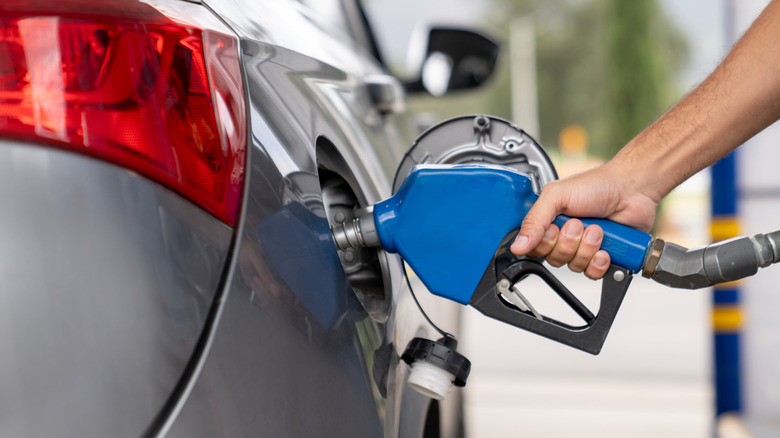
The EPA's definition of E15 is gasoline blended with between 10.5% and 15% ethanol. Aside from pre-2001 and other specific passenger vehicles that aren't suitable for Unleaded 88, there are other things that should never be fueled with Unleaded 88 or E15. In fact, these vehicles and items are prohibited from using Unleaded 88/E15, according to the Alternative Fuels Data Center of the U.S. Department of Energy. These include your lawn mowers, boats, motorcycles, snowmobiles, chain saws, heavy-duty delivery trucks, and school buses. The right fuel for these is either standard unleaded 87 with 10% ethanol or even ethanol-free fuel if you can get it.
The reason pre-2001 vehicles should not use Unleaded 88 or E15 gas is that their fuel systems are not designed to handle the higher alcohol content of these fuels. Some issues related to the use of higher-ethanol-content fuel in vehicles not designed for it include clogged fuel filters, fuel tank corrosion, swelling or cracking of plastic fuel system parts, difficult starting, and failed fuel hoses. If your car was not designed for Unleaded 88 or E15, it's just not worth the risk.
As you think about whether to fill your tank with Unleaded 88 the next time you need gas, consider the tradeoffs. Stay far away if your car was made before 2001. For 2001 and later models, if it's OK to use, you can pay less and get lower fuel economy, or spend a little more and go farther on a tank.