

Makita Table Saws Were Discontinued In The US, But You Can Still Buy Them Here
We may receive a commission on purchases made from links.
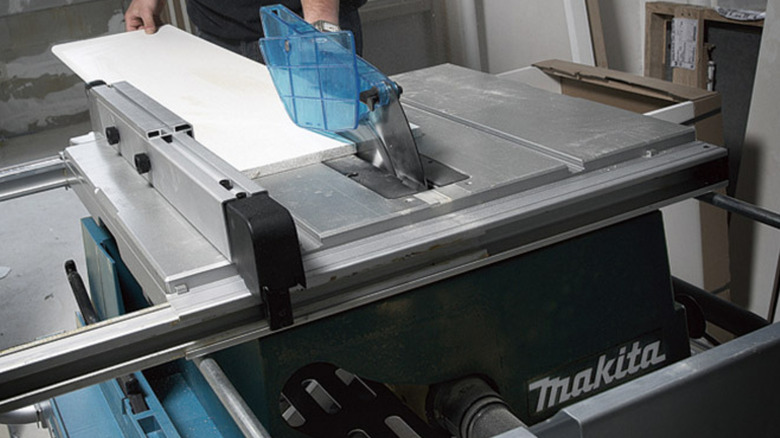
Makita is one of the go-to brands for both pros and DIYers alike, and much of that is due to the manufacturer's reliable selection. From simple hand tools and accessories to heavy-duty equipment and more, there's a lot you'll want to know about Makita tools before you consider buying one. But what happens when the company discontinues a specific tool, like the Makita table saw, in the United States? If you're searching for one, you do have options, but they're very limited.
Beyond Tools, an online Australian retailer, has two models of the Makita table saw: a 254/260-millimeter model for $637 and the 255-millimeter model for $878. However, its inventory is low, and shipping is not free. Both new and used Makita saws are also listed on eBay, where you'll pay anywhere from $329 to $1,500 or more, depending on what you buy. Italian-based Mister Worker has the Makita 1650W 260-millimeter table saw for $1,862.20, and shipping varies by location. In fact, depending on where you are, you could pay more than $1,000 for shipping alone.
The problem is that neither Lowe's nor Home Depot typically carries Makita table saws either in-store or online. The same is true for Ace Hardware as well. While you could get lucky and randomly find one from a U.S. retailer online, nearly all of the top tool retailers are either out of stock or don't regularly carry Makita table saws. Even Amazon and Walmart are hit-or-miss, and in both cases, you could be buying from a third-party seller and not directly from Makita.
How table saws compare with alternative options
Makita, as a company, has not specifically addressed why it discontinued table saws in the U.S. Though there is some speculation about the company's motives, none of it has been confirmed by Makita. The manufacturer does continue to offer a selection of corded and cordless models, including cordless circular saws, miter saws, and reciprocating saws. This may suggest that Makita's focus shifted to other options, rather than continuing to focus on the table saw category.
The issue is that a table saw, by design, is much different from these other saws, and as a result, it's better for performing specific tasks. A table saw is built as a stationary cutting system, which means the blade stays in one place while the user guides the wood across it. This allows for highly consistent, repeatable rip cuts and precise straight edges. Additionally, unlike circular saws and reciprocating saws that rely on hand control, table saws use a stabilized fence system. This makes a difference in woodworking specifically, where accuracy and repetition matter.
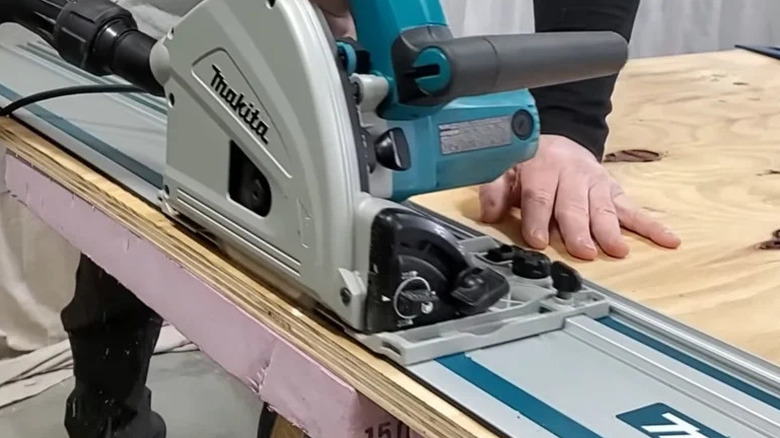
The Makita Corded Plunge Saw track system could potentially be seen as a viable alternative to the table saw. This is especially true when working with large sheet materials. Using this Makita saw system involves running the circular saw along a guided rail, which allows users to make long, straight cuts. But you're still moving the tool in this system instead of the wood, which makes it a different process overall.