

This Diesel Sensor Is No Longer Mandatory In 2026

In a surprising move, the Environmental Protection Agency says manufacturers can now remove traditional diesel exhaust fluid (DEF) sensors from trucks, tractors, buses, and other diesel equipment. Per the latest guidance, manufacturers can now replace these traditional urea quality sensors with nitrogen oxide (NOx) sensors instead. If it sounds a little random, the EPA says the change is much-needed. In the agency's words, it effectively solves a problem that's led to years of complaints from truckers and farmers. According to the government, these faulty sensors have cost Americans "billions of dollars" in shutdowns and slowdowns on jobs and highway routes.
DEF systems first became standard back in 2010. And with this new move toward NOx sensors, the EPA says it'll still be able to monitor emissions compliance without all the widespread failures that have apparently troubled diesel drivers for the last 16 years. By the Trump administration's estimates, the shift to NOx sensors could save Americans nearly $13.8 billion a year, including a projected $4.4 billion in savings for farmers.
Potential downsides of looser emissions requirements
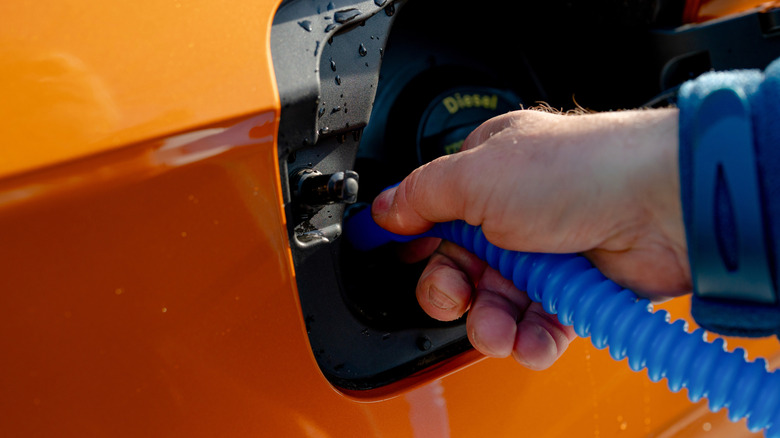
For context, the EPA already loosened the reins on some of its harshest penalties for DEF faults back in August 2025. At the time, it decided to simply extend warning periods before mandatory speed restrictions had to kick in. But this latest action goes a whole lot further than that. Now, manufacturers can remove the Urea Quality Sensors entirely without getting hit with illegal tampering charges under the Clean Air Act.
And to be clear: The EPA will continue to monitor pollutants, just without the hardware it has been using since 2010. Still, the decision does raise some questions. Specifically, what sort of impact will loosening emissions requirements have on both enforcement and the environment? It's not just the EPA, either: the Department of Justice is also getting less strict about diesel. There's definitely an argument to be made about choosing to remove components instead of forcing manufacturers to fix the faulty ones, as well. Why choose to deregulate instead of doubling down on the importance of the federal standards? For now, the real test will be whether or not these changes actually cut back on costly failures without sacrificing diesel emissions standards.