

Experts Say This Is The Ideal Temperature To Set Your AC To This Summer
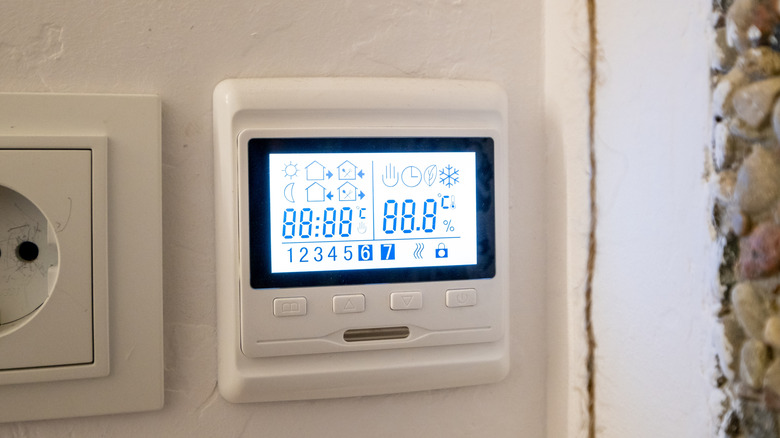
Ask ten different people what their AC should be set to in summer, and you'll probably get ten different answers, half of them delivered with the conviction of a sworn oath. People obviously always have their own preferences, but turns out there's actually a definitive answer to the "right" temperature, as recommended by experts. That answer is also much higher than most people would guess.
The number is actually 78°F (25.5°C). It's oddly specific, but it's also agreed upon by multiple organizations at the same time, the most notable of which is the US Department of Energy, which sets the federal guidance on residential energy use. It's echoed by Energy Star, a joint program run by the DOE and the Environmental Protection Agency. Then there are the utility companies that actually bill you for the electricity — like New York's Rochester Gas and Electric and National Grid – that also land on the same number. It's valid for standard residential and commercial split-system air conditioners, including modern variable-speed inverter systems. Fair to say, when the people who set the standards, the people who certify the appliances, and the people who collect your payment all agree, the figure is worth taking seriously.
The idea behind 78°F is pretty straightforward. The point is to keep electricity bills as low as possible without compromising comfort. According to RG&E, every degree you push the thermostat above 75 trims about 3% of your cooling costs. You may hear slightly different figures depending on how efficient your unit is and how well your home retains heat. But the point is that small savings add up over time.
Small measures now, big savings later
The DoE notes that if you bump things up by 7 to 10 degrees for roughly eight hours a day, you can shave off as much as 10% off your annual heating and cooling spend. A common schedule looks like 78°F at home, 82°F while sleeping, and 85°F at work or away. It may sound a bit much, especially if the weather's especially hot, but learning how to set your thermostat to save money this summer really is one of the easiest wins on your energy bill.
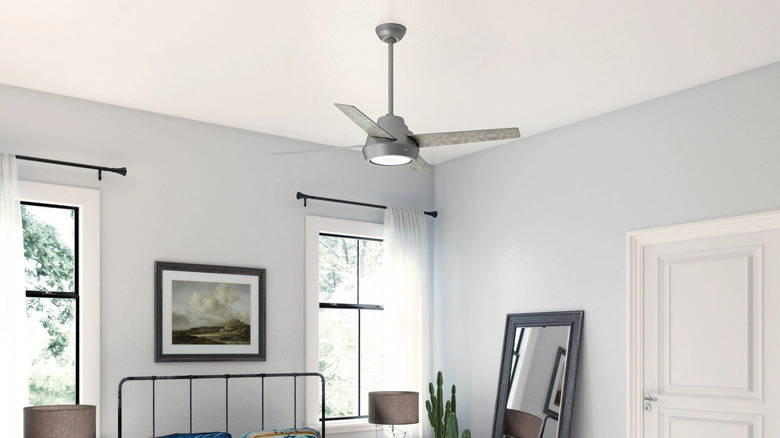
Setting the right temperature is just the start, though. Paired with a few other hacks, you can increase your savings even more. The easiest of the bunch is letting a ceiling fan handle some of the cooling duties. You can bump the thermostat up by another 2 degrees and let a fan compensate for that — fans typically use 10 to 20 times less energy than an AC, so any extra draw from one barely registers on your bill. Energy Star says that doing so can knock your cooling costs down by up to 14%. Just remember to flip the fan off when you leave the room. Fans don't lower the air temperature; they just move air across your skin to make you feel cooler, so an empty room gets nothing out of it.
Keeping the heat out
As important as it is to keep the cool in, it's just as important to keep the heat out. And that's exactly why window coverings are important. Simply drawing your blinds or curtains during peak sunlight blocks a chunk of heat. In fact, according to DoE, tightly fitted cellular shades can cut solar heat by up to 60%. But even standard curtains lined with white plastic backing reduce heat gain by 33% in the summer. You should easily notice the impact of this simple adjustment on your bills.
A few quick maintenance habits help, too. Vacuum the air intake vents now and then to clear dust, keep furniture from blocking your airflow registers, and check for air leaks around windows, doors, baseboards, and outlets.
One easy trick people often miss: avoid placing lamps or heat-generating electronics next to the thermostat. It senses the heat coming off them and assumes the whole room is warmer than it actually is, so the AC ends up running longer than necessary. If you're tired of manually tweaking the schedule, it might be worth looking at how much money smart thermostats can actually save over a full cooling season.