

Traveling Long Distance In A Lexus ES Is About To Get A Lot Easier
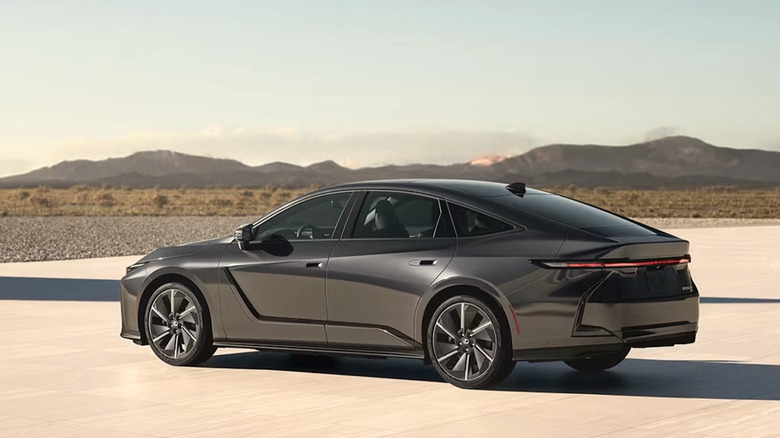
Since its founding in the late-1980s, Lexus has sought to become the torch-bearer for affordable luxury automobiles. While the brand — which is owned by Toyota — hasn't entirely managed to topple the biggest names in that elite automotive sector, Lexus has very much become a top choice for drivers looking to get behind the wheel of something high-end without breaking the bank.
Like its competitors, Lexus has spent the past decade-plus building out its lineup of electric vehicles. But while EVs like its intriguing ES model have proven worthy of cruising about town and even on shorter journeys out of the city, they've been known to sometimes struggle a bit on longer road trips. They are, of course, limited a bit in their capacity due to the fully-electric build, which ensures the ES will only go as far as its battery will last between charges. And that means when you're on the road, you are pretty much at the mercy of the nearest EV charging station.
That fact has made planning your journey particularly important for ES drivers, and prior to the release of the 2026 model, some have felt Lexus was falling short when it came to the vehicle's native route planning capabilities. That's about to change via a little help from Toyota's Arene operating system. Paired with a shiny new infotainment platform, the addition is intended in part to help ES drivers plot a course farther from home than ever before.
What to know about Lexus ES's navigational upgrades
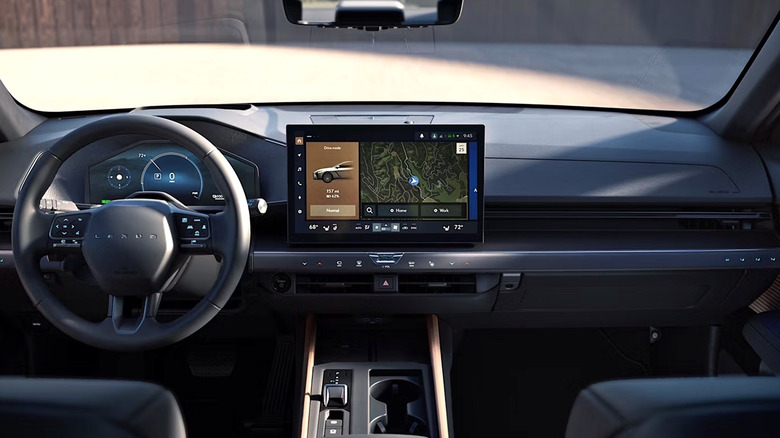
If you aren't already in the know about Toyota's Arene software, the announcement that it's coming to Lexus's ES EVs may not mean much to you. It should, however, as the Arene system has proven a massive upgrade for Toyota's EV fleet, and the ES is the first Lexus to receive the upgrade. The question then becomes what makes the Arene operating system such a big time road tripping upgrade?
Toyota debuted the system in the RAV4, touting Arene as a sort of unified digital brain stem for its cars that notably shifts them away from hardware dependency towards in-house OTA upgradable software. As for how that software will enable Lexus ES drivers to make the most of their time carving a path through the asphalt wilderness, the addition of native route planning is the biggest part of that equation.
Native route planning essentially gives drivers the chance to plot navigational courses directly through the vehicle's software, cutting out the need for third-party apps or connected mobile devices. It's particularly helpful in EVs, as it allows the navigation to communicate directly with the vehicle and adjust battery life parameters based on internal and external readings. That information also allows the navigational feature to adjust routing directly based on known EV charging stations, making it easier than ever to drive from one charge to another without fear of battery failure. That's the sort of peace of mind any EV driver should desire.