

4 Cars With Better Resale Value Than The Subaru Crosstrek
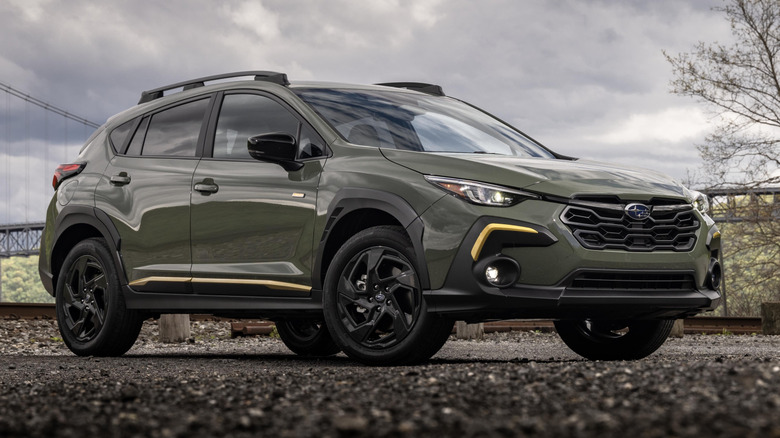
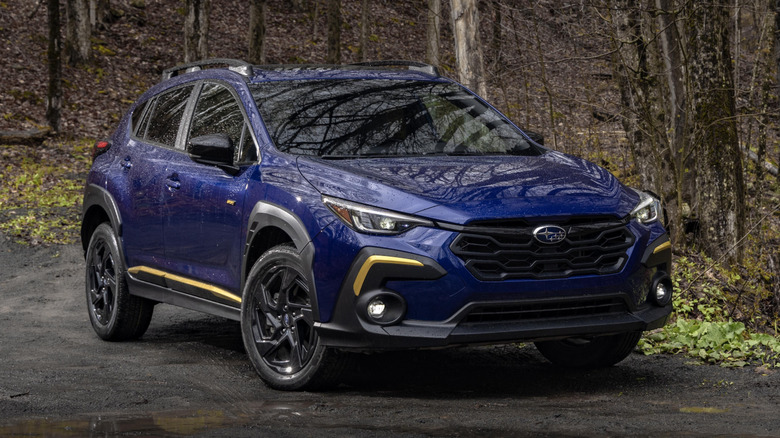
There's very little to dislike when it comes to the Subaru Crosstrek. The Japanese automaker introduced the crossover SUV in the early 2010s, and it has since become arguably the company's most popular vehicle in the United States. The Crosstrek consistently earns high reliability scores from Consumer Reports and J.D. Power, and the latter ranks it as the best overall small SUV for the 2026 model year. On the resale market, the Subaru Crosstrek does decently well, too.
After five years of ownership, CarEdge states that a Crosstrek will retain 66.3% of its initial value, while iSeeCars is slightly more bullish, with an average 70.9% retention over the same period. After seven years, Car Edge's average retention drops to 61.3%, outpacing many models that had higher five-year retention than it. These are solid numbers, but in the overall landscape of car resale values, they are well below the top of the list.
Here, we're going to look at four different vehicle models estimated to have higher resale values than the Subaru Crosstrek, using CarEdge, iSeeCars, and more for our best metrics on vehicle depreciation. This list will cover a variety of models. Some of them will be quite similar to the Crosstrek, while others — such as sedans and light trucks — will also be used to show that vehicles of varying sizes can maintain their value over time.
1. Honda CR-V
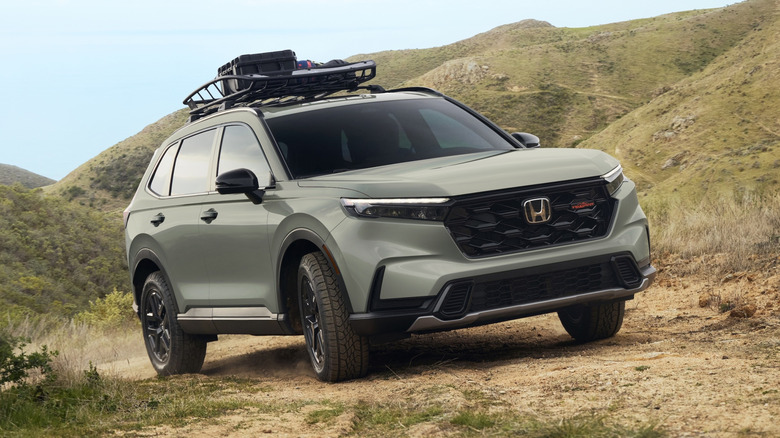
The compact crossover SUV is probably the most popular vehicle type in the United States today, and there are plenty that you can compare the Subaru Crosstrek to when it comes to value retention. In this group, the Crosstrek performs extremely well, but on average, it falls behind several models. One of them comes from a fellow Japanese automaker: the Honda CR-V, which has been produced since the mid-1990s.
CarEdge estimates that the CR-V retains 71% of its initial value after five years of use, placing it 17 spots higher than the Crosstrek in its overall depreciation ranking. iSeeCars has the two much closer together with the CR-V's five-year retention average at 71.1%, just one spot higher on that publication's list.
It should be noted that the Honda CR-V is generally a more expensive vehicle than the Subaru Crosstrek. A new 2026 CR-V has a starting price of $30,920 (plus a $1,450 destination and handling fee), whereas a 2026 Crosstrek starts at $26,995 (plus a $1,420 destination and delivery fee). Based on just the MSRP and using CarEdge's averages, this CR-V after five years would be worth $21,953, and the Crosstrek would be worth $17,898.
Since it's 2026, let's look at the current value of the 2021 models to see that five-year window. Kelley Blue Book estimates the average price of a 2021 Honda CR-V at $19,650 and a 2021 Subaru Crosstrek at $17,250. A new Honda CR-V may cost you more upfront if you are looking for a new compact crossover SUV, but you'll most likely get more for it down the road than a Subaru Crosstrek.
2. Honda Civic
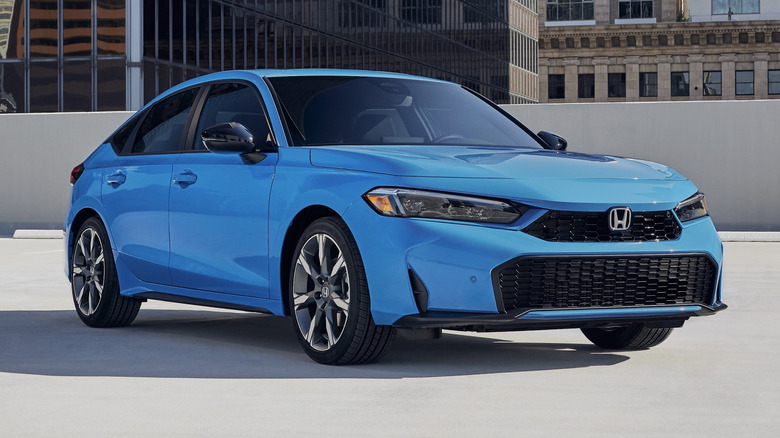
The Honda Civic is another vehicle by the same company that competes quite well with the Subaru Crosstrek's value retention. There's a lot to consider before buying a Civic, but worrying about its resale value isn't one of them. After five years, both CarEdge and iSeeCars estimate that, on average, it's the sedan with the lowest depreciation rate.
Just like with the CR-V after five years, the Honda Civic should retain 71% of its initial value, according to CarEdge. Over at iSeeCars, that percentage jumps to 77.1% after five years. If you want to extend the timeframe to seven years, CarEdge still has the Civic holding 67.1% of its value, besting the Crosstrek's five-year percentage.
The Honda Civic has a starting price below the Subaru's at $24,695 (plus a $1,195 destination and handling fee). Using these starting MSRP and CarEdge's five-year retention rates, a Civic will sell for $17,533 in five years. That's just $365 less than what you'd get for a Crosstrek, and if you use iSeeCars' averages for reference, a Civic will get you $19,040, while a Crosstrek would be worth $19,139. While the Civic retains a higher percentage of its value, its lower starting price means the Crosstrek will still technically fetch more total dollars down the line..
Kelley Blue Book's average sale prices for 2021 models aren't quite as favorable to the Civic as these percentages suggest. A 2021 Honda Civic goes for $15,500 on average in 2026. That's $1,750 less than a 2021 Subaru Crosstrek. These numbers are based on identical depreciation rates, deviating from other sources' averages.
3. Toyota 4Runner
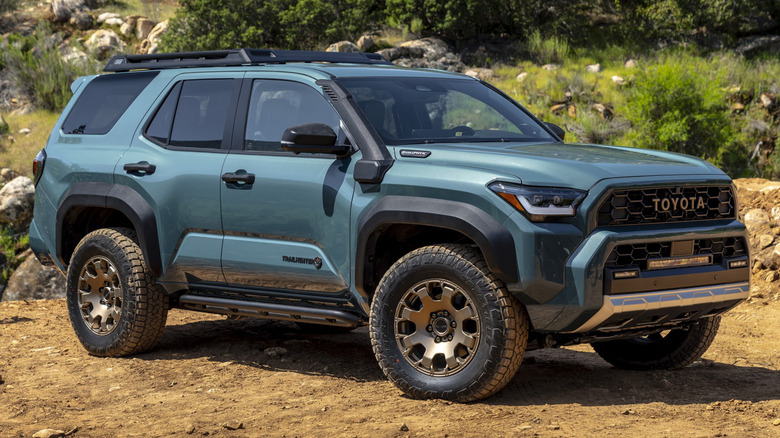
Generally, the larger a vehicle is, the less reliable it becomes over time. More weight on a vehicle inherently causes more strain on its operations. However, some larger vehicles are extremely reliable, and because of that, they can be quite a commodity on the resale market. One of the most reliable SUVs ever is the Toyota 4Runner, which has a near-perfect reliability score from Consumer Reports. This mid-size SUV is a good deal larger and more expensive than the Subaru Crosstrek, but its ability to hold its value is quite impressive.
iSeeCars estimates that a 4Runner should have a retention rate of 74.5% over a five-year period. That same amount of time yields a 74.9% average from CarEdge, while its seven-year value retention rate still averages out to an impressive 68.8%. You'll be hard-pressed to find mid-size SUVs with better averages than these.
You also see some impressive numbers with Kelley Blue Book. It estimates that a 2021 Toyota 4Runner has an average resale value of $28,900. That's more than the starting price of a brand-new 2026 Subaru Crosstrek from the dealership. This SUV's original starting price was $39,815, meaning KBB has a 2021 retaining about 72.6% of its original value.
A new 2026 Toyota 4Runner has a starting price of $42,070 (plus a $1,595 delivery, processing, and handling fee). Based on CarEdge's five-year average, that SUV should still be worth about $31,510 based on the MSRP. If KBB is more accurate, that number drops slightly to $30,543. Either way, few people would be unhappy with getting these prices for their used vehicle.
4. Toyota Tacoma
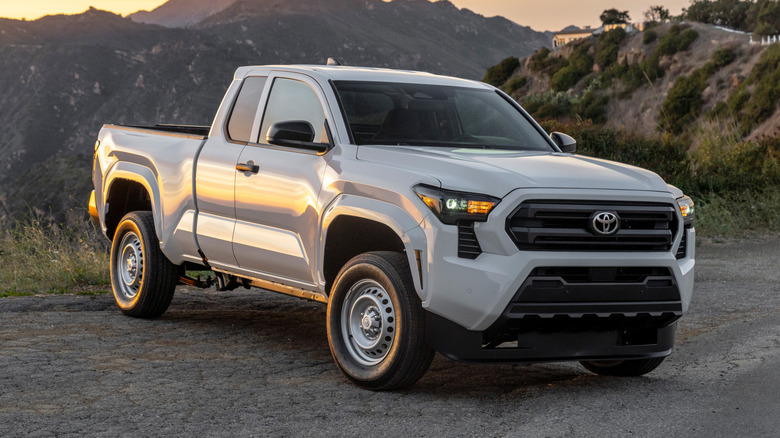
For the final vehicle on the list, we stay with Toyota, looking at one of its signature pickup trucks. While the Tundra could've made this list as well, the Toyota Tacoma outpaces it. Both CarEdge and iSeeCars rank it among the four vehicles with the lowest depreciation rates, regardless of vehicle category. Strengthening its case even more, CarEdge ranks Toyota as the overall brand with the highest average value retention rate, beating out Subaru in second place.
After five years, iSeeCars states that a Tacoma will lose just 19.9% of its initial value. CarEdge isn't too far off from this number, estimating its five-year average depreciation to be 21.6%. If you wait seven years to resell, you're looking at an average 27.7% depreciation rate, according to CarEdge.
The starting price of a new 2026 Toyota Tacoma is $32,445 (plus a $1,745 delivery, processing, and handling fee). In five years, that means your Tacoma would be worth about $25,988, based on iSeeCars' average depreciation rate from the truck's original MSRP. That's about $1,000 less than the price of a new 2026 Subaru Crosstrek.
Kelley Blue Book isn't quite as high as CarEdge and iSeeCars on the Toyota Tacoma's resale value, but it still suggests you'll get a lot of value for your truck. A used 2021 Tacoma has an average resale price of $19,900. A used Cab model had a starting price of $22,100, while a used Double Cab started at $30,700.
How we listed these cars
In order to be represented on this list, a vehicle needed to meet several different criteria. First, they needed to have better value retention rate averages from multiple different sources than the Subaru Crosstrek. These were primarily Car Edge, I See Cars, and Kelley Blue Book. If a model bested the Crosstrek on one but not the others, it wasn't considered. Some form of consensus was a necessity.
Secondly, a variety of different vehicle types needed to be represented. While having a list of compact crossover SUVs similar to the Crosstrek could've made this list, this method wasn't used for two different reasons. Generally, the models with the highest resale value in this category all had similar rates to the Crosstrek that it felt like splitting hairs. The other reason is that it was important to show that there's no uniformity to resale value. Vehicles bigger and smaller than a Crosstrek have the ability to be better suited to the used market.
Lastly, luxury and electric vehicles weren't taken into consideration. These vehicle types on the used market are quite different than mass-market gas or hybrid models that it felt wrong to compare and contrast the two. These vehicles can be prohibitively more expensive than a Subaru Crosstrek, so there isn't a tremendous amount of overlap in their target demographics. For example, comparing a Porsche 911 Carrera, which I See Cars has well above the Crosstrek, with a starting price of nearly $138,000 against an SUV that only costs nearly $27,000 makes little practical sense. Once all of these criteria were established, these four models were selected.