

Intel Is Reportedly Boosting Its Profits By Selling 'Scrap'-Quality CPUs

Intel has reported its first-quarter 2026 earnings, showing that the chipmaker earned $13.6 billion in revenue, a 7% increase year-over-year. Intel also notes that this is the sixth consecutive quarter where it has seen revenue above the company's expectations. As is normal for these earnings reports, there's a lot of corporate speak and business jargon to sift through. But the key takeaway is that Intel has been gradually repositioning itself to take advantage of the AI boom and the insatiable demand for silicon the world over — and it's paying off.
However, beneath the surface, Intel's earnings are reportedly being propped up by an unexpected windfall in profits from salvaging chips that would otherwise not meet the rigorous quality standards required to be sold as high-end SKUs. Both Intel and AMD are facing intense demand stemming from datacenter and AI hyperscalers for CPU orders, and that says nothing of the global RAM shortage that has also been brought about by voracious AI demand. Intel, for its part, seems intent on making the most of its production capacity.
Intel is salvaging more edge-die chips to satisfy customers
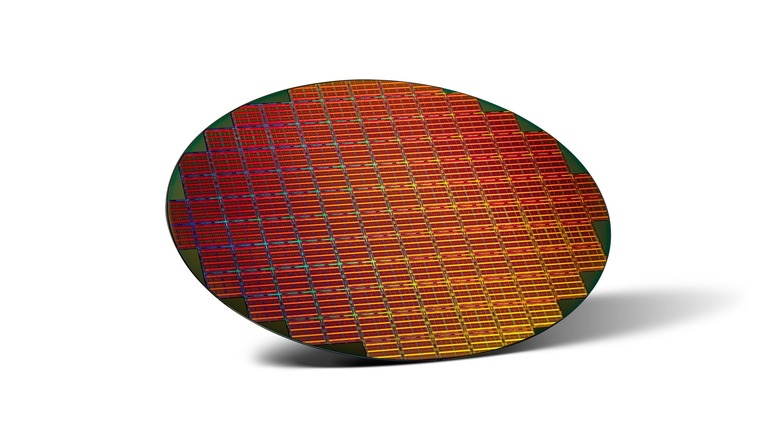
Without getting into the weeds of silicon engineering or explaining what a CPU is, they are fabricated using silicon wafer substrates. Each circular wafer is then cut into pieces, called dies. Semiconductor manufacturing is an imperfect science that inherently produces some amount of waste; this waste is around the outer perimeter of the wafer, also known as edge-die. Edge-die silicon is either discarded or packaged as lower-spec CPUs. In consumer terms, this could mean a chip that doesn't meet the quality standards to be an Intel Core Ultra X9 can be turned into a Core Ultra 5.
What Intel is doing in an attempt to meet demand is taking a greater amount of scrap edge-die chips, turning them into low-end parts, and selling them. I reached out to Intel for comment on what form these SKUs were taking. However, Intel declined to comment on specifics regarding its customers and instead referred me to this quote from Intel CFO David Zinsner during an April 23rd earnings call.
"We were able to do in the first quarter was go through finished goods inventory and find opportunities to sell product we didn't think we would be able to move. It was either de-spec'd product or it was legacy product we had shelved, and then worked with customers and found opportunities for them to leverage that technology in their system."
CPU demand is still outpacing supply and customers aren't picky

Industry analyst Ben Bajarin did get some additional context from speaking with Intel's Investor Relations. In a post on X, Bajarin mentions that Intel's margins were padded by better yield salvage per wafer and by binning the chips down into a usable product. Bajarin's post also suggests that Intel's customers are currently not picky about what CPUs they can get, instead opting to take whatever is available – this goes a long way in putting the CPU supply shortage into perspective.
Got some clarity from Intel IR on additional lift to margins.
Intel got an unexpected margin lift from better yield salvage. Chips that would normally have been lower-value edge-die on the wafer were binned down and still sold into usable SKUs, turning what may have been scrap...
— Ben Bajarin (@BenBajarin) April 24, 2026
As for the immediate future, reports suggest that the CPU crunch could be a more acute supply issue compared to the ongoing memory shortage. Intel does seem confident that its supply will improve in the second quarter, and continue to improve quarter-over quarter. Intel is also in the enviable position of not only having partners such as TSMC, but also having its own manufacturing capabilities through its foundries – an advantage AMD does not have. This gives Intel a certain amount of flexibility in responding to demand, as it can use its own production capacity to prioritize certain products. We'll see how next quarter looks, and if you find yourself in need of a CPU in the meantime, maybe consider an older budget model.