

4 V-Twin Motorcycle Engines More Powerful Than The Harley-Davidson Milwaukee-Eight
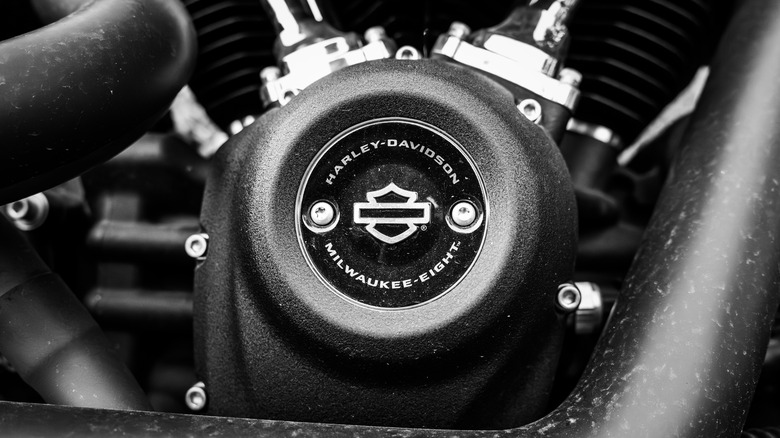
Harley-Davidson has a long history of powering its motorcycles with "Big Twin" engines. So much so that the company's Milwaukee-Eight engine represented the ninth generation of these iconic powerplants. With this engine, Harley-Davidson aimed for a more modern design with four valves per cylinder — hence the "Eight" in the title.
It also brought improved thermal management and a better overall refinement to the table. And, not incidentally, it just happens to produce what must be regarded as one of the most iconic "rumbles" in motorcycling. Depending on the version, the Milwaukee-Eight produces a stout 114 horsepower and has a torque rating of 128 lb-ft.
Now, the latter figure is important because it shows this is not an engine that chases horsepower. Rather, it's one that likes a bit of grunt at the low end of the power spectrum. This means that just defining what V-Twin engines are more powerful than Harley's doesn't tell the whole story.
But that doesn't mean it's not a fun exercise!
Other manufacturers have taken a different approach, designing V-Twins that scream with sheer power rather than grunt with torque. Let's take a look at some of the V-Twins that beat Harley-Davidson's Milwaukee-Eight — at least in terms of power, that is.
Ducati Superquadro 1285
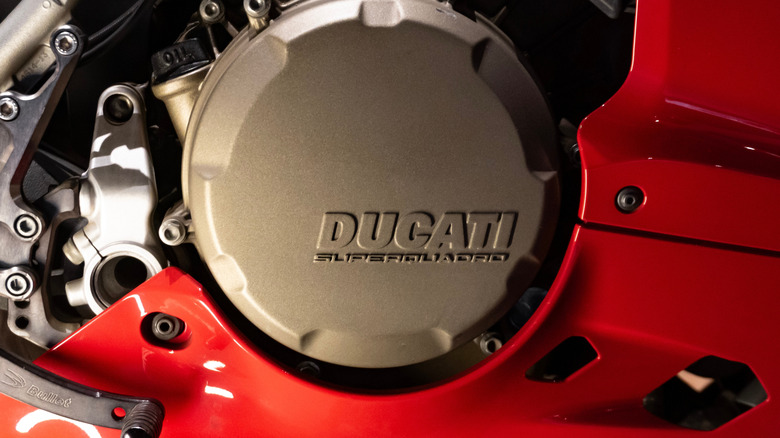
There is a quote on the Ducati website that says of the Superquadro engine: "Designed for the track, developed for the road." On the face of it, this could be taken as just another slogan composed by those clever marketing people. But actually, it tells us a lot about how the ethos of the two brands differs and how this translates into the engines that power their motorcycles.
This quote reflects the company's heritage, and the Superquadro 1285, with its focus on performance, is a rich part of this pedigree. In its most extreme form, this high-revving V-twin produces over 200 horsepower — a figure that comfortably eclipses even the most powerful versions of the Milwaukee-Eight.
Those who know Ducati won't be surprised to hear that the beating heart of this engine is Ducati's signature desmodromic valvetrain. While many of this complex system's advantages have been negated by engine and material innovations, Ducati still manufactures a handful of motorcycles that use desmodromic valvetrains.
Ultimately, comparing this engine to the Milwaukee-Eight is not about saying the most powerful engine is the better one. These are two engines designed for different niches; it's like comparing an F1 car to a grand tourer.
KTM LC8 1301
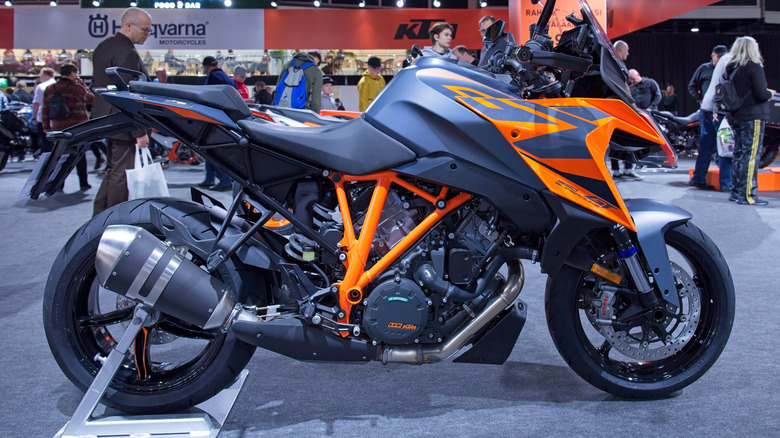
If the Ducati Superquadro represents a racing thoroughbred adapted for the road, then the KTM LC8 1301 shows what happens when the same pursuit of power is applied with a more street-focused mindset. Found in machines like the 1290 Super Duke, this V-Twin delivers a level of power that comfortably exceeds the Milwaukee-Eight, but doesn't quite boast the thoroughbred-like horsepower of the Superquadro.
Like the Ducati, the LC is a liquid-cooled high-revving design that produces a respectable 180 horsepower, substantially higher than Harley's engine. However, in terms of performance, this engine is something of a halfway house — it doesn't have the racetrack-like aspirations of the Ducati, but it isn't quite the torquey monster that the Milwaukee-Eight is.
While the Milwaukee-Eight is designed to deliver its strength low down, the LC8 encourages riders to explore the higher rev range, but without the outright aggression of the Ducati motor. It's this versatility that has seen KTM claim the engine is unique in the market for its ability to seamlessly equip the brand's flagship Naked, Sport Tourer, and Travel models.
Indian PowerPlus 108
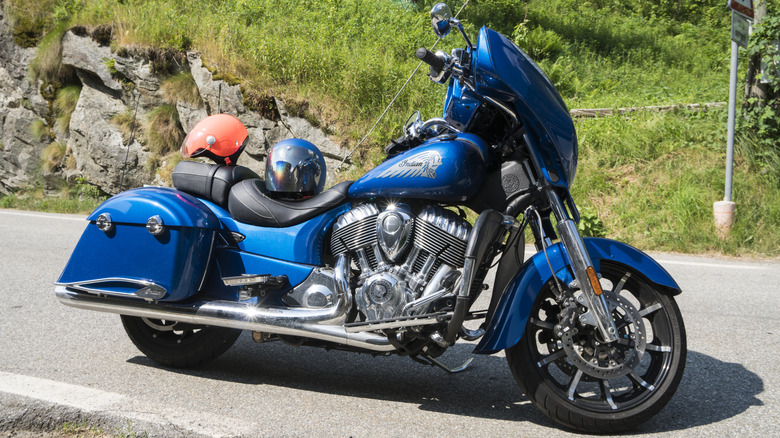
Moving back closer to the Harley design ethos, next on our list is the Indian PowerPlus 108. At least in terms of the bikes they're developed for, this engine offers a more direct comparison with the Milwaukee-Eight.
Developed for models like the Challenger and Chieftain, the PowerPlus is a liquid-cooled V-twin that outperforms the Milwaukee-Eight, at least in peak horsepower. However, it does so without compromising on the torque delivery you'd expect from an engine designed for a touring class of motorcycle.
The Indian PowerPlus 108 delivers 122 horsepower, down from the previous two engines but still more than the 114 horsepower delivered by high-output variants like Milwaukee-Eight 117. However, as close as this figure is, even this slight disparity is missing, with both engines delivering an identical 128 lb-ft. While on paper it looks like there's very little to separate the engines, we should mention that this comparison compares a standard Indian PowerPlus against a high-output Milwaukee-Eight. A more typical rating for the Milwaukee is about 105 horsepower and a torque rating of around 125 lb-ft.
Finally, it's also worth noting that the newer Indian PowerPlus 112 engine delivers more horsepower and torque.
Harley-Davidson Revolution Max 1,250cc V-twin
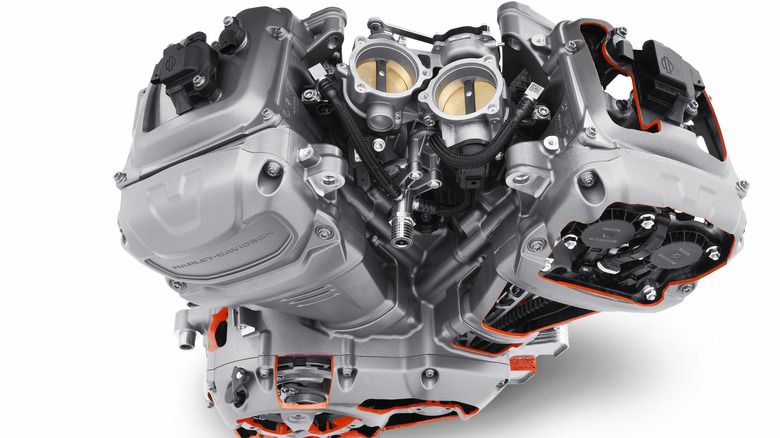
It seems fitting that the last word on this should go to Harley-Davidson itself. The Harley-Davidson Revolution Max 1250 engine is a clean-sheet design specifically for the Pan America range of motorcycles. It also represented a change of focus from the company, one which demonstrated that the relatively low horsepower of the Milwaukee-Eight was a design decision.
In other words, the Revolution Max could be Harley saying, "You want power and torque? We can deliver that too." The 1,250cc engine retains Harley's smooth low-end torque, delivering 94 lb-ft of peak torque, a step down from the Milwaukee-Eight. However, in terms of horsepower, the Revolution Max outmuscles its older sibling with a maximum rating of 150hp.
The Revolution Max is a liquid-cooled motor that features a double-overhead camshaft, independent variable valve timing, and a rev ceiling of 9500 RPM. For comparison, a standard Milwaukee-Eight 117 redlines at 5,600 rpm, with the high-output Milwaukee revving to 5,900 rpm. This massive difference in maximum engine speed accounts for much of the Revolution Max's extra horsepower.
What this tells us is that measuring an engine's performance isn't as simple as saying it has more power — ergo, it's the best. Successful motorcycle engines are judged not just on the basis of who can supply more power — but on who can design the best engine to suit the needs of the bike it's intended to power.