

USAF Will Fly B-52s Until 2050, But It's Already Looking For What Comes Next
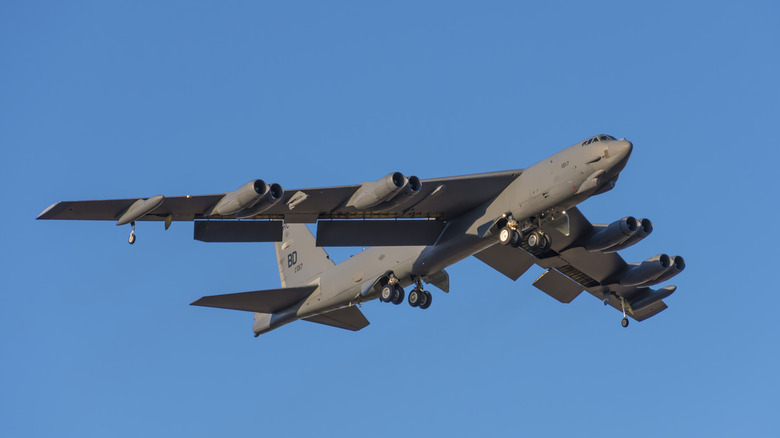
Imagine if you were still regularly driving a 1952 Buick Roadmaster — similar to Tom Cruise's movie car from "Rain Man" – with no GPS or Apple CarPlay. In fact, there's also no power steering or even anti-lock brakes! Life has changed in innumerable ways since the 1950s and technology has forged ahead, but in one way the U.S. Air Force is still living in the '50s. The first B-52A bombers took the skies in 1954, and the B model, the first to be used in active service, took flight in 1955. The Air Force has used several iterations of the massive plane since, but the current variant, the B-52H, was first delivered in 1961, 65 years ago! The Air Force plans to continue flying the B-52 until 2050, but it's seeking $1 million in the 2027 budget to begin the formal process of exploring a successor. It will certainly be a tough act to follow.
At time of writing, very little is known about potential replacements for the B-52. The Air Force is reportedly at work on a classified "proof-of-concept," and the formal process includes identifying key performance parameters, system attributes, and additional performance attributes. The 2027 budget funding will also help identify future vendor options.
The U.S. has relied heavily on its fleet of B-52 bombers in the recent conflict with Iran, and despite a potential retirement date, the Air Force is at work updating and modernizing the fleet. A potential cost for the replacement program has not been disclosed, but the upgrades will cost billions, starting with a multi-billion contract with Boeing.
Modernizing the B-52
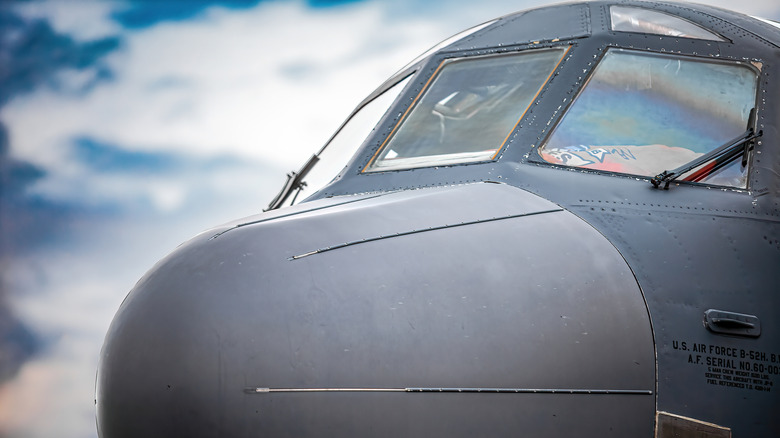
Described by the Air Force as the "backbone" of the strategic bomber force in the U.S., the B-52 can drop or launch a wider array of weapons than any other plane currently in service. Of course, it has been modernized, which is why it's still flying, and the Air Force currently has 58 B-52s in active service and 18 in reserve. Built by Boeing, each B-52 can carry up to 70,000 of payload weight and has a range of 8,800 miles. It typically carries a crew of five, including a commander, pilot, radar navigator, navigator, and electronic warfare officer.
While it explores replacement options, the Air Force is also at work on a plan to continue to modernize the fleet, investing in new engines, radar, avionics systems, landing gear, and more. The revamped planes will be designated B-52Js and plans also include new ordnance such as hypersonic missiles and nuclear weapons.
In May 2026, the Air Force announced that it completed a design review of the engine replacement plans, and modifications will begin on the first two B-52s at Boeing's San Antonio, Texas facility this year. After the new Rolls-Royce F130 engines are installed and other work is completed, the two B-52s will be sent to Edwards Air Force Base in California for testing before the rest of the fleet is updated. The new engines alone will cost approximately $15 billion, while the entire upgrade process is expected to cost about $48.6 billion.