

These Cutting-Edge OLEDs Can Bend, Fold, And Stretch Without A Single Crease
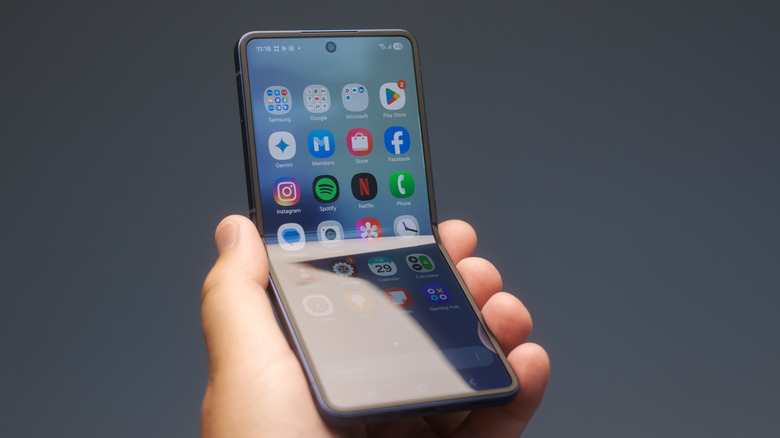
Displays have come a long way, from monstrous CRT televisions to thin, lightweight LCDs and the portable smartphone displays we have now. The transition to wearable displays, however, has been thwarted by the annoying habit of OLED displays to break instead of bending. That might not be a problem anymore, as South Korean researchers, in collaboration with counterparts at Philadelphia-based Drexel University, claim to have developed a new type of OLED display that is both bendable and stretchable.
Flexible OLED displays have been around for more than a decade, but current foldable smartphones have serious drawbacks, such as significantly reduced display durability. Repeated folding and unfolding cause micro-fractures in the conductive traces and the gradual degradation of the organic layers of the OLED substrate. This manifests as visible damage and reduced image quality. The same weakness also makes it extremely difficult to integrate the current generation of flexible OLED displays into wearables that will likely be subject to repeated stretching and folding cycles.
The new flexible OLED display, described in the journal Nature, uses nanomaterials that allow it to be safely stretched to a whopping 1.6 times its original size. While contemporary wearable displays lose a significant amount of their brightness upon stretching, this nanomaterial-enhanced OLED display can allegedly retain 83% of its light output after 100 cycles rated at 2% strain. Let's take a look at what makes this new technology tick.
Leveraging nanotechnology to improve brightness and durability
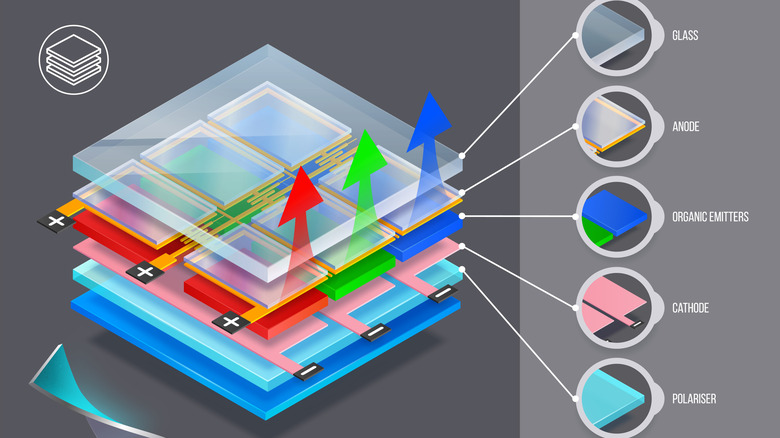
Traditional flexible OLED displays cannot endure many bending and stretching cycles due to the fragility of the conductive electrodes and organic layers that make up the panel. The electrical underpinnings wear out over repeated strain cycles, while the stretchable polymer layers introduced to enhance flexibility and durability reduce the display's brightness and energy efficiency.
The new flexible OLED design overcomes those shortcomings by using a nanomaterial dubbed MXene to create transparent and stretchable electrodes. Developed by Drexel University's College of Engineering in 2011, the nanomaterial combines excellent electrical conductivity, mechanical strength, stretchability, and transparency. This allows for a bendable display that claims to retain almost 90% of its performance and efficiency when stretched up to 60% of its maximum strain limit.
The researchers' claims of impressive light efficiency stem from a new stretchable organic layer, called an exciplex-assisted phosphorescent (ExciPh) layer, that essentially alters the energy level of the OLED system to produce light more efficiently. An OLED pixel produces light by combining the positive and negative charges generated by the electrodes, which eventually unite to form an exciton. The subsequent decay of these excitons generates the electroluminescence driving individual OLED pixels. The new ExciPh layer lets more than 57% of excitons produce light, much higher than the 12% to 22% of traditional flexible OLEDs. This makes for a flexible display that's not only more durable but also significantly brighter.
Will these lab experiments mature into consumer applications?

While the publication of research papers on high-tech displays and other promising phone-related technologies doesn't always translate into consumer products, this joint US–Korean research endeavor did at least result in displays that offer a glimpse of the future. Drexel University researchers demonstrated the efficacy of their stretchable OLED display technology with two green monochrome displays: one depicted a heart icon, while the other showed a set of numbers.
Their counterparts at Seoul National University went one step further, developing a full-color stretchable display, replete with stretchable passive-matrix OLEDs. In other words, this flexible OLED technology already seems relatively mature, and deploying it in low-power wearable display solutions is not out of the realm of possibility.
The authors of this research paper list real-time health care monitoring and wearable communications technology as the potential applications of the stretchable OLED display prototypes demonstrated in their journal publication. Meanwhile, contemporary research into stretchable batteries, as discussed in ACS Energy Letters, seems to herald a future where wearable displays are the norm rather than science fiction.