

What Is The 60/40 Trailer Rule?
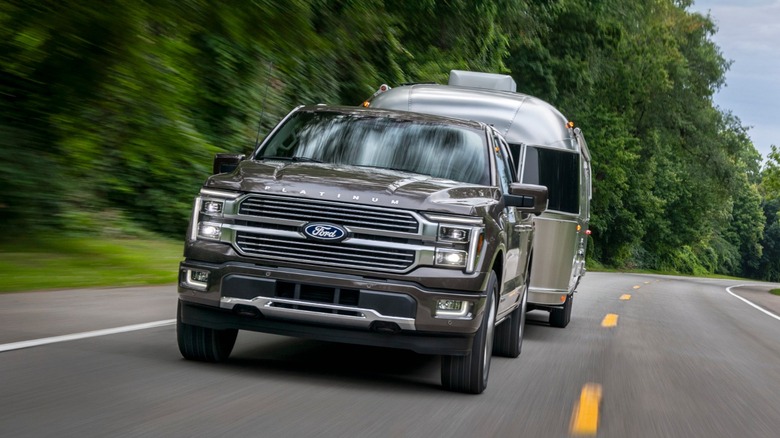
When it comes to safely towing a trailer, the way you load it is just as important as how much weight you're pulling. If you've ever felt your trailer start to wiggle at highway speeds or noticed the steering feel strangely light, you have likely brushed up against the limits of proper weight distribution.
The 60/40 trailer rule addresses just that: It is a simple guideline that says roughly 60% of the cargo weight should sit in the front half of the trailer, closer to the tongue, while the remaining 40% should sit farther back. That forward bias helps keep enough downward pressure on the hitch so the trailer follows the tow vehicle rather than swinging around behind it.
This distribution prevents the trailer from becoming too tail-heavy or too nose-heavy. A trailer that is too light at the tongue can feel normal to drive initially, but quickly become unstable once you hit highway speeds. Other factors, such as gusts of wind (including from passing vehicles), uneven pavement, or sharp turns, can also cause dangerous trailer sway. Too much weight behind the axle can turn that first wiggle into violent swaying, and the driver can end up fighting the trailer instead of controlling it. Once your trailer starts swaying, it becomes a safety hazard not only for you and your passengers but for every car around you. Of course, the 60/40 rule is not the only thing that matters, but it is the first one to get right.
The 60/40 rule is only the first step
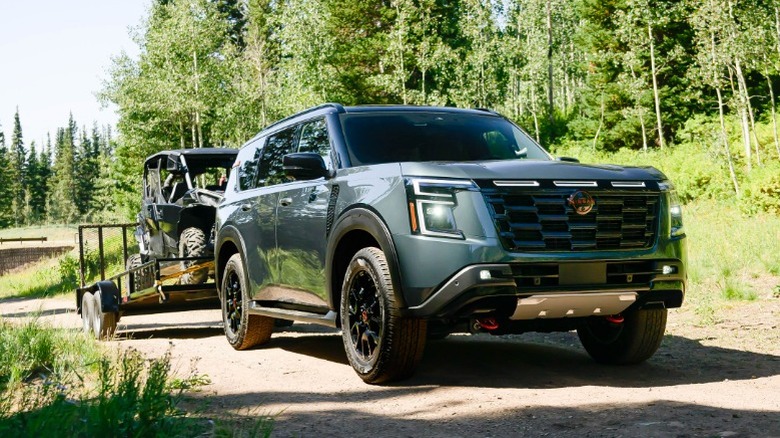
The 60/40 rule gets the trailer loaded the right way, but it doesn't mean you can keep stacking weight toward the front until the trailer stops moving around. A conventional trailer still needs adequate tongue weight, with around 10% to 15% of the trailer's loaded weight sitting on the hitch. The catch is that tongue weight counts toward what your tow vehicle is carrying, including passengers, tools, coolers, or anything else sitting inside the vehicle. Thus, tongue weight can push a vehicle past its GVWR or GAWR faster than many people expect.
GVWR (gross vehicle weight rating) tells you how much total weight the vehicle can carry, while GAWR (gross axle weight rating) breaks that limit down by axle. If the trailer's tongue weight, passengers, cargo, and hitch hardware push either number too far, even a perfect 60/40 trailer won't save the setup. That is why simply moving more cargo forward is not always the answer. A front-heavy trailer can feel more planted, but too much hitch load can make the tow vehicle squat, strain its rear suspension, lighten the steering, and reduce braking control.
Even if there are no problems at the start, there is also the possibility of cargo shifting mid-trip and undoing your 60/40 balance. That is why you should place heavy items low and further forward to preserve the 60/40 split, balance the cargo side-to-side, and secure everything tightly so that it doesn't slide around once you hit the road.