

This Popular Lighting Upgrade Could Be Killing Your Truck's Fuel Economy
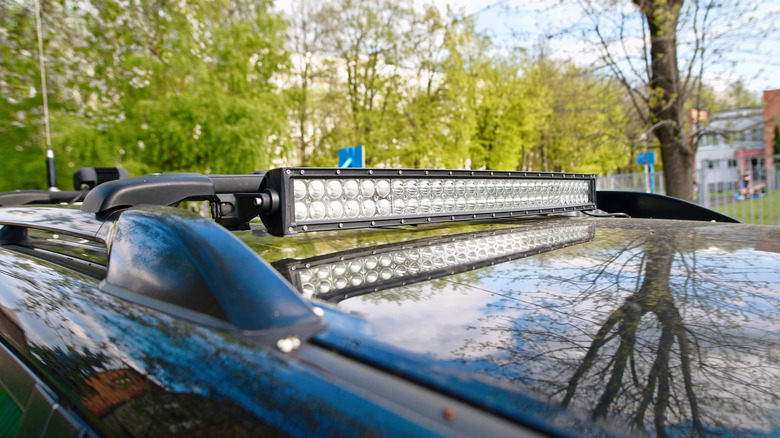
For some drivers, getting the best fuel economy possible involves obsessing over their miles per gallon number. But there's more to it than just the vehicle's capability, as oftentimes, you can actually make things worse with the addition of aftermarket accessories. In fact, if you're using auxiliary lighting on your truck's roof, you might be negatively impacting your overall fuel efficiency.
The issue is that roof-mounted lights affect airflow over the truck, creating wind resistance and thus increasing drag. Not only is this noticeable, it can even be noisy in some cases. Even modern LED light bars, though smaller than some older setups, can still negatively impact airflow when attached to the roof. You may or may not see an immediate drop in fuel economy with a roof-mounted bar, but it's adding drag to your truck and that can be a problem over time.
If you want to keep the auxiliary lighting, you can just install it somewhere else, like your truck's grille. An LED bar still won't be exactly flush with your grille, which you shouldn't drive without, and it will still create some drag. But it won't be as much as it would be on your roof. Also, many modern truck grilles typically have a suitable mounting area for auxiliary lighting, while also not drastically affecting airflow to your radiator. But if you're concerned about this and want more information, refer to your vehicle owner's manual, or contact your local dealership.
The reality of auxiliary lighting placement
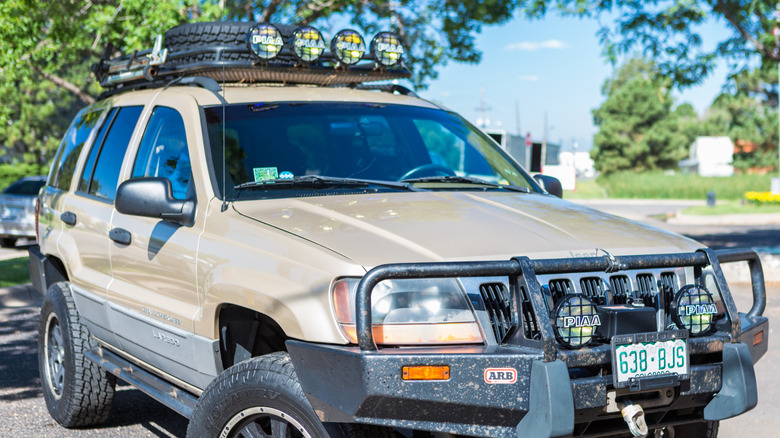
If you want to keep your light bar (though it can be a police magnet) and don't want to impact fuel economy, you might be curious about a windshield mount. The problem is that any equipment mounted above the windshield will still be high enough to disrupt airflow over the roof of the truck. So while the placement can help provide good visibility, it will increase drag on your truck, leading to a reduction in fuel efficiency.
This issue was addressed in a 2024 study published by MDPI regarding roof-mounted lights on police and emergency vehicles. The study's results showed that roof-mounted light bars increased aerodynamic drag by about 8–11%, along with higher fuel consumption due to the added resistance. The study also noted that more aerodynamic lighting options have been explored. However, that move has to be paired with the need to maintain high visibility for emergency operations.
The problem is that when it comes to the placement of auxiliary lighting, there's really no single best mounting position. If you go too high, you're affecting fuel economy. If you go too low, you may be losing some visibility, which essentially negates the use of the lighting altogether. So in the end, it's about why you wanted the lighting in the first place, and what purpose it must serve once it's installed. Once you know that, you can make the best decision on how to move forward.