

Why US Fuel Octane Numbers Are 6 Points Lower Than Europe's
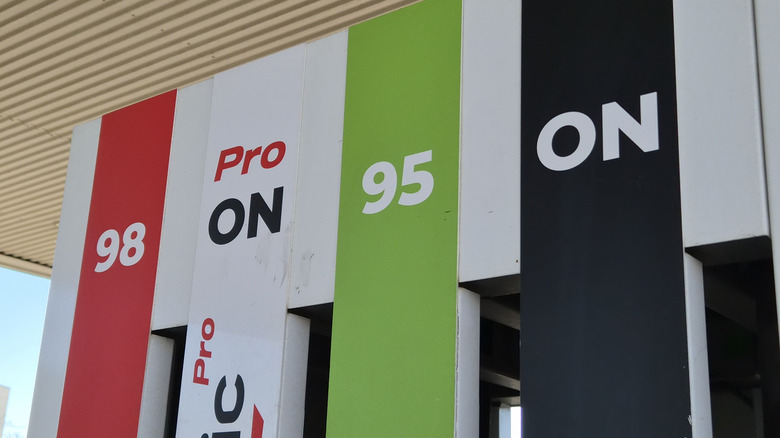
Given the whole "driving on the other side of the road" thing, it's easy to assume driving in the United States and Europe are two very different things. Same for when you pull up to the pump in one country vs. the other. A European station selling 97- or 95-octane gas looks like much higher octane fuel than the 91- or 89-octane premium sold across much of the United States. But in reality, the fuels have more common than you'd think. The difference comes down to how each region measures octane. Knowing the difference can keep you from spending extra money on fuel if you ever find yourself behind the wheel across the Atlantic.
Let's look at the standards on fuel pumps. In Europe, it's the Research Octane Number (RON) system. This measurement finds a fuel's resistance to engine knocking using controlled testing on a special engine running at 600 rpm with various compression ratios. Europe also uses the Motor Octane Number (MON) system, which puts the fuel through higher engine speeds and other tougher conditions. MON results can typically come out to be 8 to 12 points lower than RON results for the same gasoline blend. Meanwhile, the American AKI system involves no testing whatsoever. It simply averages the two numbers together. That average usually comes out to be about 4 to 6 points below the RON number on European pumps. And that's the discrepancy.
Why you need to know the difference between AKI and RON ratings
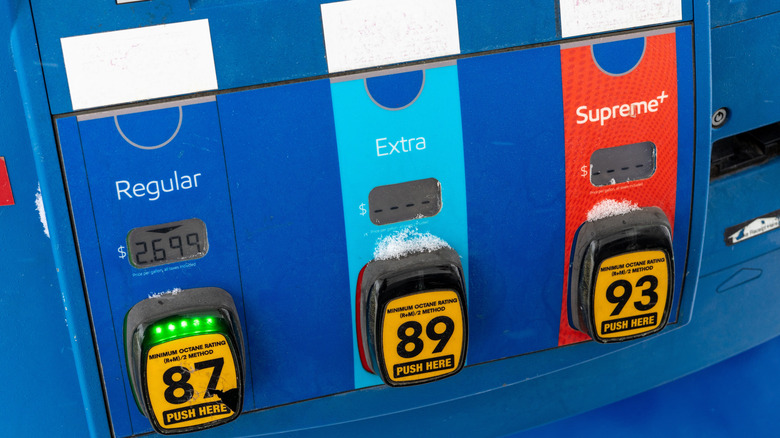
Doing the math, 95 RON in Germany would basically be equivalent to 91 AKI premium in the United States. Likewise, 91 RON "regular" in Europe is right in line with the US's standard 87-octane regular gasoline. Remember that if you ever import a car or motorcycle from one continent to the other: A manual recommending 96-octane fuel doesn't need expensive American race gas. It needs 96 RON fuel, which is only about 92 AKI at a US pump.
If you don't know the difference, you'll end up paying all this extra money for premium gasoline that you don't actually need. Not to mention, choosing a higher octane doesn't automatically mean better performance. In reality, octane isn't a quality rating. It's just a measure of how well fuel resists pre-ignition and engine knock under compression. High-compression or turbocharged engines need higher octane fuel because they generate greater cylinder pressures and temperatures. Engines made to take regular fuel probably aren't going to gain much from using premium (if anything at all). Using higher octanes won't clean your engine, either. Anything higher than what your engine needs is basically just wasted money.