

This Self-Repairing Material Could Let Cars & Planes Last For Centuries
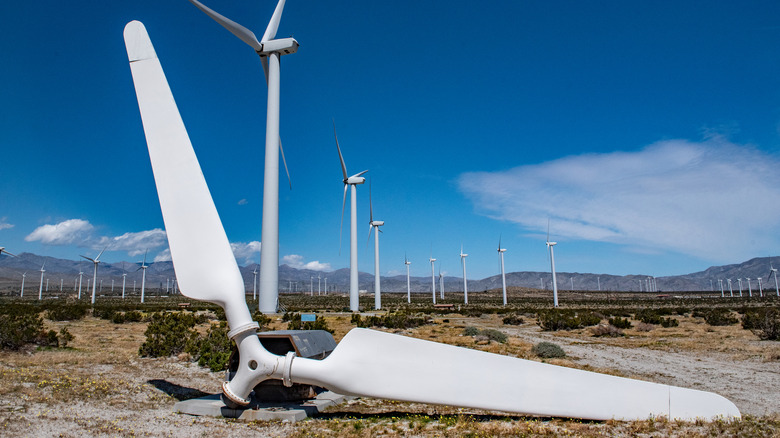
Engineers from North Carolina State University and the University of Houston have published a paper in the Proceedings of the National Academy of Sciences detailing a new composite material with a "self-healing" ability not too dissimilar to that of the iconic T-1000 from the "Terminator" movie franchise. The fiber-reinforced polymer (FRP) composite described in the research paper could make spacecraft, airplanes, automobiles, and wind turbines last centuries on end.
The self-healing composite is touted to be virtually immune to delamination, a failure common to composite materials where the layers separate due to cracks. The researchers claim that this new material can repair these separations more than 1,000 times. The unique design of this self-repair system allows the healing to occur without any disassembly. The repair process could even be automated with sensors that detect damage and initiate self-healing.
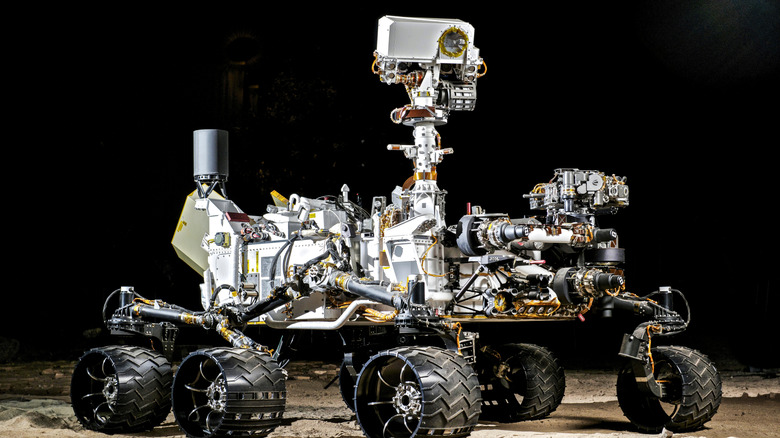
If implemented successfully, this innovation has the potential to revolutionize the aerospace and renewable energy industries by significantly increasing the service life of critical components. These include wind turbine blades, automotive bodywork and structural components, airplane fuselages, and various spacecraft assemblies. Such a composite can do more than cut costs, too; it may also help improve safety and environmental sustainability, the latter of which is a major issue for FRP composites. To put this into perspective, wind turbine blades alone are projected to generate 43 million tons of waste worldwide by 2050. Such self-healing FRP composites have the potential to reduce the impending load on landfills and the environment by delaying the eventual decommissioning of components manufactured from composite materials.
A thermoelectric approach to self-healing
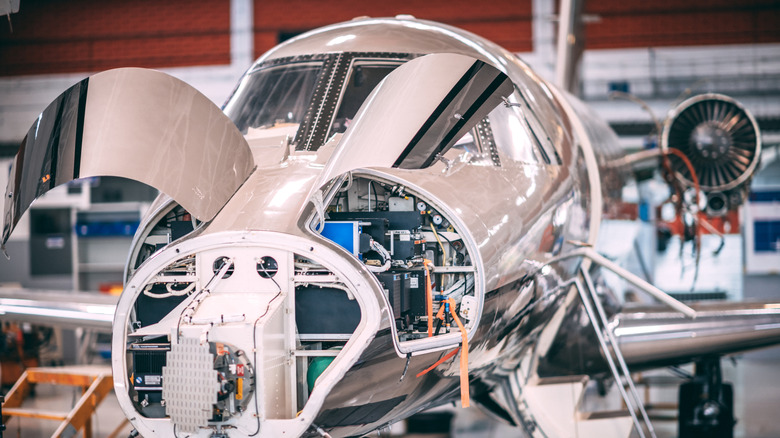
Polymer composites encompass everything from carbon fiber and fiberglass to various aramids and even basalt fibers, with the former two being widely adopted in aerospace and renewable energy applications. FRP composites are strong and lightweight, but are prone to a common failure called delamination, where fractures can cause the layers to separate. Delamination is partly why FRP components tend to have a limited lifespan of 15 to 40 years.
This self-healing material gets around the delamination problem by incorporating a 3D-printed poly(ethylene-co-methacrylic acid) (EMAA) interlayer at strategic intervals within the FRP composite. The researchers claim that the EMAA layers alone increase the base FRP material's ability to withstand delamination by two to four times, and that's before leveraging the material's thermoplastic nature.
These embedded EMAA layers are paired with a thin, electrically resistive heating element that can melt the thermoplastic on demand. The heating process causes the molten EMAA to flow into gaps, cracks, and microfractures left behind by delamination, permanently bonding the fractured layers. The resistive heating layer only melts the EMAA layers without affecting the integrity of the polymer matrix, potentially allowing centuries of use.
Will impressive lab results hold up in the real world?
Extending the usable life of FRP products can also help reduce waste by, for example, improving the lifespan of wind turbines. This would not have been possible with prior attempts at self-healing fiber composites, which were limited by their small number of self-repair cycles. The scientists behind this breakthrough, however, expect that this approach will allow approximately 125 years of use with quarterly healing cycles, or up to 500 years with an annual healing arrangement. More challenging deployments can also be paired with sensor-equipped systems that can detect damage and trigger repairs as needed.
While all this sounds great on paper, these results are based on tests conducted under lab conditions, with the healing cycle and durability claims based on statistical modelling that doesn't necessarily reflect practical applications. Real-world conditions can be brutal and expose flaws in the researchers' statistical durability models. Moreover, the underlying EMAA-based healing mechanism relies on hydroxyl ions present on the surface of glass fiber composites to ensure solid bonding. Carbon fibers, however, are more chemically inert and lack these hydroxyl ions, which makes the healing process less effective for carbon fiber composites, which also happens to make up a large chunk of aerospace applications.
The research team has already patented the self-healing composite process and licensed it through Structeryx Inc, a startup specializing in structural composite materials. It isn't uncommon for promising technologies, like Google's self-healing asphalt, to never amount to anything in real life, but the odds of this self-healing composite technology amounting to something seem relatively promising.