

What's The Average Lifespan Of A Dryer?
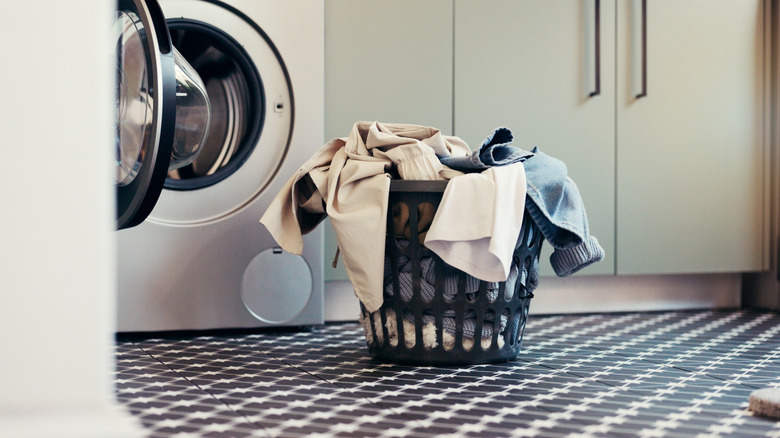
When it comes to the evolution of home appliances, people tend to focus on items like refrigerators, freezers, dishwashers, and stoves. However, a case could easily be made that in-home laundry options have become every bit as game-changing in the modern world, as washers and dryers have not only made it easier to clean clothes, towels, and sheets, but considerably reduced the amount of time it takes to do so.
Though it's also a major energy consumer, the clothes dryer in particular has proven a legit time-saver. After all, the old-school method of drying clothes involved hanging them up and waiting for the sun and breeze to do their thing, a process that could take hours on a good day and even longer when the weather is foul. Even still, you might find yourself employing that time-consuming old-school method if your clothes dryer eventually ceases to function. The death of your dryer is, of course, more a matter of "when" than "if," as with every appliance you currently have in your home. That makes the real question concerning your clothes dryer how long you have before it kicks.
There is no precise timeframe we can apply to the lifetime of a clothes dryer, but according to some sources, a new dryer should provide you approximately 10 years of duty, with potentially more before it's time for replacement. However, that timeframe could swing dramatically one way or the other depending on how well you maintain it.
How to know when it's time to replace your clothes dryer
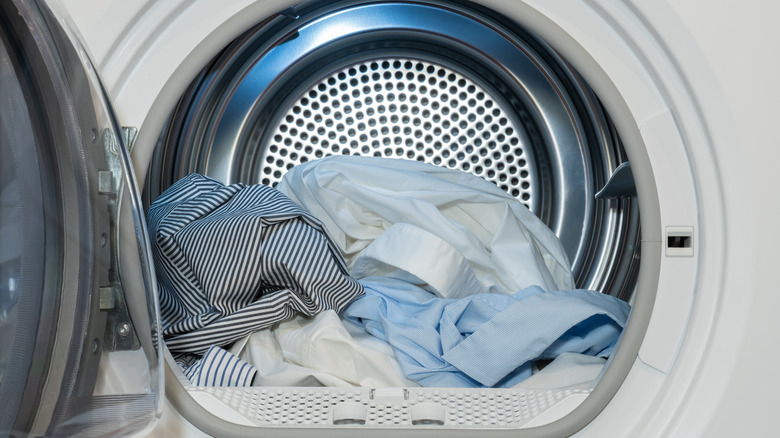
If you've got a clothes dryer with several years of cycles under its belt, you might be thinking about how many more you can muster before it's time for a change. Before you think about taking the potentially expensive step of purchasing a top-rated new dryer, you should first factor in the age of the device.
Apart from time, there are a few obvious signs to keep an eye out for concerning the performance of the machine. First and foremost, you should pay attention to whether or not the device is functioning as it should and actually drying your clothes. In this situation, the dryer may not be the problem, as you'd be wise to check the lint filter before giving up on the device. If the lint trap is full, clean it out and run the dryer for a cycle. If it's still not drying your clothes, you may have a more serious problem on your hands.
Even in that scenario, it's likely that your dryer could be repaired. You will, of course, need to weigh the potential cost of fixing the appliance with that of simply replacing it. Apart from that issue, if you find that your dryer is making loud noises during operation or turning off before a cycle's end, it may be time to replace it. The same is true if you find the dryer is running hotter than it should, which could also prove a danger to you and your home.
How to properly care for your clothes dryer
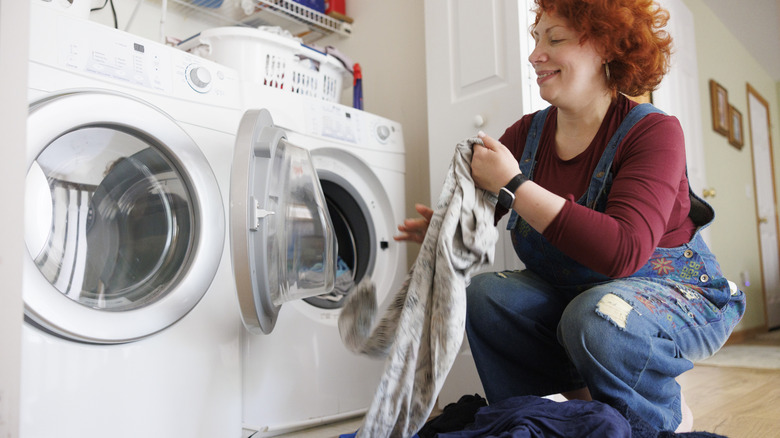
Now that you know how long you might expect your dryer to last, and what signals to look out for in the appliance's decline, you might be wondering what steps you can take to ensure you get the maximum lifespan out of the device. The good news on that front is that there are a few simple measures any appliance owner can take to help keep their clothes dryer running as it should for the length of its lifespan.
Keeping the clothes dryer clean is the first (and arguably easiest) way to ensure it continues to operate as it's designed to for as long as you own it. When it comes to cleaning, that primarily involves the regular removal of lint from both the trap inside the device and any exterior vents you might have on your home. In fact, the general rule of thumb is that you should clean the machine's interior lint trap after every single use to ensure proper airflow. On top of that, you should consider vacuuming out any hoses running out from the dryer to a vent with some frequency too, perhaps as much as once a year.
Apart from lint traps and vents, you'll want to keep the exterior of the machine clean and lint-free as well, which can be accomplished with a damp microfiber cloth. Cleaning the interior drum of the dryer with a non-flammable cleaner on occasion may also prove helpful, as oils and residue from laundry chemicals can build up inside.