

What Ruins A Concrete Driveway? 5 Common Causes To Be Aware Of
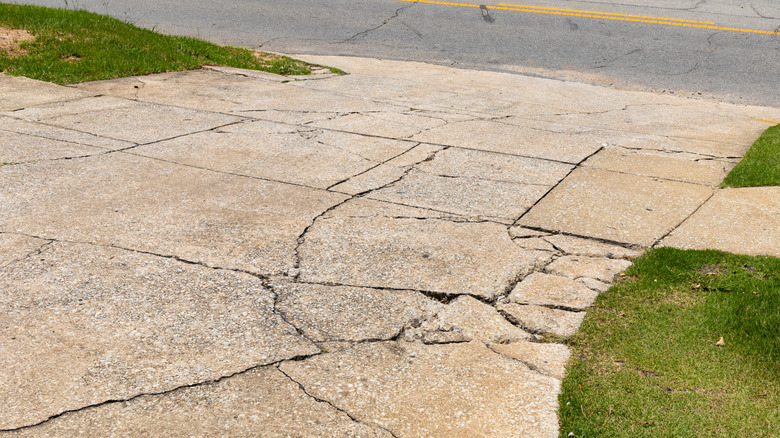
The difference between an old driveway and a new one is pretty staggering. Cracks, crumbling, lifting, gaps... as time goes by, they really end up in rough shape. But if concrete is one of the most durable materials used in residential construction, how do driveways end up looking so bad anyway? Turns out, there are actually a ton of reasons why this happens, and not all of them are environmental, either.
Each of these factors targets a different part of the driveway's structure, from its surface layer to the soil beneath it. It doesn't matter if you use concrete or asphalt for the driveway. Understanding how and why these things happen is the first step toward preventing them. Otherwise, you just might end up slapped with an expensive bill for a brand-new driveway. We're talking as much as $10,000 or more. If you want to get more life out of your driveway, here are five of the most common (and most damaging) factors to try and avoid.
Heavy loads
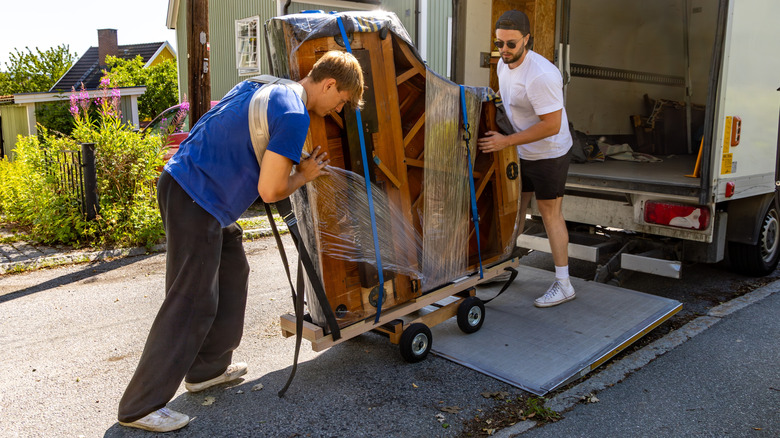
Whether you drive a sedan or an SUV, your concrete driveway should be able to support its weight with no issue. Even light trucks should fall well within the load capacity of a standard four-inch-thick residential slab. But problems are going to start if you go any heavier than that.
Heavy vehicles like delivery trucks and moving vans put more stress on concrete surfaces than should ever really be put there. These types of vehicles weigh significantly more than what a typical driveway is built to support. And every time you put tens of thousands of extra pounds onto your standard slab, the pressure exceeds the concrete's structural limits. Even if it's temporary, if it happens repeatedly that can lead to damage.
It's about more than just total weight, too. It's just as much about how that weight is distributed. Heavier vehicles concentrate force onto fewer points, which makes cracking more likely. And, just like trying to stop a cracked windshield from getting worse, that kind of damage spreads quickly. The best thing you can do is keep heavy vehicles off the driveway whenever possible.
Cold weather
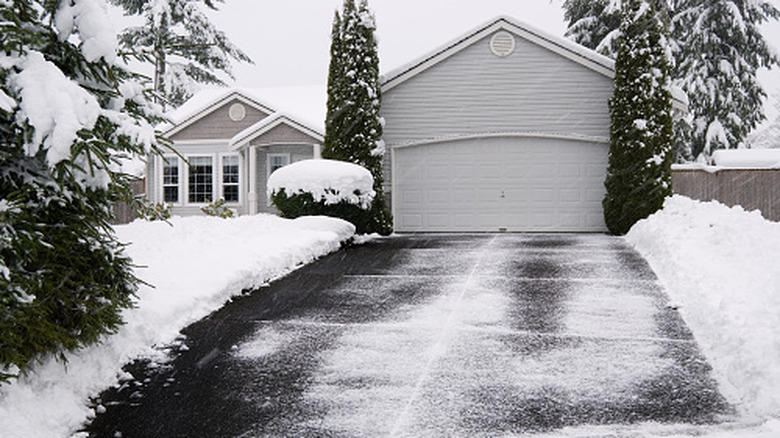
If you live in an area of the US with regular freeze-thaw cycles every winter, you know the struggle of trying to make it up your driveway when it's slick. Luckily, taking a tumble isn't going to hurt your driveway as much as it hurts your tailbone. But all those freezes and thaws, well, that's a different story. Contrary to what you might assume, the cold temperature itself doesn't cause any damage. It's the repeated freezing and thawing you should be worried about.
Concrete is porous, which means it's filled with tons of tiny openings that let water seep inside. As ice and snow thaw or rain falls, that moisture fills those pores and any existing cracks. When temperatures drop below freezing again, the trapped water expands as it turns into ice. This expansion creates internal pressure within the concrete, which gradually weakens its structure. Over time, these repeated cycles of freezing and thawing can really damage the driveway.
Without intervention, even a well-constructed driveway can take a serious beating. One piece of advice? Apply a high-quality sealant as a protective barrier to help shield the concrete from freeze-thaw damage. Routine snow removal also helps a lot because you're getting rid of all that excess moisture before it has a chance to melt.
Ice melt
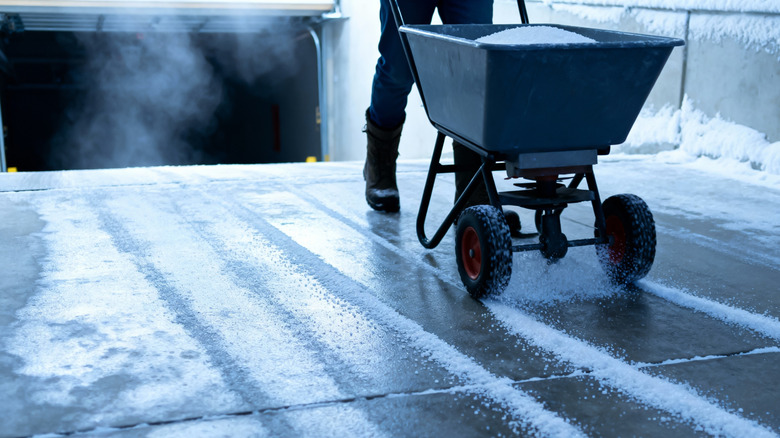
We just told you to shovel your snow to keep moisture off the driveway, but there's a caveat. Things are different with ice. While it's definitely the easiest option, you shouldn't just sprinkle a bag of ice melt on your driveway and call it a day. That actually makes things worse. The chemicals used in many de-icing agents will only speed up the wear and tear. Calcium chloride is one example. It's commonly found in plenty of traditional ice melt products, but it can react really poorly with the calcium hydroxide in your concrete driveway. This reaction weakens the surface, making it more susceptible to cracking and crumbling.
Not to mention, ice melt products can also intensify the freeze-thaw cycle. By lowering the freezing point of water, these substances can seep down into the driveway while the temperature's still below freezing. With that logic, you could end up spurring double the freeze-thaw cycles as opposed to just the one when the temperature climbs above the freezing point. Next winter, try safer solutions like kitty litter, coffee grounds, or another ice-melting alternative. These can give you traction without triggering the same chemical reactions.
Tree roots
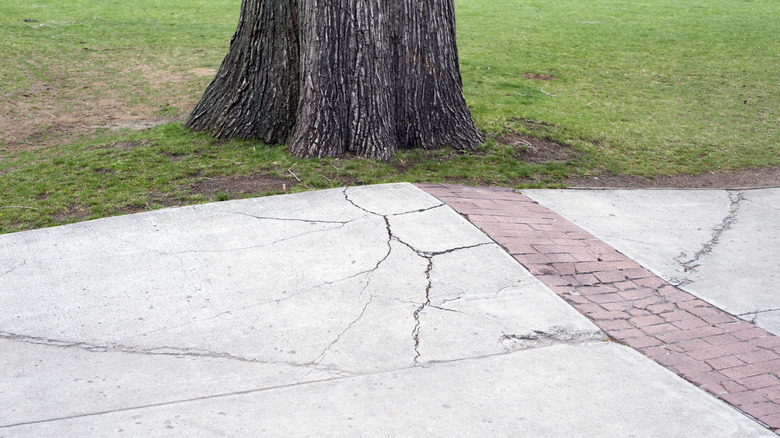
Big, beautiful trees can really add a lot of value to your home. But they can also pose a threat to your driveway thanks to their root systems. As trees grow, their roots naturally expand outward in search of water and nutrients. When they get too close to your driveway, these roots can start putting upward pressure on the foundation, which can gradually lift and shift sections of your driveway.
In extreme cases, entire sections of your driveway can end up cracked and raised. That's a trip hazard, for one, but it can also lead to drainage issues. That water can erode the dirt under your driveway and cause problems of its own with the stability of the slab. It can also lead to more dramatic cracks during those freeze-thaw cycles mentioned above. Of course, it's hard to really know if or when roots are about to do damage until they actually do it. Instead, prevention is more about being sure you don't make it worse and planting any new trees far enough away from the slab.
Improper installation
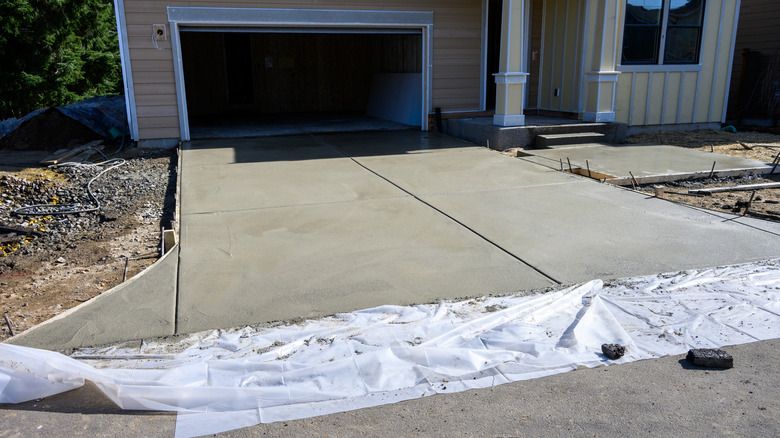
It's true that a lot of these problems are environmental. But, like our first point about excess weight on the slab, human error can very much be a factor. We'd be remiss not to mention problems with installation. A bad install can set the stage for years of problems ahead.
It all starts with the pour. To get a driveway done the right way, builders need a stable subgrade, the right concrete mixture, proper thickness, and the right curing techniques. It's a delicate balance, to be sure. If any one of these elements gets compromised, the entire structure becomes more vulnerable to damage. Encounter any one of the other factors above, and things go from bad to worse fast.
Avoiding issues means being careful with both your contractors and your materials. And sure, high-quality construction comes with higher upfront costs, but it can significantly reduce your risk of long-term damage. Best-case scenario, paying more now means paying less on upkeep later.