

5 Lightweight Motorcycles That Happen To Be Great For Long Distances
One of the great pleasures of owning a motorcycle is taking it for long trips on the open road, but not every bike can do this comfortably. One reason you might not want to buy a sport bike, for instance, is that they place the rider in an aggressive sitting position that is great for aerodynamics, but can get uncomfortable quickly. They also tend to have smaller tank sizes and can vibrate more.
Traditional wisdom would say that the best kind of bike for a long road trip is something heavy, like a touring motorcycle or a cruiser. These large bikes tend to be more stable, comfortable, and generally easier to ride over long distances. That doesn't mean that they're your only option, however.
There are a lot of lighter motorcycles out there — especially smaller adventure bikes — that are pretty decent for long-distance riding. These won't be competing with massive machines like the Honda Goldwing in terms of luxury, and certainly not in terms of power. That said, a few of these lighter bikes can offer a degree of comfort and performance that makes them better suited to long distances than many of their peers.
BMW G 310 GS
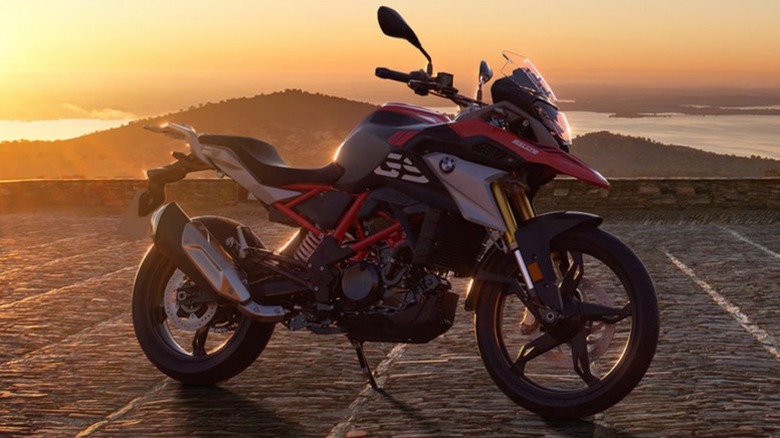
BMW is widely known for making bikes that specialize in comfort and reliability, and the BMW G 310 GS is no exception. It's an adventure bike designed for ergonomic comfort and easy rideability, both on and off the road.
The engine in this thing is relatively small. It has a 313 cc water-cooled, single-cylinder 4-stroke engine, with four valves, two overhead camshafts, and wet sump lubrication. This has an 80mm bore, a 62mm stroke, and a 10.9:1 compression ratio. That gives this little guy 34 horsepower at 9,250 RPM, 20 lb.-ft. of torque at 7,500 RPM, and a top speed of 88 MPH, which is just enough to let you traverse most highways comfortably (though you may want to stick to the slow lane on inclines). In terms of dimensions, the bike is 81.7 inches long, 48.8 inches tall, 34.6 inches wide, has a 32.8-inch seat height, a 3-gallon tank with a 0.25-gallon reserve, and weighs 374 pounds with standard equipment.
Ultimate Motorcycling reviewed the 2022 model and stated that, while it's capable of hitting the 75 mph threshold for freeway usage, that would be running the bike at the top of its capabilities. He warned that this can be a bit scary when the semis drive by, but it has more than enough juice for 55 mph highways.
Kawasaki Versys-X 300
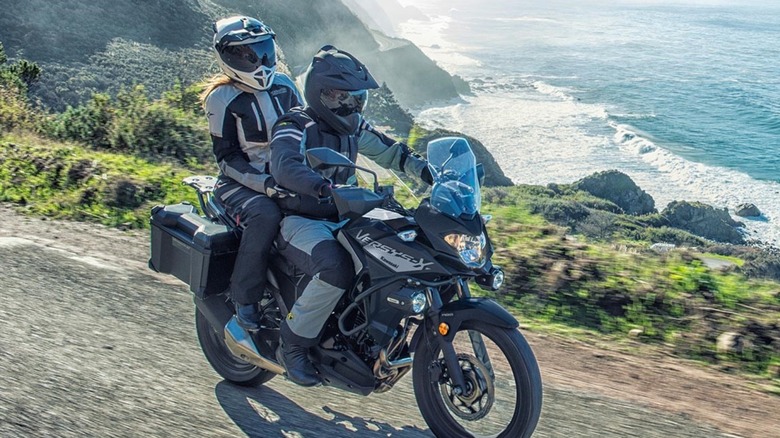
There are a lot of great Kawasaki bikes, from supersports to dirt bikes and everything in between. The brand also offers a particularly wide range of lightweight, entry-level motorcycles. You probably wouldn't want to spend a long trip bent over the tank of one of the brand's Ninja sport bikes, but the Kawasaki Versys-X 300 is another story.
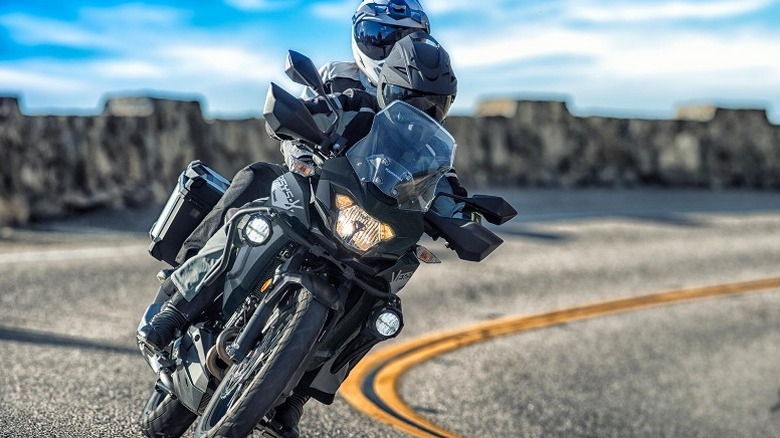
This is an adventure bike with a 296 cc 4-stroke, 2-cylinder, DOHC, liquid-cooled engine with a 62 mm bore, a 49 mm stroke, and a 10.6:1 compression ratio–the same engine that was used in the company's Ninja 300 sport bikes. This ultralight engine surprisingly allows the bike to hit 39 horsepower at 11,500 RPM, 19.2 lb.-ft. of torque at 10 rpm, giving a top speed that gets close to 90 mph. The bike is 85.4 inches long, 33.9 inches wide, 54.7 inches tall, and has a 32.1-inch seat height. It has a larger 4.5-gallon tank
The Versys-X will "sling you down the highway at 75 mph, but its crankshaft will be turning a dizzying 9,000 rpm and you'll be praying for a seventh gear," says Zack Courts of Cycle World. "Dial it back to 60 mph and the bike feels less frenzied, gets better gas mileage (mid-50s versus mid-40s at 75 mph), and leaves you with a bit more roll-on power to use for passing." So once again, this bike is competent on high-speed freeways, but it is more comfortable on highways. He also stated that the bike's seat and its neutral riding position made it as comfortable as many larger bikes that cost considerably more.
Honda CB300R
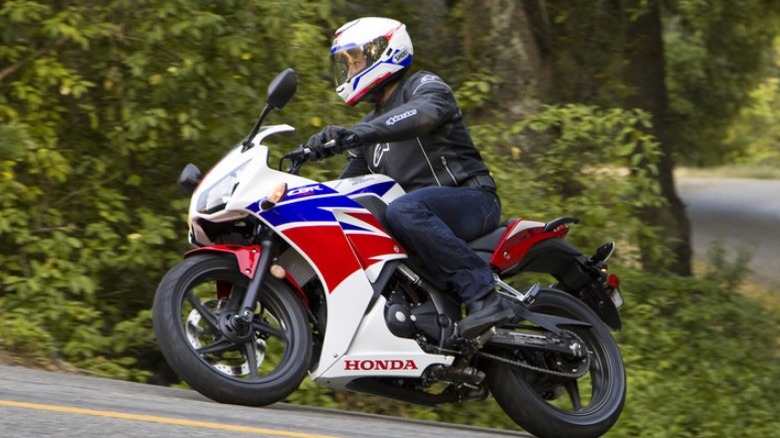
Honda is widely acknowledged as one of the best motorcycle brands in the world and has been for several decades. The company produces a variety of models, and the Honda CB300R is one of the lighter bikes that you might consider for a longer road trip. It's one of the only standard street bikes on our list and it has the smallest engine, but it still packs plenty of features conducive to longer rides.
The bike is powered by a 286 cc liquid-cooled, DOHC, single-cylinder, four-stroke engine with a 76 mm bore, a 63 mm stroke, and a 10.7:1 compression ratio. It has a programmed fuel injection system and a 6-speed transmission. This gives the bike 31 horsepower at 9,000 rpm, 20.2 lb.-ft. of torque at 8,000 rpm and a top speed nudging 100 MPH in neutral conditions (per Motostatz). The bike has a 31.6-inch seat height, a 2.6-gallon fuel tank, and a 316-pound curb weight with standard equipment and a full tank. This adds up to a bit of a mixed bag — weaker than many of the other long-distance options we've covered, despite the higher top speed — but it remains a good choice for those who prefer a classic street bike design.
KTM 390 Adventure
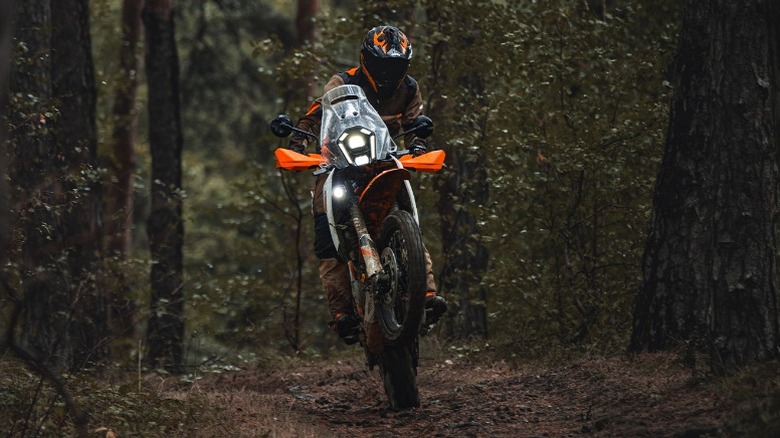
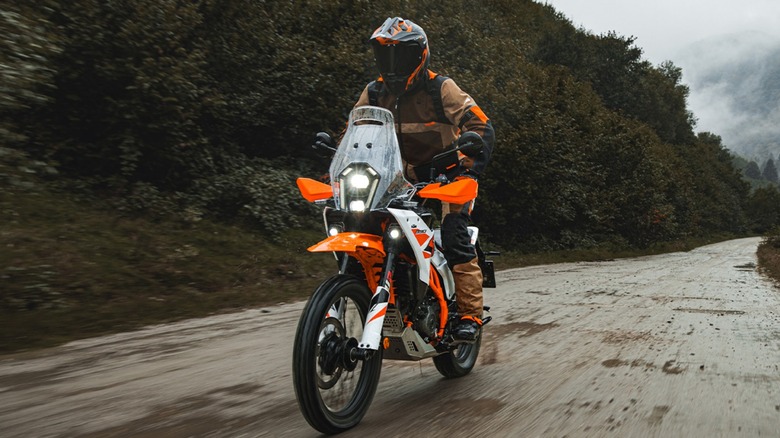
Long trips don't always mean sticking to the road. All of the bikes mentioned so far have decent off-roading capabilities, but not as good as the KTM 390 Adventure. Just one glance is all it takes to see that this bike has a bit more dirtbike DNA than many of its compatriots. KTM itself calls it "the most off-road capable middleweight adventure bike in its segment." In fact, this machine was used to win the 2026 Dakar Rally.
The 390 Adventure is powered by a 399 cc single-cylinder, liquid-cooled, 4-stroke engine putting out 44 horsepower and 29 lb.-ft. of torque. KTM doesn't post the top speed, but some riders have shared videos of them hitting 99 mph. It has a 34.2-inch seat height and weighs 388 pounds with a full tank. It also has a WP Apex Open Cartridge 43mm suspension in the front and a WP Apex Split Piston suspension in the rear with about 9 inches of travel at both ends.
Even though it's geared toward dirt trails, the bike seems to be plenty capable on the roads as well. Adventure Rider claimed that the bike could easily keep pace on 70 mph freeways with maneuvering room to spare, even on hills. The reviewer noted some vibration to contend with, but the sharp handling, quick acceleration, and impressive highway power make it a solid option for touring.
Royal Enfield Himalayan 450
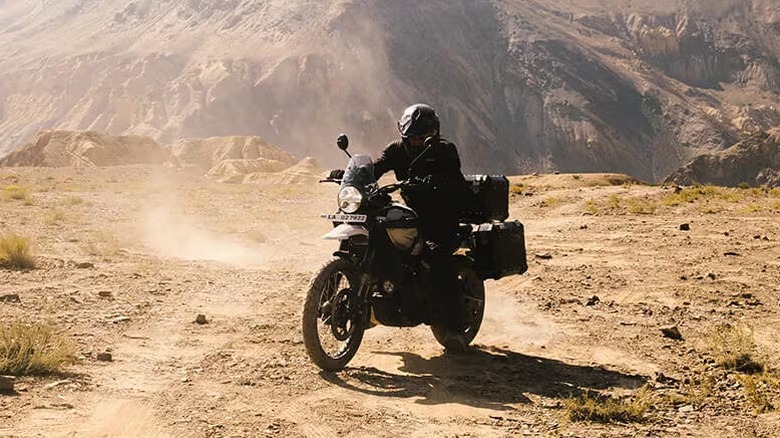
There is a range of sizes when you talk about "lightweight" bikes, and not all of them are right next to that 300 cc mark. There are models out there that are a bit bigger and offer a touch more horsepower while still being light enough not to quite hit middleweight. A powerful example of this is the Royal Enfield Himalayan 450 – a bike designed specifically for its ability to seamlessly transition from highways to rocky mountain trails.
The core of the bike is a 452 cc single-cylinder, DOHC, liquid-cooled, 4-valve engine with a 84mm bore, an 82 mm stroke, and an 11.5:1 compression ratio. It produces up to 40.2 horsepower at 8,000 RPM, 29.5 lb.-ft. of torque at 5,500 rpm, and a reported top speed of around 100 mph (per Top Speed and The Compass). It is 88.4 inches long, 33.5 inches wide, 51.8 inches tall, has an adjustable 31.7-inch to 32.5-inch seat height, and weighs 432 pounds when at 90% fuel in its 4.5-gallon tank.
The Motorcyclist shared a review of the bike in which they primarily discussed its off-roading capabilities, but also stated that "a decent windscreen, a wide bar, and surprisingly roomy ergonomics for a 6 ft 1 rider also made the Himalayan a nice place to sit during the long freeway stretches of our journey." They also said it quickly reaches a 74 mph cruising speed with a decent chunk of passing power left in reserve. Likewise, Really Big Bike Ride stated in their review that it offers a comfortable riding position and could easily handle difficult terrain.
Our methodology
Definitions of a "lightweight" motorcycle vary, as do expectations for long-range comfort. We focused on bikes with engines in the 300-450 cc range that balance power and ride quality under 450 pounds. Power is naturally limited at this size, but we ensured the bikes could at least maintain freeway speeds without strain.
We also sought bikes with comfortable ergonomics that kept the rider upright and didn't vibrate too heavily. We considered offerings from several major brands and selected options that appeared to fit these criteria. Once the contenders were set, we consulted professional reviews focused on highway performance, outlining each bike's strengths and shortcomings.