

The '90s Volkswagen Engine That's One Of The Most Reliable Of All Time
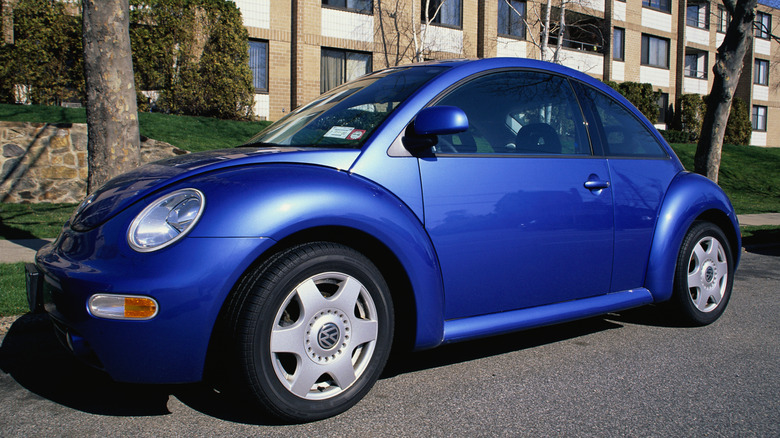
In the 1990s, Volkswagen revived a classic model with a modern take on the iconic Beetle. And, while much of the attention focused on the styling and the nostalgia of the car, another piece of German engineering was also debuting.
More specifically, while it didn't define the Beetle's revival, one Beetle engine option did go on to build a reputation as one of the most reliable Volkswagen engines ever. The engine in question is the 1.9 TDI ALH, an engine that's worthy of a place on any list of the most reliable VW engines ever.
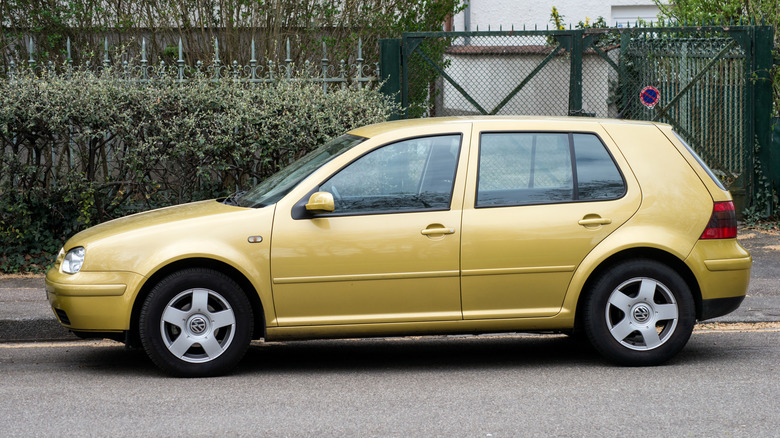
Introduced in 1997, the engine and its variants were widely used into the 2000s and powered VW models, including the aforementioned Beetle, the Golf Mk4, and the Jetta, to name a few.
This wasn't an engine with a particularly noteworthy performance to shout about, producing a rather modest 90 HP. But what it lacked in grunt, it made up for with longevity. Efficient and durable, many examples of the engine regularly exceeded 200,000 miles.
The VW 1.9 TDi was overengineered where it needed to be, yet retained a simplicity of design that contributed to its longevity. Unlike later diesels that used more complex high-pressure common rail systems, the 1.9 TDi used a rotary injection pump that proved to be both reliable and easier to maintain. With a cast-iron block and conservative tuning, this was the tortoise rather than the hare — it wouldn't get you there in the fastest time, but it would get you there.
Why the 1.9 TDI earned its reputation for reliability
It's worth noting that these engines were produced before the infamous VW dieselgate scandal and before emissions levels were as stringent as today's. This means the engine lacks many of the complex emissions systems that can introduce additional failure points; such systems can also cause diesel engines to derate and restrict performance.
This relative simplicity is something that carries over to other parts of the engine. Electrically, this is a relatively rudimentary powerplant with fewer electronic components overall, another point that reduces potential failure points, especially as the engine ages.
The engine block is also worth noting. Manufactured from cast iron, this wasn't built with high performance in mind, but to withstand the high-compression ratios that diesel engines rely on. The modest 90 HP or so that the engine produces also places less stress on the engine as a whole, which reduces the normal wear and tear that affects all engines.
Naturally, for an engine to achieve any kind of longevity, proper maintenance is required. For the 1.9 TDI to keep on running, owners had to keep on top of essentials like oil and filter changes, and changing the timing belt in accordance with VW's recommendations (60,000 to 100,000 miles depending on the generation of belt installed).
Volkswagen is proud of its engine — as a report from an English regional newspaper demonstrates, VW displayed a 1.9 TDI-powered car that clocked up 507,759 miles. Probably not the most exciting half million miles of motoring, but the tortoise got there in the end.