

Is It Safe To Use An Air Compressor Indoors? Here's What You Should Know
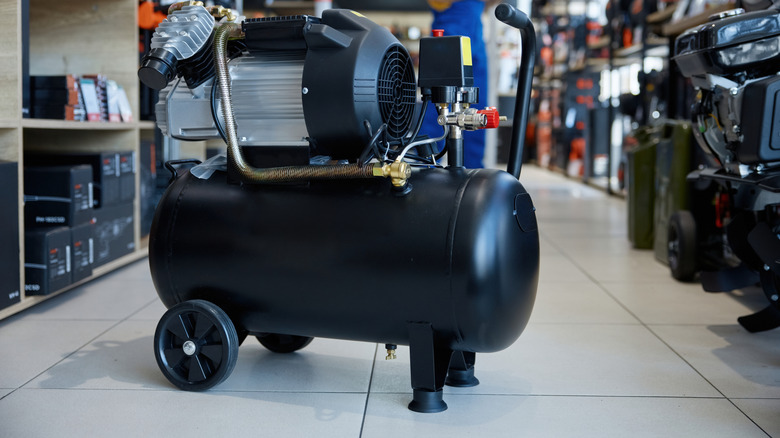
An air compressor is a versatile tool that provides the power and efficiency needed to run air-powered tools such as ratchet wrenches, blow guns, brad nailers, and pneumatic grinders. This tool is also great for handling almost every kind of inflating job, keeping your garage clean, and powering paint sprayers, too. When you consider these general in-garage uses and the fact that some compressors are limited by things like hose length and portability, you might be contemplating using yours indoors.
But is it really safe? It depends on the type of air compressor you have. Air compressors are available in gas-powered and electric variants. An electric air compressor is generally safe to use anywhere. However, gas-powered models should never be used indoors, as they emit carbon monoxide, which is dangerous, especially in enclosed spaces.
Carbon monoxide is toxic, invisible, odorless, and impossible to detect with your senses. If it fills up your garage, it can cause headaches, dizziness, or, in the worst-case scenario, death. To avoid this and rule out any potential risk, operate your compressor in an open, well-ventilated area where lethal levels can't collect. If you want to use it indoors, you should invest in an electric air compressor. The best ones promise zero emissions and ultra-quiet noise levels.
Other risks of using an air compressor indoors
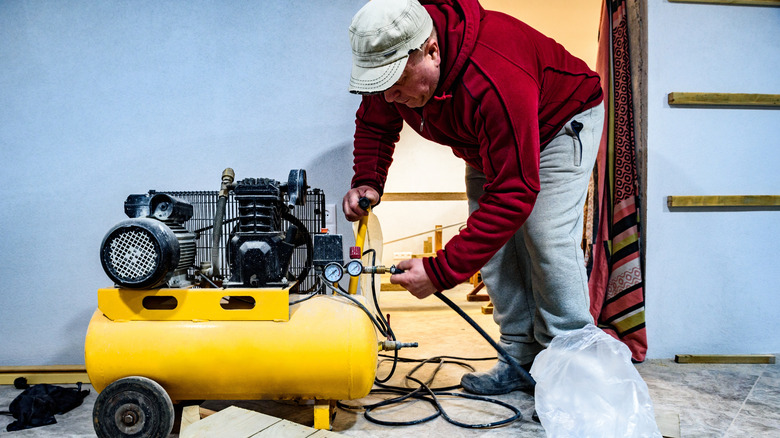
Electric air compressors have some drawbacks, too. Similar to generators, there are some electric air compressors that are notoriously noisy. While you might treat that noise as a harmless annoyance, bringing your compressor indoors can significantly amplify the noise, which can disrupt your neighbors or lead to hearing issues, especially if the sounds are higher than 85 decibels. To protect your hearing while working, move the air compressor outside and don't forget to dampen the noise with earbuds or earmuffs.
There's also the issue of heat. Air compressors will generally generate moderate heat. But when used inside, your compressor might overheat. If this happens, you'll experience frequent shutdowns or even tool damage. To protect your compressor from overheating, make sure there is plenty of space around your machine. This will allow the emitted heat to dissipate into the atmosphere rather than accumulate around the compressor.
You should also follow workplace safety protocols, like wearing proper safety gear. This includes protective gloves, safety glasses, ear muffs, and a respirator kit. Don't forget to perform regular maintenance and monitor your compressor's condition by inspecting it before and after every work session for any problems.