

This Tip Can Help Keep Your Car's Air Vents From Retaining Too Much Moisture
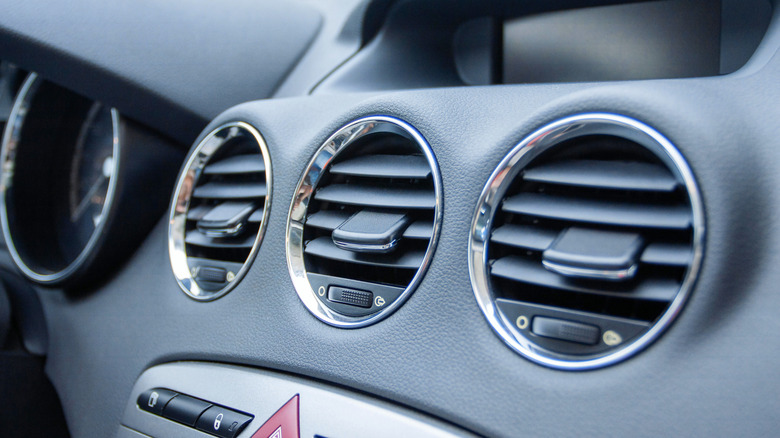
Modern cars often feature more efficient seals and better insulation than older vehicles, both of which can potentially result in increased moisture buildup. A better-insulated car will stay warmer for longer when it's turned off, which increases the amount of moisture that condenses on the insides of the windows. Then, efficient seals trap that moisture in. To add to the problem, an inefficient or clogged A/C system can leave water stuck in the evaporator, which then gets into the cabin when you turn the system on. As well as bringing even more moisture into the cabin, a clogged A/C also leaves you with a musty smell when you're driving.
If your car's A/C smells bad, there are ways to fix it, but there is also one thing you can do to reduce the amount of moisture that builds up in the A/C system in the first place. In the warmer months, it's worth periodically turning the A/C off but keeping the fans running for a couple of minutes after you finish a journey. This simple tip isn't enough to guarantee that the musty smell won't eventually return, but it should help keep your A/C system smelling fresher for longer by allowing any residual moisture in the vents to be channeled out.
Keeping up with maintenance is also important
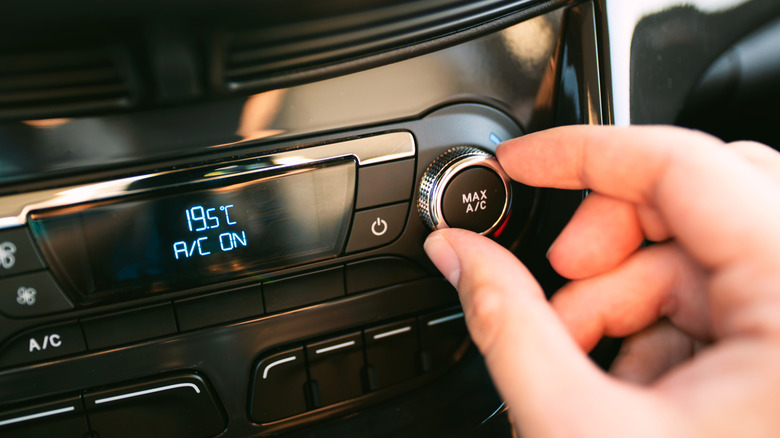
In addition to letting the car's fans clear out moisture from the vents every so often, it's a good idea to periodically clean your car's A/C to keep it running efficiently. Many manufacturers offer specialist cleaning sprays that need to be carefully sprayed into the car's A/C system, then circulated to kill any bacteria or mold. It should help neutralize any bad smells and will stop you from breathing in potentially problematic mold spores.
It's also worth making sure you regularly replace your car's cabin air filter, since it plays a key role in helping to circulate clean air through the cabin. Exactly how often you should change the cabin air filter can vary between makes and models, with Ford suggesting that it should be changed every 15-20,000 miles and Hyundai recommending that it's changed every year or every 12,000 miles, whichever comes first. If you're unsure when the cabin air filter was last changed, it's worth buying a fresh filter as a precaution, since it's inexpensive and usually easy to install.