

Don't Forget To Do This To Your Tires Before Towing Anything
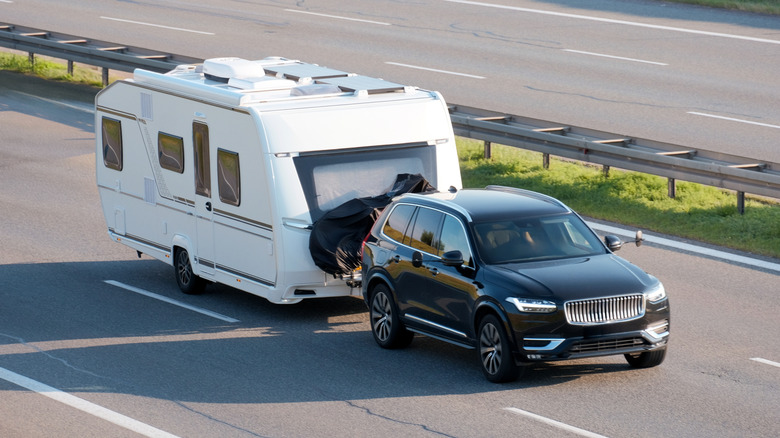
If you've ever towed anything with your vehicle before, then you probably know it's not as easy as it looks. Understanding how to safely tow a trailer or camper is one thing, but there are also many things you have to do before you actually hook up. The first step before towing anything is to check the air pressure in your tires and confirm they're set to the manufacturer's recommended PSI.
A vehicle's ideal tire pressure is based on its weight and its intended real-world use. This is why automakers list a recommended PSI on the sticker inside your driver's side door. The number you see on that sticker reflects a balance between safety, handling, and tire wear under normal and loaded driving conditions. When you start towing, your vehicle is no longer operating at normal weight, and that additional load increases the demands placed on your tires.
However, this does not mean that you either need to underinflate or overinflate your tires' air pressure to compensate for the added weight. Doing some random math to determine a new PSI is not the answer, as you could be doing more harm than good. Overinflating your tires can cause uneven tread wear, while also reducing grip and making for a rougher ride. Underinflating your tires increases edge wear, affects rolling resistance, and can lead to heat buildup that weakens the tire. This can also increase the risk of failure while towing.
More tips for safe towing
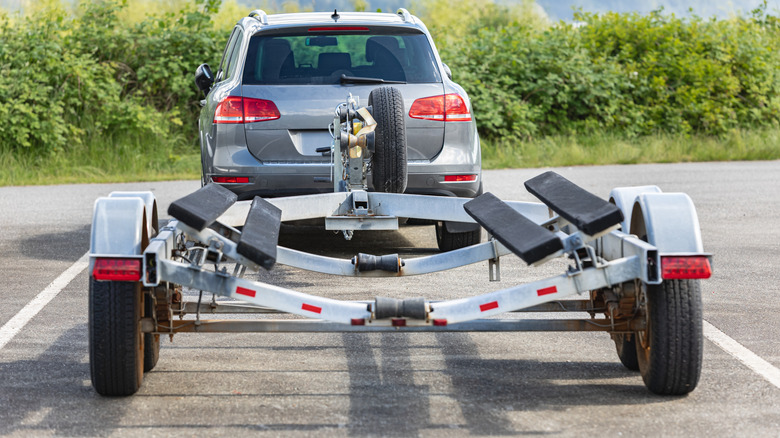
Getting the right tire pressure is essential, but you should also be aware that you shouldn't use just any tire for towing. Know how the specific tire you're using handles extra weight, including specs such as its load range, ply rating, tread design, and overall durability. These factors will tell you whether your tires are built for towing heavy loads or just for everyday driving. The type of trailer you're pulling also matters, since your tires will be under more stress than usual.
Of course, your tires should also be in top condition as well. They should still have a good amount of tread, no bald spots, and no swelling of any kind. Your tires will already be handling the weight of your vehicle, as well as passengers and cargo, and expecting worn or damaged tires to safely do all of that, while also towing even more weight, is not realistic. So before towing, you may want to visit your local garage for a quick inspection, just to be safe.
You should also know the 80% rule for towing, as it can directly affect the entire process. That rule, though more of an unofficial guideline, states that you should not go above 80% of your vehicle's rated towing capacity. That's because towing capacity is a maximum load limit, while real-world conditions like weather, braking distance, and more, can affect how that load actually reacts. So, staying under 80% means that you have a better chance of maintaining control and staying safe.