

Why The Northrop Grumman B-21 Raider Is Smaller Than The B-2
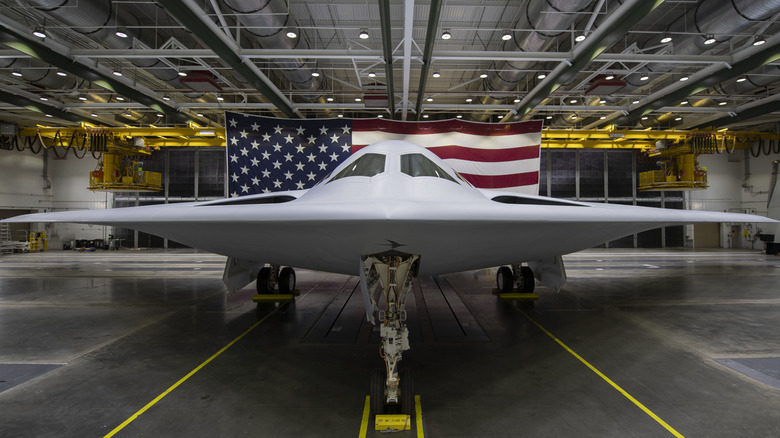
The Northrop Grumman B-21 Raider is the newest stealth bomber to join the United States Air Force. Like its predecessor, the B-2 Spirit, the Raider is based on a flying wing design with no vertical stabilizers. Looking more like an alien craft than a bomber plane, the B-21 Raider has been in development since 2015.
From a glance, it may look like the B-2 and B-21 are roughly the same size, but the Raider is actually much smaller. The exact size is classified, and likely will be for some time, but estimates put the wingspan at around 140 feet and the length at somewhere around 55 feet. The B-2, on the other hand, has a wingspan of 172 feet and a length of 69 feet.
The Spirit first hit the tarmac way back in the '80s, so why is the Raider so much smaller? Well, in the case of multi-million (sometimes multi-billion) dollar aircraft and pieces of machinery, bigger isn't always better. For one, using fewer materials to build smaller aircraft can save on costs. The Raider's smaller size also allows it to have enhanced stealth capabilities and greater flexibility for missions in the future.
The advantages of the B-21 Raider's smaller size
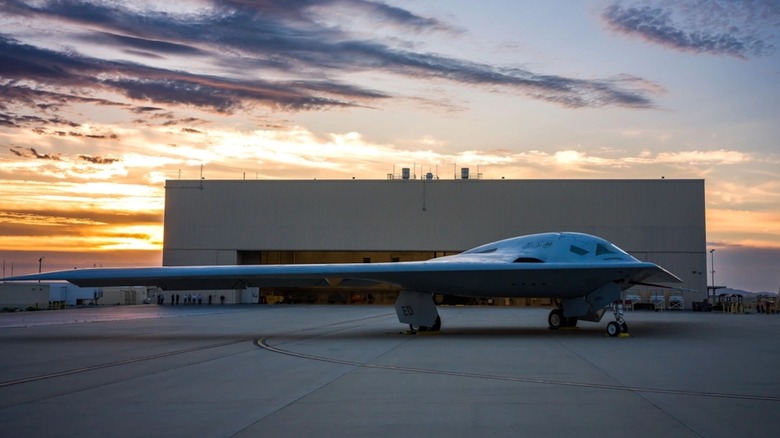
The Raider's size allows it to be more stealthy in combat missions. Given the much shorter wingspan and length, the radar cross section — or the area of the B-21 — that gets reflected back to enemy radar installation is much smaller, making it harder to detect. Air and Space Forces Magazine notes that the Raider's engine inlets are placed deeper into the fuselage, giving it an overall shorter length. Overall, the advancements of two entire generations of aircraft and 21st century tech have made things more compact and upgradable compared to older aircraft like the B-2.
The cost of production is also worth considering. Each B-21 Raider is estimated to cost about $692 million to produce. That's a hefty chunk of change, especially compared to aircraft like the supersonic Cold War B-1B Lancer bomber, which cost about $317 million each. Both of these planes, however, pale in comparison to the B-2 Spirit's unit cost of over $2.2 billion.
There are only 20 B-2 Spirits in service, while the United States Air Force wants at least 100 Raiders to eventually join the ranks. This aircraft is supposed to eventually replace the B-2 fleet entirely and bolster the existing fleet of B-52s (a plane that has been in service since 1955). A dimensionally smaller aircraft allows Northrop Grumman, hypothetically, to make more Raiders at a lower cost than the previous B-2. It might be a boring answer, but ultimately price is also a major factor when deciding what size these aircraft will be.