

One Of The Last Of These Historic WWII Bombers Is Getting A Major Facelift
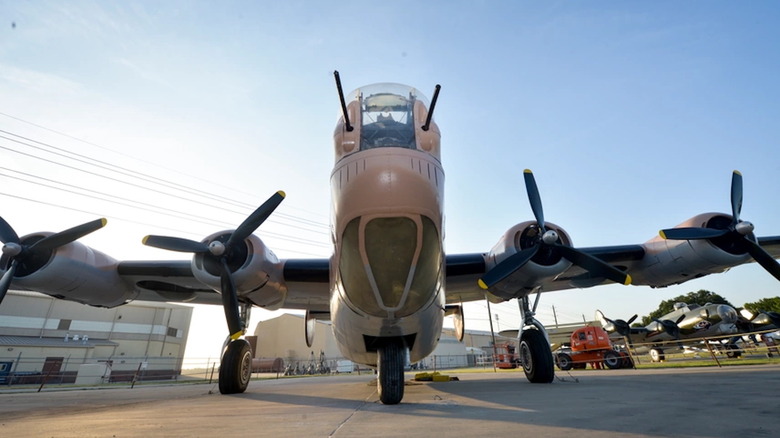
The Consolidated B-24 Liberator was a prolific Allied bomber in World War II that saw extensive service. At the time, over 18,000 planes were produced, and it was deployed to every combat theater of the war. Like its bigger compatriot, the B-17 Flying Fortress, the Liberator was meant for flying deep into Axis territory. Its range of 2,850 miles made it the perfect plane to fight the Imperial Japanese Army and Navy in the Pacific, where targets were often very far apart and isolated.
Despite the vast numbers produced, there are very few Liberators left. Not only has it been over eight decades since this aircraft saw service, but many were also scrapped after the war as aviation had firmly moved into the jet age. These days, the U.S. Air Force only has three B-24s in its historical archives. One of those Liberators, named "Rupert the Roo II" is going to the National Museum of the Mighty Eighth Air Force in Georgia. Currently at Barksdale Air Force Base, where it has sat for over 30 years, the B-24 is currently undergoing a major restoration. After that is completed, it will be displayed next to a B-17 in the museum.
This WWII bomber is prepping for the spotlight after more than 80 years
The restoration will see the B-24 almost completely disassembled and repainted to suit its new home. This will likely be a long process, as combat-ready B-24s were fitted with 10 .50-caliber machine guns, each on its own specialized mount. They also included a rotating turret on the nose of the plane. Not to mention, finding parts for an 80-plus year old plane will likely be no small task.
While it is not scheduled to ever fly again, the Liberator's four Pratt & Whitney R-1830 engines will likely get a once over to look nice on display. When it was new, those 14-cylinder radial engines gave the Liberator a combined 4,800 horsepower and a top speed of 303 miles per hour. According to reporting from WSAV3, the Consolidated B-24 Liberator will finish its makeover and be delivered to the museum in the fall of 2027.