

Why Some Luxury Cars Still Use Analog Clocks
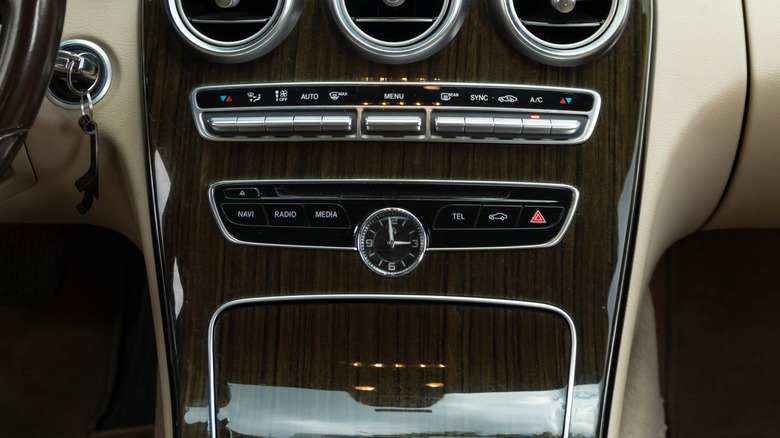
Today's crop of luxury cars represents some of the most modern and technologically advanced vehicles on the road. That includes some of the most powerful luxury cars coming in 2026, and beyond. But as these vehicles deliver comfort, performance, and style in one package, many of them are doing so with an analog clock in the dash. While it may seem like a weird feature that car designers simply missed, the fact is that these clocks are there on purpose.
Some manufacturers leave the analog clocks in place because they're meant to be the centerpiece of the vehicle. This is especially true at night with a clock that is dead center of the dashboard, as it stands out amongst the array of digital lights below it. Some car manufacturers, like Mercedes-Benz and Bentley, use elite timekeeping brands Breitling and Jaeger-LeCoultre, to develop timepieces that resemble actual wristwatches.
Then there's the idea that major luxury car brands, by virtue of their design and often their history, represent a connection to craftsmanship. So, no matter how many times vehicles upgrade to suit the current aesthetic, analog timepieces help luxury cars become something of a time capsule. You might be riding in a modern vehicle with the best technology under the hood and behind the dash. But that analog clock is a constant reminder of tradition, making luxury cars stand out even more than they already do.
The evolution of timekeeping in cars
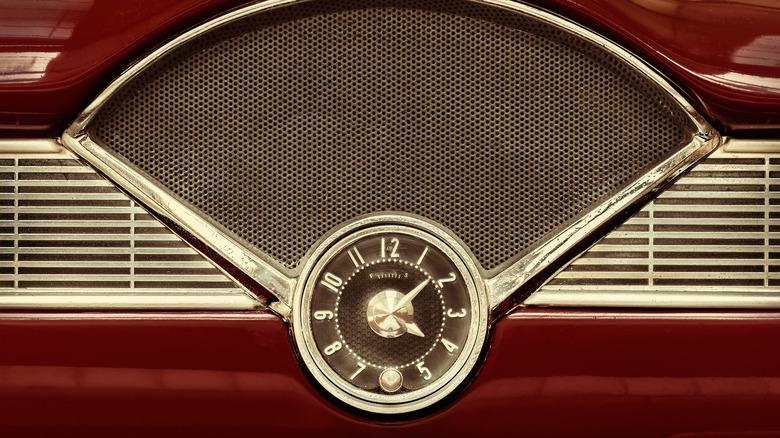
Long before luxury cars, or cars altogether for that matter, clocks were used while on the road. But it was limited to horse-drawn carriages carrying the wealthy, who wanted a portable timepiece on board while traveling. As the automobile was first developed and widely used in the 1900s, clocks were gradually included in one model after another. Some of the earliest versions of these clocks were mechanical and essentially adapted pocket watches. These clocks, like the watches used at the time, had to be wound by hand in order to work.
As time went on, mechanical clocks were eventually replaced by electric clocks, which became the norm in the 1950s and 1960s. But as timekeeping technology evolved and automobile design became more modern, clocks powered by quartz systems were introduced. By the 1970s, the driving experience was changing, and with the advent of digital displays, timekeeping had reached a whole new level of innovation. Meanwhile, analog clocks remained in luxury cars, like in certain models of the Lexus.
Some luxury car manufacturers have begun moving away from analog technology over the past several years. BMW switched over to a fully digital cockpit, complete with screen-based systems, back in 2018. The move was marketed by the German manufacturer as being beneficial for the driver, as it gave them a new operating system in which they would have more control.