

Are Flat Engines Better Than V Engines?
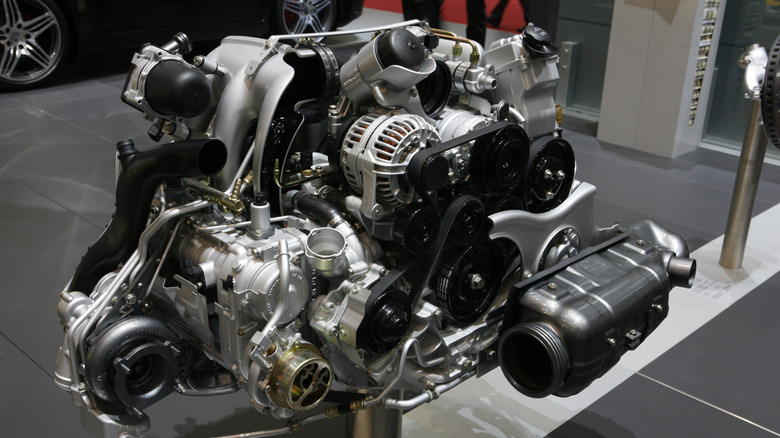
The vehicles we drive are powered by many engine types (and electric motors, of course) — but perhaps two of the most emotive forms of internal combustion engine are the V and flat configurations. Both of these have strong followings of passionate petrol heads, and both factions will insist that their preference is the true champion in this heavyweight contest.
So, which is actually the better type of engine? Let's put them in the ring in a head-to-head contest (or cylinder-head-to-cylinder-head, if you'd prefer) and see if the flat engine is better than a V-engine.
Both have a certain mystique; the throaty growl of the best-sounding V8 engines is as iconic a motoring sound as it gets. Flat engines have also earned a place in motoring history, and power many Porsche and Subaru models. They aren't restricted to four-wheeled vehicles either, and both types of engines are frequently used to power motorcycles.
Ultimately, it's the architecture of the engines that defines the differences. In V-engines, as the name suggests, the cylinders (typically six or eight) are configured in a V-shape. Flatten this V out until it's horizontal and it probably isn't a surprise to find that you have a flat engine.
So if you're faced with a choice of flat and V engines, which should you opt for? The reality is that it's impossible just to point at one and say, "That's the boy for you." Neither layout can claim to be an outright winner. There are pros and cons to each, and which comes out on top can depend on circumstances.
Flat engines: To call them best would be flattery
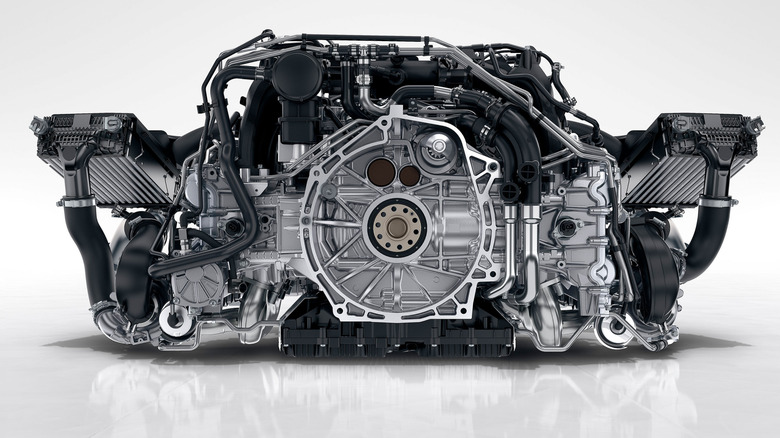
Before we proceed, it's worth noting that flat engines come in different configurations, with the most common being the boxer engine. The defining difference is how the pistons move — the boxer engine uses an opposing piston motion that's been likened to a boxer throwing right and left punches, hence the name.
With that distinction noted, let's look at some of the positive features that may sway you towards a flat engine. The flat configuration of the cylinders in these engines has one great attribute: their low profile. The most obvious advantage of this design trait is that it lowers the center of gravity of the whole vehicle, allowing for better handling characteristics. Which is why you'll often see these engines installed in high-performance cars — as the performance stats of the 2026 Porsche 911 Turbo S testify.
Flat engines are also renowned for their excellent balance and smooth operation. This is largely down to the configuration of a flat engine and the way the pistons move within it, which cancels out much of the vibrations that can affect other engine types. This trait can often negate the need for additional balancing components.
Given all this, a fair question could be, why don't more vehicles use flat engines? Mostly, this is down to that same flat layout. While this does wonders for a vehicle's center of gravity, flattening out an engine also widens it. This can cause packaging issues within the engine bay and can limit how and where the engine is used. In some cases, the tightness of this fit can also hinder routine maintenance tasks.
V engines: Popular for a reason
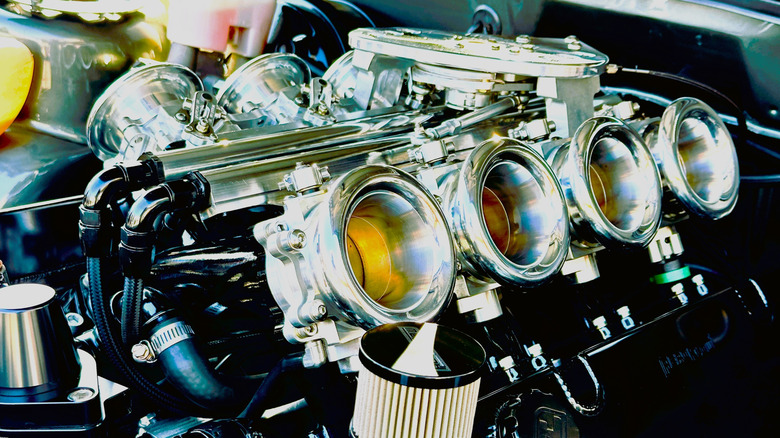
If we took the flat-6 engine and somehow re-engineered the cylinder blocks to have a sixty-degree or greater angle between them, then you'd have converted a flat-6 to a V6. Okay, so this is an oversimplification, but Russian YouTubers have converted a boxer engine into an inline engine, which is a similar principle.
Both these types of engines are configured with dual banks of cylinders. This is because it allows more cylinders in a shorter space — think of trying to fit a 12-cylinder inline engine as opposed to a V12, and you get the picture. In other words, a V or flat configuration stops cars having hoods that stretch out infeasably far.
But the V configuration has one big advantage when compared to its flatter brethren — it's slimmer. This means it's far easier to fit within a conventional engine bay. This is why the V engine is used across a far wider range of vehicles, and can be found in everything from family SUVs to high-performance sports cars.
Essentially, both these engine types have a pedigree of performance excellence, and choosing between them isn't simple. The better engine ultimately depends on what you're looking for. There's usually a reason as to why manufacturers match an engine type with a car or motorcycle model, and when they opt for a particular design, it's because it suits that purpose better than the alternatives.