

Police AI Led To The Arrest Of A Woman For Crimes In A State She Says She's Never Visited
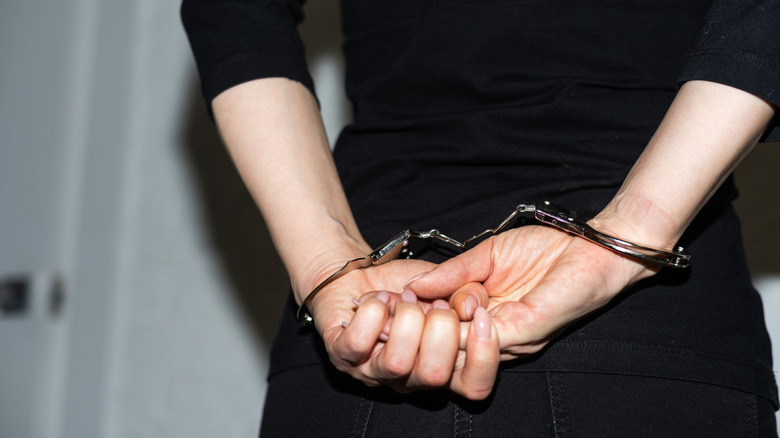
Most of us use AI every day, often without even knowing that it's working behind the scenes. While it may feel like we're living at the forefront of innovation, according to Pew Research, many Americans remain wary of AI. It's used in many controversial ways, such as deepfakes and misinformation, but it can also be beneficial for things like creating code. Police are using it to write reports, enhance communications, and even for facial recognition. But what happens when AI is wrong? For a woman who lives in Tennessee, it meant spending several months in prison for a crime that occurred in a state that she says she'd never even visited.
Angela Lipps was arrested in July 2025, weeks after a warrant was issued by a Fargo Police Department in North Dakota, more than 1,000 miles from her home. The police department turned to its neighbor, the West Fargo PD who routinely uses facial recognition technology from a company called Clearview AI. Fargo hoped the AI could help identify a suspect in a bank fraud case.
To be clear, the police state that in addition to facial recognition, they conducted other investigative steps before landing on Lipps as a suspect. A warrant was issued for her arrest, and U.S. Marshalls showed up at her home in Tennessee, where she was babysitting. She was booked into her county jail as a fugitive and held without bail for almost four months. Here's how it happened, and what the Fargo Police Department did when they realized their mistake.
Months in prison

No matter how hard we work to protect our personal information, it can be hard to avoid facial recognition technology, but it's unclear why the Angela Lipps case took so long to be resolved. While the Clearview facial recognition system identified Lipps as a suspect, it's not known what other evidence the police department used. Fargo Police Chief Dave Zibolski stated that the case was not "solely based" on the AI-generated lead.
Lipps sat in jail until October, when she was extradited to North Dakota to face multiple charges. Her lawyer eventually used her bank records to prove her innocence, and the charges were dropped. Sadly, her case is not the first or only example of the use of artificial intelligence leading to wrongful arrests. Last year, a Detroit woman, Porcha Woodruff, was charged with carjacking after being incorrectly identified with facial recognition and spent 10 hours in jail. The charges were dropped and police admitted their mistake, and the incident reportedly led to changes in how Detroit uses facial recognition.
As for Angela Lipps, she was stranded in North Dakota after being released from prison. She eventually made it home, and Fargo police stated that the length of time she was in prison was either due to her fighting extradition or serving time for a separate offense. She is considering a lawsuit. The Fargo Police Department, which does not have its own facial recognition technology, stated that it no longer uses information from West Fargo because they "don't know how it's run or how it's overseen."