

What's The Difference Between Twin-Turbo And Twin-Charged Engines?
When reading about different engine setups, all of the nomenclature can get confusing, especially when it comes to less conventional engine configurations from cars that are a little more obscure. Take how turbocharged and supercharged engines work; on the surface, they look easy enough to understand as it just describes the way an engine gets more air to increase performance. A twin-turbo engine, like the name implies, uses two turbochargers instead of one for more power.
However, what does twin-charging refer to? It's also not all that complex when you break it down, at least on paper. Twin-charging is when you use both a supercharger and a turbocharger to get more power out of an engine. This helps to eliminate the dreaded "turbo-lag" as the supercharger picks up the slack while the turbo takes time to spool up; superchargers are driven by the engine directly, which offer a more immediate boost when compared to the way turbos rely on exhaust to function.
Where twin-charging has showed up
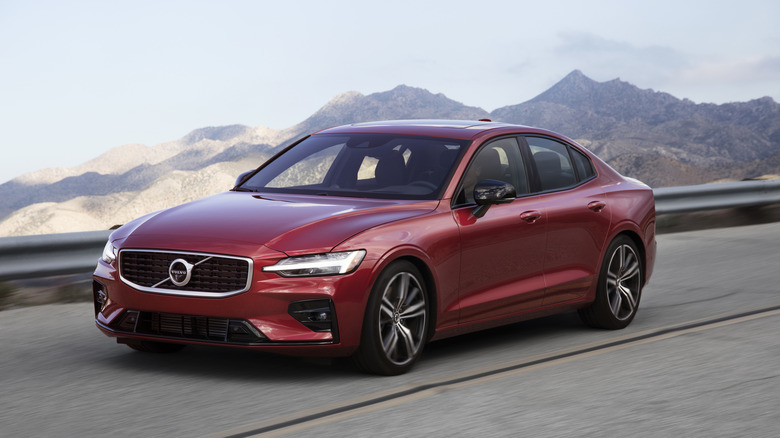
On production cars, twin-charging does crop up occasionally, although not that often given the inherent complexity of having both a supercharger and a turbocharger working in tandem. The Volvo S60 T6, for example, used a twin-charged setup. It was, interestingly, the first Volvo made in the United States when the last generation launched in 2018. Its 2.0-liter four-cylinder made a pretty stout 316 horsepower.
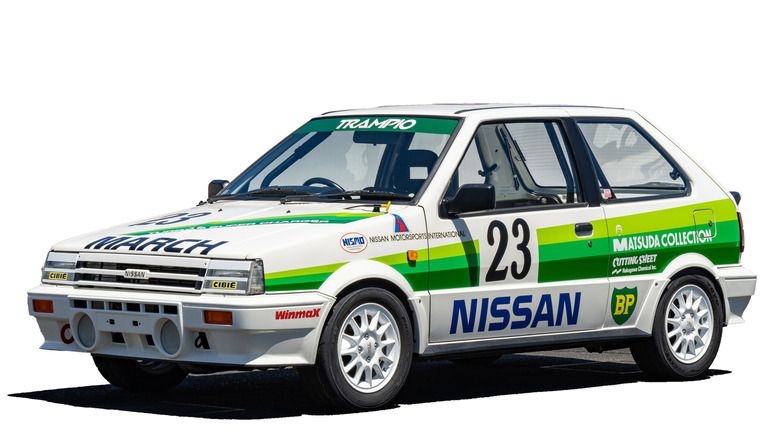
Another car that used a twin-charged engine was the 1989 Nissan March Super Turbo. The little oddball of a car was fitted with a 930cc four-banger that made 108 hp. That might not seem like a lot, but with the car only weighing 1,366 pounds it was more than enough power to push it around the track.
Despite the similarities in name, twin-charging and twin-turbocharging couldn't be more different. Twin-charging is complex and niche, while twin-turbocharging has seen widespread adoption over multiple different genres of vehicle. Twin-turbo engines are therefore much more common, showing up in everything from Ram pickup trucks and BMW Z4 roadsters to the latest and greatest 1,250 horsepower Chevy Corvette ZR1X. They're simply a more straightforward way that twin-charging to deliver more power and efficiency while reducing lag.