

How To Know If Your 12V Car Battery Has A Healthy Resting Voltage
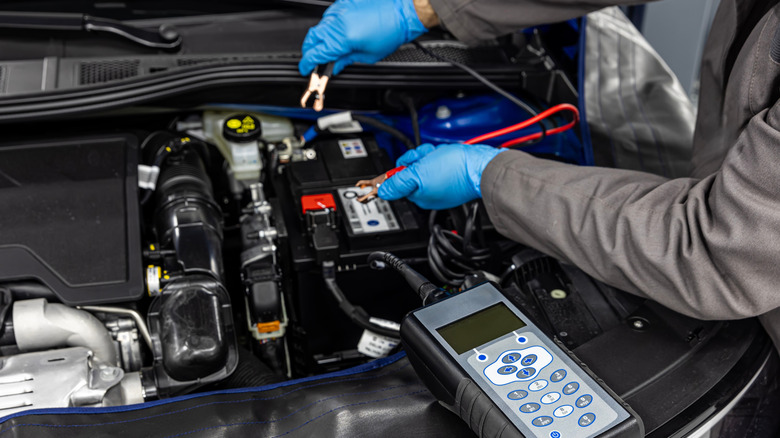
A dead car battery can take a perfectly good day and wreck it every time. The worst part is that it usually happens when you least expect it, and always when you're in a hurry to go somewhere. While it's easy to tell if your car battery is dead, how do you know that it's good on a normal day, before you start it up? A healthy 12V car battery should read about 12.6 to 12.4 volts when your car is off, or resting.
These numbers mean your battery is fully charged, and you'll likely get the performance you need. If your battery reads below 12 volts at rest, then you might have a problem, and you'll eventually need to address it before it dies completely. The reason it's important to check the battery at rest is that it gives you an accurate snapshot of its condition. Since your car isn't turned on, no electronic systems are putting a load on the battery, and thus potentially skewing the results of a battery test.
The best way to check this yourself is to use a digital multimeter. This device works at your battery's terminals, and you can use it when your engine is off to get the resting voltage. If you don't have a multimeter, you can take your vehicle to a local garage or automotive retailer. For example, AutoZone can perform a more complete battery test, along with a full diagnostic check, typically at no cost to you.
Signs your car battery is losing power

A modern car battery is 12 volts, and if the resting voltage of yours is below that number, it may still start up. If your battery is putting out less than 12 volts as the vehicle is running, that's a problem. Even if you can crank your car with less than 12 volts more than once, one of your systems is likely near the point of failure. It's better to get it checked out by a technician before you end up getting stranded.
A car battery loses its voltage over time due to everyday use. It can also lose voltage due to its age, so even if your car is rarely driven, an older battery's power can still decrease. Even though a battery doesn't actually run out of voltage, its internal chemical composition changes every time it's charged. Over the course of about three to five years, a battery's total voltage drops, until its performance is eventually affected.
The good news is you usually have some warning signs that your battery's voltage is dropping. Your headlights may start dimming or flickering. Your power windows might move slower than before. Even your car stereo can sound differently, but the most obvious sign is when your car doesn't start as it normally would. A brief hesitation here and there usually means the end is near. If you experience any of these issues, get your battery checked out by a professional as soon as possible.