

Prius Sales Dipped In 2026 – Here's What Toyota Owners Are Buying Instead
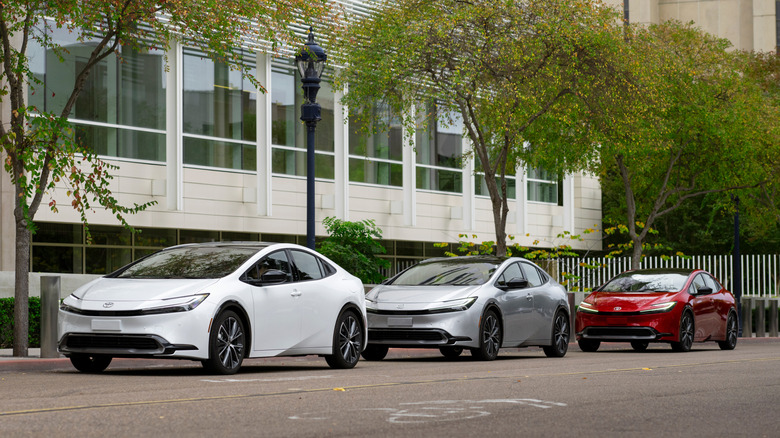
The Toyota Prius isn't the fastest, most exotic, or most traditionally desirable car out there. In fact, many car enthusiasts would say this fuel-sipping hybrid ranks near the bottom of the list in most of the categories that make an automobile memorable. Yet there's simply no denying the historical impact of the Prius, both for Toyota as a company and for the growth of hybrid vehicles as a whole.
From its humble beginnings as an awkward-looking sedan to its mid-2000s heyday as the darling of environmentally-conscious Hollywood celebrities and budget-minded commuters alike, it's been an interesting journey for the Prius, which is now in its fifth generation. By most accounts, the latest iteration of the Prius is the best yet, delivering improved style and better performance compared to the older models, along with the same fantastic fuel economy buyers have always expected.
Despite this, Prius sales have declined in 2026, and fairly steeply at that, with 2026 Prius sales looking to be substantially lower than the previous year. So why are buyers abandoning the Prius? Speaking to The Drive, a Toyota representative says it's largely because they've moved over to the ultra-practical, electrified current-gen Camry instead. In addition, the growth of EVs also likely plays a major role in the decline of the Prius' popularity among the green crowd.
Toyota now has hybrids for everyone
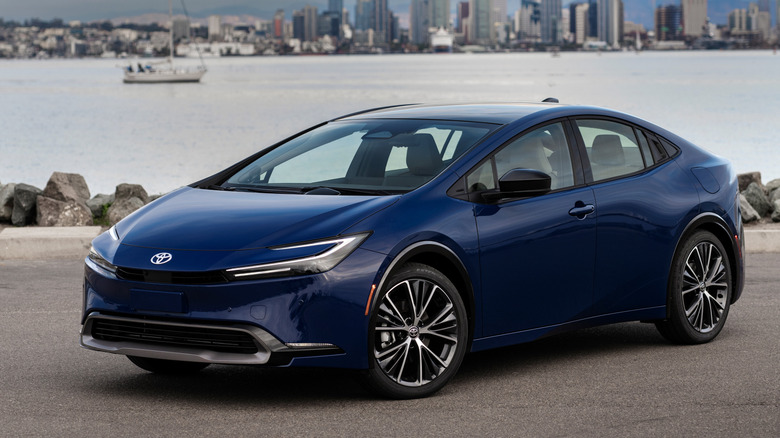
When the first-generation Prius came onto the scene in the early 2000s, it – along with Honda's funky, first-generation Insight – was the only way to get the then-new-fangled gasoline-electric hybrid technology in a vehicle. During the early years of the Prius' existence, a hybrid wasn't so much a powertrain option as it was a dedicated type of vehicle — one that emphasized fuel savings above all else. For a while, if you wanted a Toyota hybrid, the Prius was the only game in town.
As Toyota refined and developed its hybrid technology, additional hybrid models began to join the lineup in the late 2000s. These included versions of cars like the Camry, the Highlander SUV, and certain Lexus models. The Prius continued to be the MPG king, but other models had begun to close the gap.
Fast forward to today, and Toyota has hybrid powertrains available for nearly every vehicle it sells, from the entry-level Corolla sedan to the flagship Tundra pickup. Toyota's high-volume models like the Camry and RAV4 have even transitioned to standard hybrid powertrains that deliver better fuel economy and performance than ever. Thus, it's not surprising that former Prius buyers would switch to other Toyota hybrids that can fulfill different needs than the Prius, be it a lower price, more room, or better off-road capability.
Mission accomplished
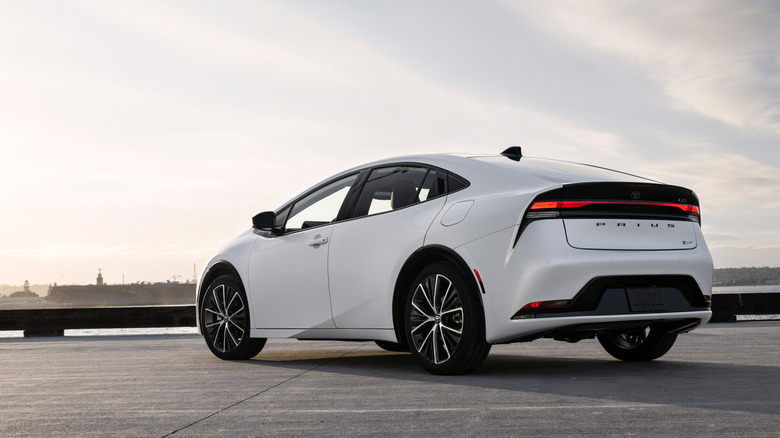
The fact that buyers are gravitating toward the Camry isn't too surprising. While the Prius still edges out the Camry in fuel efficiency, the starting prices of the two hybrids are very close, and the base Camry's higher starting price ($29,300 versus $28,550, both plus $1,195 destination fee) gives buyers a substantially larger car with a more traditional interior layout and driving experience. On a similar note, the RAV4 Hybrid also an option for buyers who want a higher-riding crossover SUV with similarly great fuel economy.
Another factor that has surely contributed to the Prius' decreased relevance is the rise of full electric vehicles. EVs have become a compelling choice for many of those who were formerly drawn to the hybrid's green image and small carbon footprint. It's hard not to look at the Tesla Model 3 as a strong alternative to the Prius, especially for those considering one of the pricier variants of Toyota's hybrid.
While the Prius faithful might be disappointed to see the popularity of this formerly game-changing model on the decline, the bigger picture shows it's less about the Prius itself failing and more about Toyota's hybrid efforts reaching new levels of success — so much so that the Prius' mission as a dedicated fuel-sipping hybrid has almost become redundant. We still like the rebooted Prius and don't foresee the model going away anytime soon, but the peak of its popularity is likely well behind it.