

These 5 Smartphones Have More Power Than You'll Ever Need
If you're shopping for a new smartphone in 2026, you're choosing between an Apple product and one of the many Android phones on the market. Going with the iPhone gets you premium build materials, an exceptional camera, and a software experience that's tough to beat in terms of aesthetics, long-term support, and consistency. The top-of-the-line iPhone 17 Pro Max runs Apple's in-house A19 Pro chip, which is impressively powerful and can even run AAA titles like "Death Stranding" at playable frame rates.
Pair that with a huge 6.9-inch 120Hz display and solid battery life, and it is one of the most powerful phones you can buy. If you're looking for a device that truly pushes performance to the extreme, though, you'll want to venture into the Android space for dedicated gaming smartphones. Raw performance is not the only metric that makes for a uniquely powerful experience, though. Smartphones that excel in other aspects, like camera performance and endurance, also fall in the same camp.
Mainstream flagships are well-rounded, but some smartphones feature ultra-high refresh rates, advanced cooling systems, and emerging battery technologies. These features elevate them above the mainstream and make them arguably the most overpowered smartphones available. Here's a look at five current-gen options in the market. It's worth noting that a few of our mentions aren't officially sold in the U.S., and you may face carrier compatibility issues if you import them.
OnePlus 15
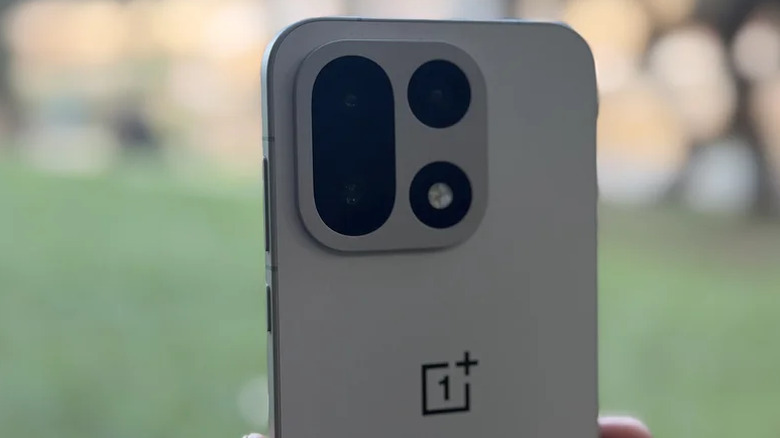
At first glance, nothing about the OnePlus 15's aesthetics screams unusually high performance — something that a lot of gaming-centric smartphones tend to wear as a badge of honor. Despite its muted design and a lack of RGB lights or bold accents, the OnePlus 15 is one of the fastest phones you can buy in the U.S. at the time of writing. It has Snapdragon's new 8 Elite Gen 5 SoC, 12GB of RAM, and 256GB of storage. At $899, it's also very well priced considering all that it has to offer.
In our review of the OnePlus 15, we were impressed by its 165Hz, 1.5K AMOLED display. In addition to the most powerful smartphone chip currently available, the OnePlus 15 also has a touch response chip, which enables a touch sampling rate of 3,200Hz — which helps make the device feel more responsive than its competitors.
The phone also packs a mammoth 7,300 mAh silicon-carbon battery. Not only does this translate to longer gaming sessions, but it also allows it to be a two-day phone with less intense use. When it's time to charge, you can top it up in less than 45 minutes via the included 80W SuperVOOC charger, although it's worth noting that the global variant of the OnePlus 15 can accept up to 120W of power. OxygenOS 16 powers the whole experience with a solid set of customization features.
RedMagic 11 Pro
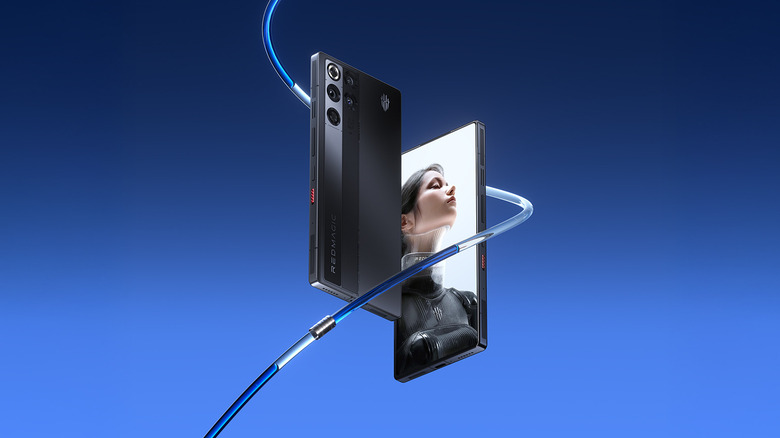
There are good all-rounder phones capable of playing high-end games, and then there are phones that are built from the ground up with one purpose in mind — gaming. The RedMagic 11 Pro is the world's first liquid-cooled smartphone, which it pairs with an active cooling fan. Rest assured, this phone's hardware is designed to make the most out of the Snapdragon 8 Elite Gen 5 that powers it. Pricing starts at $699 for the 12GB RAM and 256GB storage variant, and it goes up to 24GB of RAM and 1TB of space. You also get a giant 7,500 mAh silicon-carbon battery with 80W of wired and wireless charging.
On the front is a 6.8-inch AMOLED display that refreshes at 144Hz and sports a touch sampling rate of nearly 2,600Hz. A standout element of the RedMagic 11 Pro is the under-screen front camera. Though this technically means slightly worse selfie quality, it's a trade-off worth considering if you value a truly uninterrupted gaming experience — aided by the phone's bezel-less display. The device does sport a dual-camera setup on the rear, which PhoneArena described as being "underwhelming."
As for gaming, you really can't top this experience. Not only do you get an actively cooled phone with the fastest mobile processor available, but the capacitive shoulder triggers offer an extra layer of control in games that other smartphones don't provide. Similarly, the 3.5-mm headphone jack is a thoughtful addition that delivers latency-free audio.
Apple iPhone 17 Pro Max
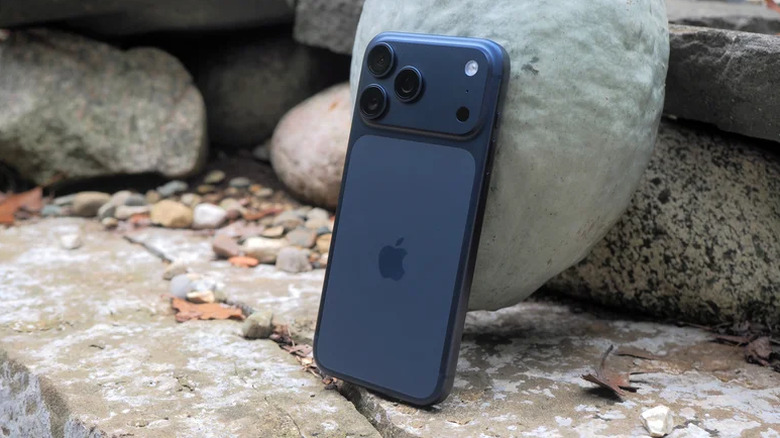
The A19 Pro chip found in the iPhone 17 Pro series is no slouch, but raw performance is not the only thing this year's iPhone does best. The Pro offers a range of features catering to power users and creators. For starters, the triple-camera system uses 48-megapixel sensors across the board. This, as we found in our review of the iPhone 17 Pro Max, allows for remarkably natural images. Both ultrawide and zoom shots retain great detail and are consistent with how results from the main shooter look.
The entire iPhone 17 lineup, except the budget-friendly iPhone 17e, sports a Center Stage front camera, with a square sensor and a much wider field of view. Although the device is perfect for quick point-and-shoot situations, the iPhone 17 Pro's true power lies in its ProRes and ProRAW capabilities. For one, you can shoot up to 4K 120fps Dolby Vision videos. It also features four studio-quality microphones that let you isolate audio sources during post-production. Furthermore, the ability to shoot videos in Apple Log 2 means you have greater control over color grading and dynamic range.
Even as a gaming handset, the iPhone 17 Pro Max delivers. The aluminum unibody build and vapor chamber keep things cool and avoid throttling. This lets you play console-quality games like "Assassin's Creed Mirage" and "Resident Evil Village" natively on your iPhone. Pricing starts at $1,099 for the smaller iPhone 17 Pro and $1,199 for the Max variant.
Nubia Z80 Ultra
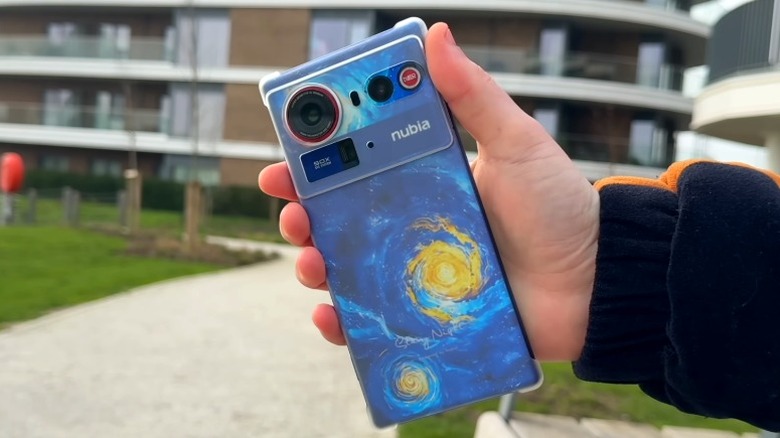
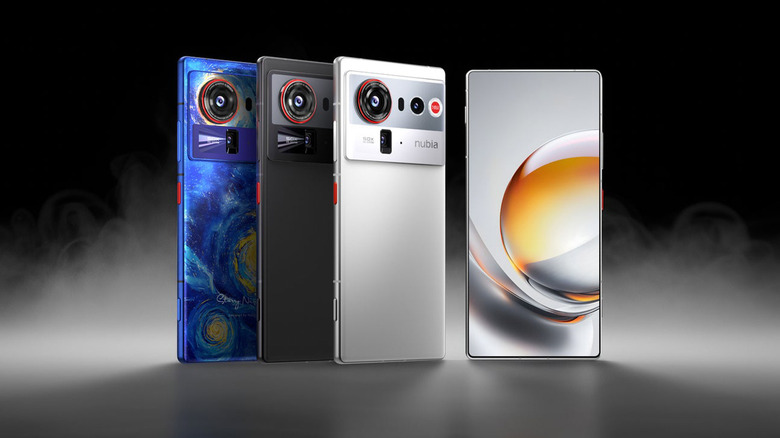
If you're a fan of smartphones featuring premium build materials and powerful internals that don't break the bank, perhaps the Nubia Z80 Ultra might interest you. Given that it's the parent brand of RedMagic, you will notice many similarities between the Z80 Ultra and RedMagic's gaming-centric smartphones. For starters, it's powered by the newest Snapdragon 8 Elite Gen 5 SoC, making it one of the fastest phones you can currently buy. What's even more impressive is the fact that it retails at $649 in the U.S. Even if you bump up its RAM and storage to 16GB and 512GB, respectively, it still undercuts most flagships at $799.
Though the phone can handle any modern game, Nubia has designed it as a camera-centric device. It features a triple-camera setup, comprising a wide, an ultrawide, and a telephoto lens. All three cameras can shoot 4K 120fps videos, but the main camera can also record footage in up to 8K 30fps. However, GSMArena found that the camera experience, while solid, was nothing out of the ordinary.
Like the RedMagic 11 Pro, the Nubia Z80 Ultra places its front camera under its display, allowing for a beautiful, notch-less 144Hz AMOLED display. You also get a two-stage shutter button for a more authentic camera shooting experience. The phone is backed by a 7,200 mAh silicon-carbon battery that supports up to 80W of wired charging.
Oppo Find X9 Pro
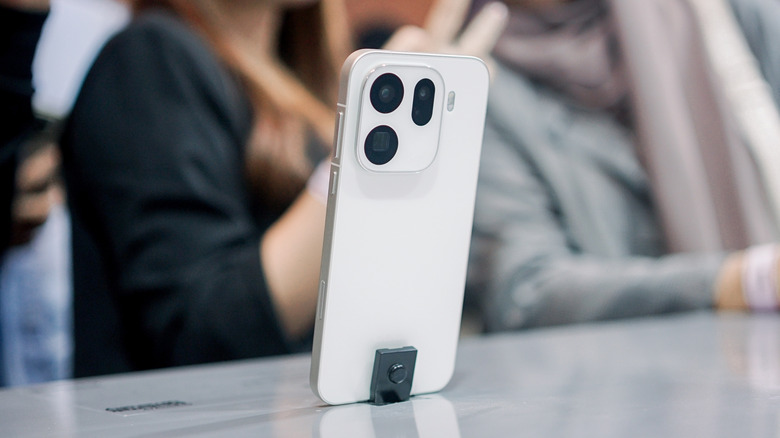
Like the iPhone 17 Pro Max, the Oppo Find X9 Pro is on this list less for its raw performance and more to do with how well it excels as a smartphone overall. That said, the Snapdragon 8 Elite Gen 5 that powers this phone means it can easily handle the same games as gaming-centric devices do. It's also backed by 16GB of RAM and 512GB of storage, so everyday multitasking and using Android's AI features should feel fast and responsive.
The Find X9 Pro puts its emphasis on camera performance. It features a triple-camera setup with wide, ultrawide, and telephoto lenses. The main shooter is a 1/1.28-inch 50-megapixel f/1.5 sensor, while the other 50-megapixel sensor offers a 15mm ultrawide field of view. The telephoto is an impressive 200-megapixel sensor that can provide up to 13x lossless zoom. The camera app itself lets you zoom to 120x. Digital Camera World gave the Find X9 Pro a perfect score, highlighting the excellent camera experience from all three sensors.
That's not all: The Find X9 Pro is also backed by a giant 7,500 mAh silicon-carbon battery that supports 80W wired charging and 50W wireless charging. It runs ColorOS 16, which is very similar in form and function to OxygenOS. The phone costs the equivalent of around $1,300 but isn't available in the U.S.