

iPhone Users Should Envy These 10 Features On Chinese Phones
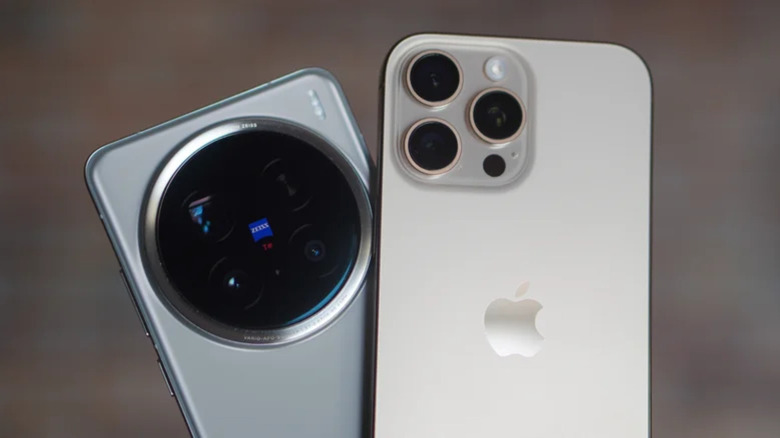
Apple's iPhone devices have traditionally been considered to be the pioneers of new and improved technology. Whether it's the first ever 64-bit processor on the iPhone 5S or the fingerprint scanner for biometric unlocking on the same phone, Apple has been at the forefront of introducing cutting-edge tech on its devices. Not to forget, the iPhone 7 Plus was among the first phones to make dual-camera setups mainstream for portrait and zoom photography. While this trend still holds true to a certain extent, the latest example being the square front camera sensor on the iPhone 17 series, it seems like Apple is lagging in terms of shipping the latest and greatest features, especially when compared to some Chinese flagships.
From the latest silicon-carbon battery tech, resulting in phones with more battery life than the iPhone 17 Pro, to massive one-inch camera sensors with variable apertures and longer zoom ranges, Chinese brands like Vivo, Xiaomi, Oppo, and Huawei seem miles ahead in terms of raw hardware. These advancements contribute significantly to the user experience, resulting in a superior phone across many aspects. We've found 10 such features on Chinese flagships that iPhone users will definitely envy. Notably, we've made it a point to only include features that make a tangible difference when using your phone daily. After all, that's what matters. Numbers that simply beef up the spec-sheet wouldn't make a difference to the average consumer.
Large 1-inch camera sensors
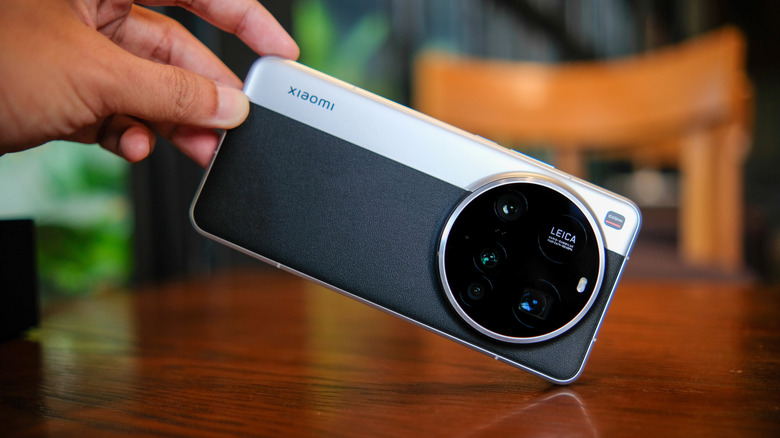
The way cameras work is that the larger the sensor, the higher the ability to capture more light. A larger sensor also results in better depth of field, which is the blur you see in the background when clicking photos. The issue with adding a large camera sensor inside a smartphone, though, is space constraints. Due to the compact and slim form factor, it becomes difficult to cram in a larger sensor, which is why dedicated cameras perform better than smartphones in most scenarios. However, some Chinese brands like Xiaomi and Huawei are pushing the envelope in this regard by including large one-inch sensors for the primary camera.
The latest Xiaomi 17 Ultra also has the same primary camera module, so you get excellent natural bokeh and class-leading low-light performance. Additional cameras, namely the ultrawide and telephoto lenses, also have larger sensors compared to iPhone devices, which results in an overall better camera experience. The biggest advantage of using a phone with a one-inch camera is that you won't have to use portrait mode on most occasions to click photos that stand out. There's a natural blur that looks much better than a software-generated one, especially when clicking subjects from up close. Just hit the shutter, and the shot is taken. On iPhone devices, you may have to hold the phone still for 2-3 seconds to get a good shot when the lighting is really dim.
Telemacro and high-res zoom cameras
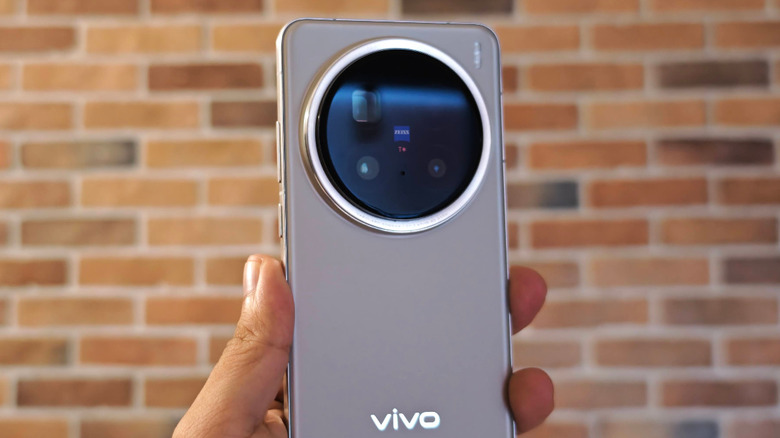
Zoom or telephoto cameras play a big role in modern-day phones, since they not only help you capture better human portraits but also let you capture faraway monuments and structures, and even read signboards that you can't with your naked eye. This is another area where the latest iPhones fall short when pitted against most Chinese flagships. Phones like the Oppo Find X9 Pro, Vivo X300 Pro, and Xiaomi 17 Ultra have zoom cameras with bigger sensors and higher megapixel counts. This results in better photos in low light, along with more detailed pictures overall. Additionally, these phones offer crazy levels of zoom, like 100x or even 120x, thanks to the sensor's ability to retrieve details, along with some AI sorcery.
Another interesting aspect of these zoom cameras is that their minimum focusing distance is usually quite low, which means you can use the zoom camera to click close-up shots or macros. The iPhone 17 Pro's zoom camera is good for portrait photography in good lighting conditions, but falls short in low-light or when you push it beyond the 4x or 8x range. The minimum focusing distance is also extremely high at close to 90 centimeters, which means you cannot click macro pictures. You can still use the ultrawide camera for macros, but you'll have to go extremely close to the subject, making it inconvenient to use a lot of times. An improved zoom lens can definitely take the iPhone cameras from good to great.
Silicon carbon batteries
Alright, enough of the camera nerd talk. Let's move on to something literally every smartphone user benefits from — battery life. The iPhone 17 Pro Max undoubtedly has one of the best endurance ratings of any phone, so there's not much to complain about here. However, the smaller iPhone 17 Pro and the base iPhone 17 could have done better if they had larger batteries. With the current Li-ion technology used by Apple, adding a larger battery would require more space, making the phone thicker and bulkier. Chinese OEMs — to tackle this issue — have switched to the more recent Silicon Carbon battery tech that allows batteries to have a higher charge density. This results in batteries with higher capacities in the same form factor as a standard Li-ion cell.
For instance, the Oppo Find X9 Pro has a massive 7,500mAh battery compared to the iPhone 17 Pro Max's 4,823mAh, while being a few millimeters slimmer. Now that's real innovation! We really hope that Apple adopts this technology on newer iPhone models. Imagine the iPhone 18 Pro Max with a 7,000mAh battery. If it's already doing so well with a sub-5,000 mAh cell, a Silicon Carbon battery will make the iPhone a true two-day phone, especially when you factor in iOS optimization. A lot of users opt for the Pro Max version of the iPhone purely for the larger battery. If Apple introduces higher capacity cells, consumers can pick up the smaller, more handy iPhone without compromising on battery life.
100W fast-charging
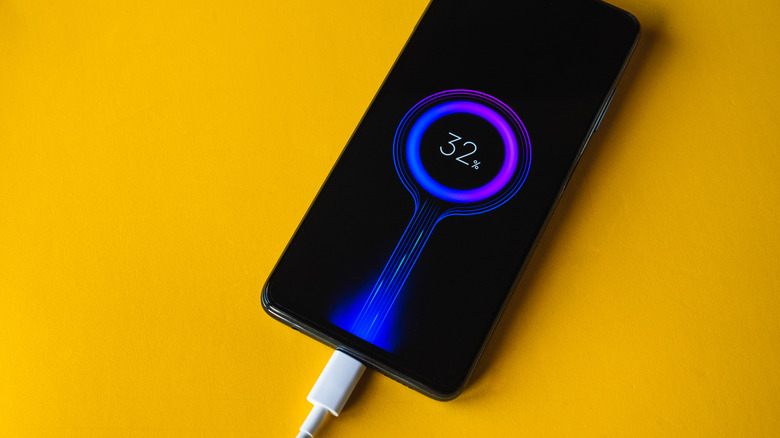
Over the years, the iPhone's charging speed has stayed in a similar ballpark, from 20-30 watts on average. Compared to other mainstream flagships from Samsung and Google, the charging speed seems on par. However, Chinese flagships — for the past few years — have been operating on another level. Phones with 80, 100, and even 120-watt fast-charging are quite popular, which means you get a full day's worth of power if you plug in your phone for 15-20 minutes. Now that's a huge deal for frequent travelers or those who commute long distances regularly. The charging slows down towards the end, especially after the phone reaches 80-90% of its charging capacity. Given the high battery capacity, you don't always need to charge your phone completely.
Even a quick 50-60% charge should last an entire day. It's also worth noting that, along with wired charging speeds, Chinese brands have also leveled up on wireless charging speeds. While the iPhone recently got a bump up to 25-watt wireless charging, thanks to the Qi 2 standard, several Chinese brands have been shipping phones with 50-watt wireless charging. Notably, one can achieve such high speeds only with the help of a proprietary wireless charger with built-in cooling fans. It's a nice feature to have nonetheless, especially if you want to rest your phone on your desk while being able to glance at the screen for quick notifications or calendar events.
IR blaster

Here's a feature that was quite prominent even in the North American market a few years ago, but seems to have vanished lately — the IR blaster. Infrared, or IR, is used to control the majority of electronic appliances around us. Televisions, ACs, fans, DVD players, soundbars, and whatnot. While it's a convenient way of controlling these devices, the issue lies in the fact that you need multiple remotes to control so many devices. Hence, some smartphone brands decided to add an IR blaster to smartphones, so that you can use the one device that you have with you all the time — to control appliances at home. The Samsung Galaxy S4, S5, and S6 had IR blasters baked into the phone, but the brand decided to ditch the component on future generations.
However, Chinese brands like Xiaomi and Vivo continue to include IR blasters on their phones to make it easier to control multiple devices. Imagine being able to change the channel on your TV and the temperature of your AC using the same device. Apart from controlling the devices at home, an IR blaster comes in handy if you want to operate a projector at work or university, and you're unable to find the remote. It's a simple inclusion that makes a world of difference in day-to-day life. We hope Apple considers adding an IR blaster to the next iPhone, especially since the brand has experimented with Lidar sensors on the Pro iPhones and iPads.
IP69 water and dust resistance
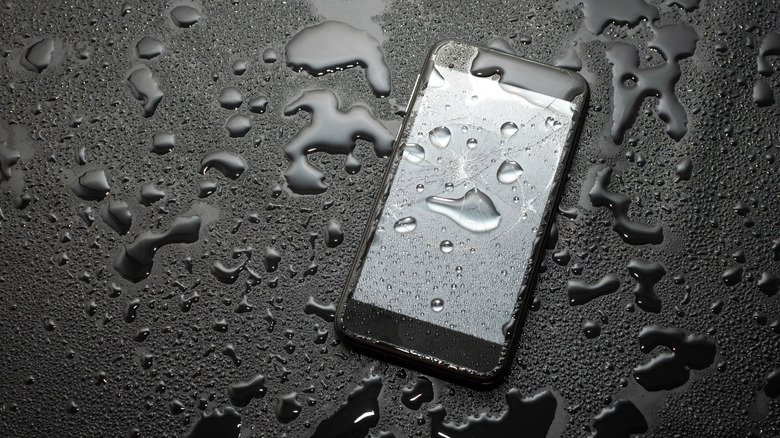
Water resistance isn't new for iPhones. Back in 2016, the iPhone 7 became the first iPhone to come with an IP67 rating, which meant that it was both water and dust-resistant. Since then, future generations of the iPhone have undergone several upgrades, with the latest iPhone 17 getting an IP68 rating. In simple terms, you can submerge an iPhone for up to 30 minutes at a depth of six meters. While this is sufficient for most people, some Chinese OEMs have gone one step further by adding an IP69 rating to their smartphones. For those wondering, the IP69 rating doesn't add more time or depth to a phone's water-resistant rating. However, it covers one important factor.
The IP68 rating only covers incidents where your phone gets submerged in water. However, the IP69 rating also factors in high-pressure streams or jets of water. For instance, if you're pressure washing your car, and the hose gets pointed at your phone's ports, there ideally shouldn't be any harm caused to the device if it has an IP69 rating. On the other hand, an iPhone with an IP68 rating isn't officially rated to survive a scenario like this. Notably, the IP69 rating also factors the temperature of the water, which IP68 doesn't. So if your work involves being around high pressure or temperature water jets, you should wish for Apple to add IP69 rating to the next iPhone.
Photography kits and other official accessories
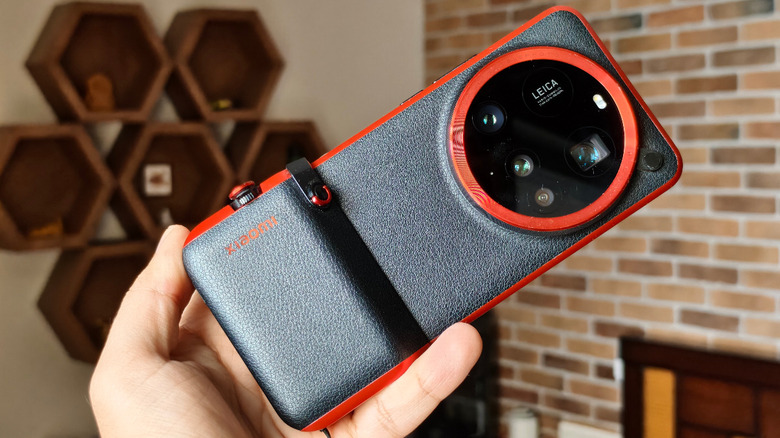
Every year, alongside the latest iPhone launch, Apple also unveils official accessories, like cases for all the iPhone devices. This is also true of other OEMs like Samsung and Google. However, Chinese brands have gone one step further, launching phone accessory kits that not only protect the phone but also enhance its functionality. The best example of this is Xiaomi's photography kit. This kit comes with a case that adds a dedicated capture button and extra grip, allowing you to use your phone like a proper point-and-shoot camera. That's not it. The grip on Xiaomi's case also serves as a power bank, allowing you to shoot photos and videos for longer stretches.
If you thought that was cool, wait till you see what Oppo and Vivo are up to. Both brands have launched photography kits for their latest flagships that also include a clip-on teleconverter lens. Oppo's version, made in partnership with Hasselblad, has a 230-millimeter focal length, letting you zoom way farther than what the built-in lens allows. Vivo also has a similar implementation built in partnership with Zeiss. The new Vivo X300 Ultra supports a teleconverter kit up to 400 millimeters, making it one of the longest supported optical zoom ranges on a phone. Apple could make something like this to take full advantage of the iPhone's camera hardware, especially for video recording, since iPhones are still unmatched in that aspect.
Reverse wireless charging
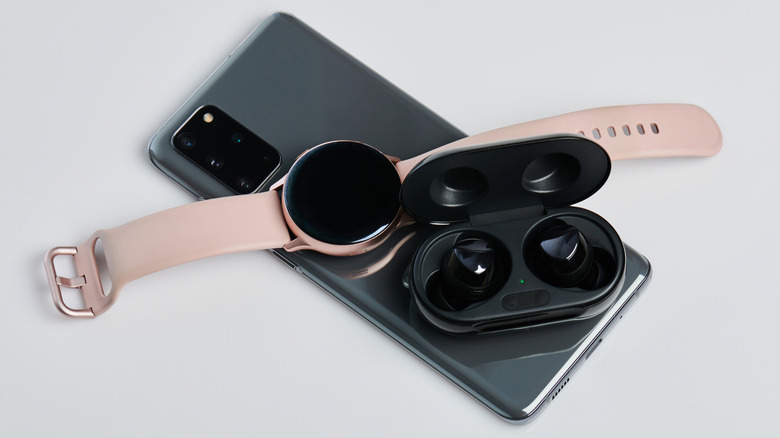
iPhones have had wireless charging since the iPhone 8 and iPhone X, thanks to the glass back. While it's slow, it still gets the job done on a bedside wireless charger or on a phone mount in your car. Unfortunately, Apple hasn't unlocked the full functionality of the iPhone's wireless charging coil. Almost all Chinese brands, and even some mainstream brands like Samsung, allow users to wirelessly charge other phones and gadgets using the smartphone has a wireless charging pad. How cool is that?! If your earbuds or secondary smartphone are running out of charge, all you have to do is flip your phone upside down, enable reverse wireless charging, and place your device on top.
Apple has an excellent opportunity to enable this feature on the iPhone 18 series, especially because it's going to be super-convenient to charge your AirPods and Apple Watch wirelessly when you're out and about. It would mean one less cable in your backpack when traveling, which can be a big deal for frequent travelers. Apple added support for reverse wired charging with the iPhone 15 a couple of years back, and it's high time they extend the functionality to wireless charging as well.
Variable aperture cameras
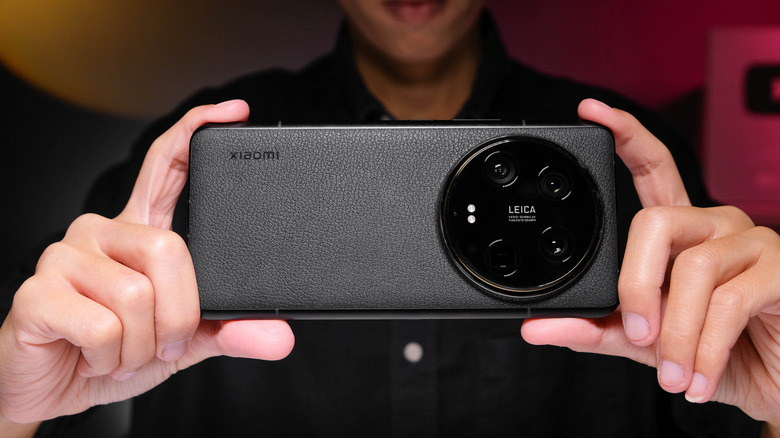
We've spoken in detail about several camera features that Chinese OEMs have added to their smartphones, making them superior to the latest iPhones. Another of those features is a variable aperture lens. A wider aperture means the sensor can capture more light, resulting in a brighter image that's also more detailed in low-light situations. Additionally, a wider aperture results in better bokeh. So, a wide aperture is clearly beneficial, right? Why would one need a feature to use a narrower aperture? Turns out, there are situations where a narrow aperture can be beneficial.
If you're shooting in extremely bright light, like outdoors when the sun is high, or in a studio setup, a wide aperture can result in an overexposed image — especially at lower ISO levels. Another factor to consider is that large sensors paired with extremely wide apertures can also result in some close-up objects appearing blurry, due to the narrow depth of field. Considering these factors, having the ability to vary the aperture is useful. A narrow aperture can also help you capture artistic photos, such as starbursts.
Ultrasonic fingerprint scanner
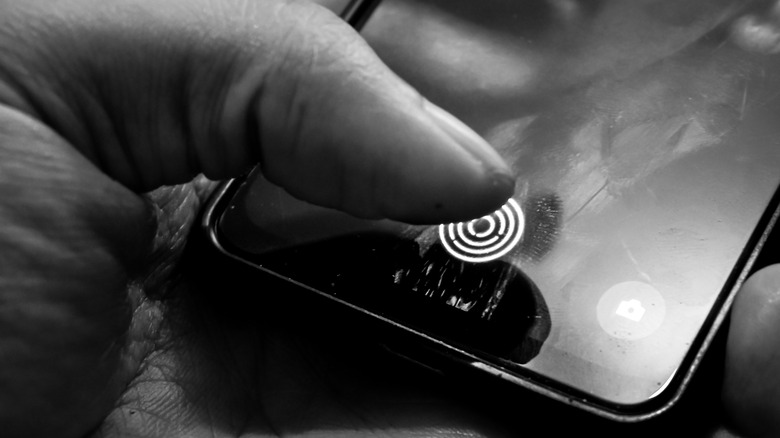
Apple made the shift from TouchID to FaceID when it launched the iPhone X with extremely slim bezels. Getting rid of the home button meant there was no other place for Apple to put the fingerprint sensor, since the technology to embed it under the screen wasn't available back then. However, the tech is now very much popular, with pretty much every Chinese OEM using ultrasonic, in-display fingerprint scanners in their flagship smartphones. This calls for Apple to make the switch back to TouchID, or at least provide an option for users to pick between TouchID and FaceID. TouchID is arguably faster and more convenient in certain scenarios — especially if you're regularly wearing a face mask post-pandemic.
An under-display fingerprint reader is also a much better solution compared to Apple's existing implementation on the iPad Air, where the power button has the fingerprint sensor baked into it. There have been reports of FaceID working with both siblings, which makes it less secure than a fingerprint scanner, since fingerprints are unique. Considering Apple is a huge proponent of privacy and security, it only makes sense to provide users with the option to pick their preferred method to secure their phone.
Split-screen multitasking
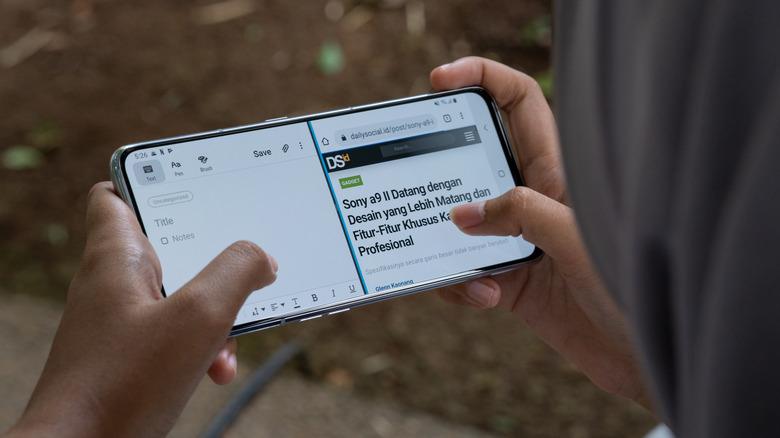
iOS has undoubtedly improved significantly since its early days, especially in terms of features. Not to forget, the latest iOS 26 also brought about a massive overhaul in terms of aesthetics, giving your iPhone's UI a fresh coat of paint. However, the OS still lags competitors in some areas, including multitasking. On several Android skins running on Chinese phones, users can not only open two apps or windows simultaneously in split-screen mode, but they can also run mini versions or instances of apps in multiple smaller windows. While this is primarily helpful on foldable phones and tablets, where you have a large canvas, it's also helpful on smaller devices where you may want to reference a webpage or YouTube video when messaging someone.
You may also want to make notes during an online meeting or call — something you can't do on an iPhone. The fact that you cannot perform two mutually exclusive tasks at once on an iPhone is a massive liability for those who like multitasking. With iPadOS getting more and more similar to macOS, we can only hope that iOS also follows the same path and borrows a few features from iPadOS, one of them being the ability to run multiple apps side-by-side. This is a much-needed feature, especially on larger Pro Max iPhones, where there's so much unused real estate when running a single app.