

6 Things You Should Never Keep In Your Car's Glove Compartment
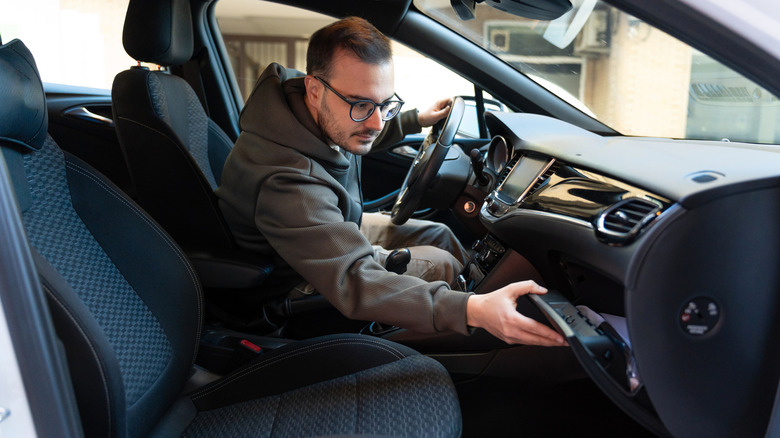
Keeping your valuables safe in your car isn't always as straightforward as it should be. In an ideal world, anywhere within your vehicle's confines would be a good place to store your items. Unfortunately, that's not the case. Putting valuables in plain sight is a security risk any owner would do well to avoid, and the glove compartment is probably the most accessible location in your car to keep your stuff safe from prying eyes and hands.
That's doubly true when you consider the extra layer of security modern vehicles embed to keep the contents of glove compartments safe. Most glove compartments have a provision to lock and unlock with the ignition key, and there's also the valet mode security feature that stops temporary drivers from accessing the glovebox. But it's not always that simple. Any would-be thief knows that car owners tend to store important documents and other prized possessions in it. So, in a break-in, the first place an attacker would target would be — you guessed it — the glove compartment.
That means your valuables aren't necessarily as hidden as you think — a fact that you need to consider when it comes to storing certain items. Beyond security purposes, though, your glove compartment wasn't built to store everything you can think of. We've put together a list of six items to avoid keeping in your glove compartment to keep your belongings, your passengers, and your car safe.
Personally identifiable information and credit cards
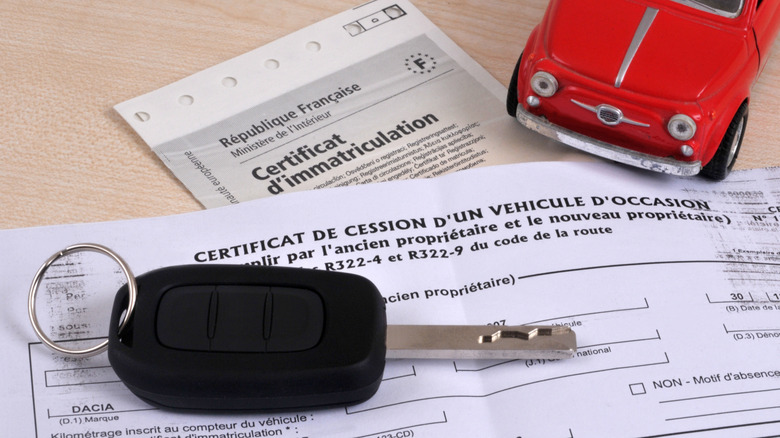
The first place in your car you might think to keep your personal documents in, like your wallet, car registration, and even your checkbooks, is the glove compartment. You want to keep these neatly tucked away in an area with minimal human activity, so it's logical to reach over and slide all those valuables in there. However, you're exposing yourself to major security risks by doing this.
In the event of a break-in, you'd be left vulnerable to an unknown entity having access to your personal records and financials. If you don't take action quickly enough, your bank accounts could be in danger. Worse still, personally identifiable documents such as vehicle registration could be used against you.
So, where do you keep these items, if not in the glovebox? For starters, your credit cards should always be on your person. As for documents like vehicle registration, depending on your location, you might not have to carry them with you in transit, even if you get pulled over. In Michigan, for instance, you can take a picture of your registration certificate on your phone and present it to law enforcement as evidence. Some other states require a digital license; If you have an iPhone, you can put your driver's license in your Apple Wallet in California, Georgia, and eleven other states.
Aerosol cans

It might seem prudent to keep a bottle of hairspray or deodorant in your glove compartment. This way, you can simply lean over to spritz a few times during the day. However, this puts your car at risk — especially if you make it a regular practice during summer. As a matter of fact, aerosol cans feature on our list of things to avoid leaving in your car entirely in hot weather.
That's because aerosol cans are pressurized and use propellants; They need to expel their contents through the nozzle when a person presses the button at the top of the can. If exposed to heat or direct sunlight, they can explode and scatter shrapnel. Depending on the type of propellant used and the product stored in the container, the explosion can result in a fire outbreak.
Most aerosol cans come with explicit temperature warnings on their casings. If temperatures in your car exceed those limits (usually north of 90 degrees Fahrenheit), there's a possibility the can will explode. Shards of the can will launch towards your car's interior, damaging it, and there's also the problem of hazardous liquids and gases being released. There's a reason aerosol manufacturers detail specific instructions on how to store and dispose of them, so don't put your safety at risk and store them as instructed.
Medicine

Medicine doesn't pose the same level of risk to your car that aerosol cans do, but that doesn't mean there's no damage to be found by storing your drugs in a glove compartment. It's simply a more insidious risk in nature. When exposed to extreme heat, medicine can become less potent. It can also change physically, too. Depending on heat and drug composition, variables such as color, texture, and smell of individual tablets can change.
You might even observe your capsules starting to stick together, or crack, or become brittle to the touch. All of these contribute to reducing the efficacy of your drugs. Some drugs, in particular, are more susceptible to heat damage than others. Insulin, inhalers, liquid antibiotics, and EpiPens, to name a few, change composition once they're exposed to heat, which might even make them unsafe to consume at all. You need to throw them out if they're compromised.
Cold isn't exempt from the equation, though; It's often recommended that you keep your drugs at room temperature. The acceptable temperature range for storing medicine falls between 59 and 77 degrees Fahrenheit. Your car's glove compartment doesn't store things at room temperature, especially in hot weather — it's often warmer inside your car than on the outside. With all that trapped heat (or chilly air, if you're in colder climates), your drugs won't be in the best shape for consumption. Store them inside the house, or if you're in transit, on your car seats — just keep them away from sunlight and heat.
Electronics and batteries
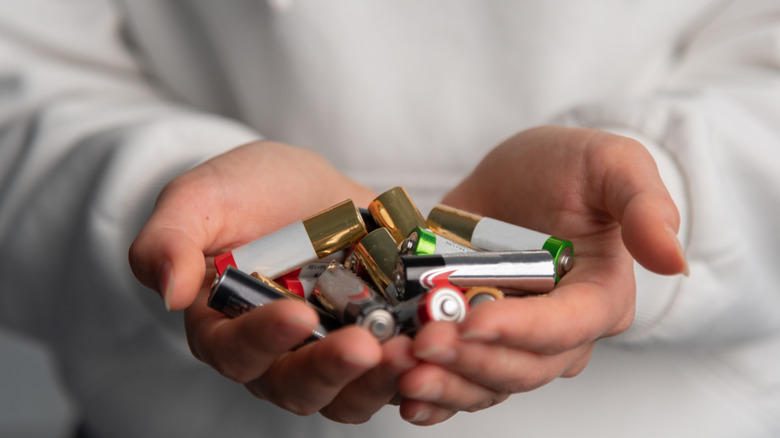
If you've been driving for a while, you probably know the impact heat has on your car, and specifically, your car battery. Heat ages your battery and accelerates corrosion, and that affects your car battery, too. Here, we're talking specifically about the small batteries in electronics and gadgets: phones, power banks, and even regular AAA lithium-ion batteries you keep for torches and other older equipment. Just like your car battery, these gadgets are adversely affected by heat, and although keeping them locked away in your glovebox may hide them from public view, you're exposing them to another risk entirely – degradation.
Let's use the regular portable batteries as an example. Say that you stow away a handful in your glove compartment; After all, they can come in handy in a number of situations. Unfortunately, as we mentioned earlier, when exposed to extreme heat, batteries degrade, and depending on the make and severity of the temperature exposure, their battery acid can leak. This acid typically contains sulphuric acid — a chemical that can cause severe skin burns, contact dermatitis, and even leave permanent scarring when touched, especially the lead acid battery in your car.
As for your phones and other electronic gadgets, they'll be exposed to phenomena like thermal runaway (basically, when the battery swells, heats up, and in some cases, catches fire). In cold temperatures, moisture could build up in your device instead. Your screen could also start lagging or behaving oddly.
Snacks
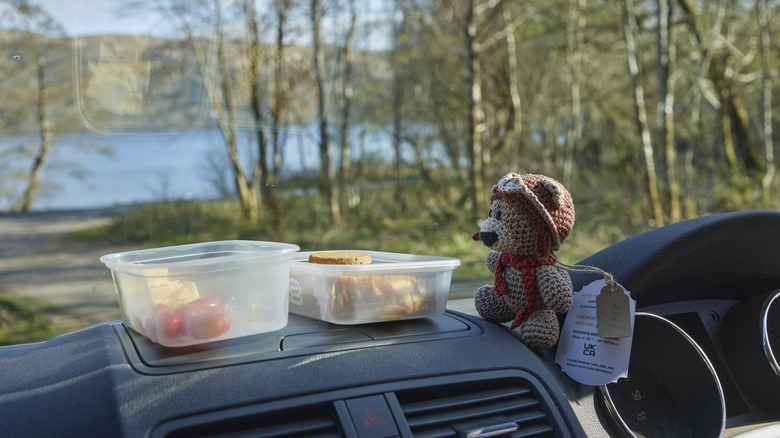
Having a stash of sweet treats and other bites to eat on the go may sound appealing. You don't have to stop for food at chain restaurants alongside a busy road, for one, as long as you're not eating while driving and you're making sure to keep your car clean and organized. However, you should avoid using the glove compartment as a storehouse for your snacks, for multiple reasons.
First, having snacks in the car can attract bugs, and having pests living in your car is one of the most repulsive experiences. You're not always going to be on the move; You'll eventually park somewhere for hours at a time, and pests have a strong sense of smell that lets them detect food and safe places to inhabit. With a glove compartment packed full of snacks, especially sugary foods and dried fruits, you're bound to attract cockroaches, ants, and fruit flies at some point.
Once bugs gain access to your car, there's now a question of contamination. Droppings and urine can pose health hazards if you come into contact with them, whether via touch or ingestion. Getting your cabin rid of these invaders can be an expensive exercise, and that's not all you have to contend with, either. Snacks can rot if left exposed to unfavorable temperatures, not to mention the risk of mold growth if you're in an area with high humidity.
Plastic Water Bottles

Keeping water in your car to stay hydrated during the day is a great idea — if you actually have a glass or reusable aluminum water bottle, that is. Trusting plastic water containers is an entirely different matter. The plastic bottles you commonly see are made of polyethylene terephthalate (PET, for short). When exposed to sunlight, the chemical bonds holding the compound together can break, which causes the plastic to decompose. That means that chemicals seep into your drinking water, a situation anyone would want to avoid.
Now, you might be thinking, the whole point of keeping your plastic bottles in the glove compartment is to protect them from sunlight. The line of reasoning may be sound, but there's still the influence of temperature to factor in, a variable that can change the taste and smell of your drinking water. Once you can taste or smell your water, that's a pretty obvious sign you shouldn't be drinking it, even though the change may not always be a sign of contamination. Better safe than sorry.
Apart from plastic degradation, there's another health concern you need to weigh if you're considering storing bottles in your glove compartment. That's the topic of bacterial growth. If, say, you've taken a sip of water with your lips touching the cap before putting the container in the glovebox, you've transferred bacteria from your mouth to the bottle. In hot climates, bacteria can multiply rapidly, and if left unattended for long enough, could make you sick when you next go for a sip.